Ever think you’d pay a stranger to stay in their home when they’re not there? Airbnb realized that convincing people of this would be challenging when they first started out.
As a relatively unknown platform, it needed to gain the trust of users who were skeptical about staying in strangers’ homes. To overcome this, Airbnb emphasized user reviews and host ratings. As the reviews grew, so did the platform’s popularity, ultimately transforming it into a global giant.
This is social proof in action.
At its core, social proof is the psychological phenomenon where people look to the actions and opinions of others to guide their own behavior, especially when unsure about a choice. It‘s a powerful tool for anyone looking to influence decisions, build trust, and grow their brand or business.
Statistical significance is only part of deciding whether an A/B test is trustworthy. A test can fail to detect a real improvement simply because it does not have enough statistical power.
Statistical power is the probability that a test will detect an effect of a specified size when that effect genuinely exists. It is usually expressed as 1 – β, where β is the probability of a Type II error, or false negative.
For A/B testing, power should be considered before the test starts alongside sample size, the minimum effect you want to detect, the significance level, and the underlying conversion rate. An underpowered test increases the risk of missing an effect that actually matters.
Mediocre marketing teams guess: “Our latest run of Facebook ads seems to be working.”
Good teams know: “The Facebook ad set drives first visits, but the retargeting campaign and the nurture emails are what close the sale.”
Marketing attribution is how you get from the first sentence to the second. Attribution models are the rules that decide which touchpoint gets credit, and the model you pick changes the answer. Pick the wrong one and you will defund the channel that actually fills your pipeline.
This guide covers what marketing attribution is, why it got harder, every common attribution model (with a side-by-side comparison), data-driven attribution, when to use which model, and how marketing mix modeling, incrementality tests, and self-reported attribution fill the gaps that click tracking can’t.
You’ve acquired a ton of customers lately for your company. On the surface, this is awesome. More customers, more money. So you throw your energy into your customer funnel.
However, soon after sign-up, they seem to fly right out the back door. Why is this happening? Why do customers leave—or use the service less—often without saying anything?
ChatGPT is able to answer lots of difficult questions. It’s (mostly) available 24/7. It’s disruptive and could potentially become your best employee.
This raises some other difficult questions. Will the skills you’re learning today be obsolete by tomorrow if AI can do it better? Are chatbots going to steal marketers, writers, and developers’ jobs?
A/B testing tools help teams compare different versions of a webpage, product experience, feature, or campaign and measure which version performs better against a defined goal.
In 2026, that covers a much broader range of software than traditional website split testing. Some tools are built for marketers using visual editors, while others handle server-side experiments, feature flags, mobile apps, warehouse-native analysis, personalization, or full-stack product experimentation.
A value proposition is a promise of value to be delivered: the primary reason a prospect should buy from you instead of a competitor. A unique value proposition (UVP) states that promise so specifically that only you can make it.
It significantly influences whether visitors continue exploring your product or hit the back button. On your site, your value proposition is the main thing you need to test. Get it right, and it will make a real difference to your conversion rate.
Testing your value proposition should be a top priority in your conversion optimization work.
The less known your company is, the better your value proposition needs to be.
TL;DR
A UVP is not a slogan. It’s a specific, testable statement of relevance, quantified value, and differentiation; not a tagline or positioning statement.
Clarity beats cleverness every time. If a reader can’t explain your offer back to a friend in one sentence, the value proposition has failed.
Structure it the same way every time: headline, sub-headline or short paragraph, three bullet points, and a supporting visual.
Test it with genuine prospects, not just A/B tests. Message testing tells you why something isn’t working; split testing only tells you whether it worked.
AI has changed how fast you can draft and test variants, but it hasn’t changed what makes a value proposition work: specificity, evidence, and language taken from actual customers.
A value proposition is a clear statement that explains the benefits of your product, how it solves customers’ problems, why it is different from the rest, and why customers should buy it. A unique value proposition (UVP) is the same statement with the weight on the third part: the difference only you can credibly claim. In practice the two terms are used interchangeably, and everything below applies to both.
In marketing, an ideal unique value proposition must provide the following:
Relevancy. Explain how your product solves customers’ problems or improves their situation.
Quantified value. Deliver specific benefits.
Differentiation. Tell the ideal customer why they should buy from you and not from the competition.
Your value proposition has to be the first thing visitors see on your homepage, but it should also be visible at all major entry points to the site.
That message has plenty of influence over the buying decision: Wynter’s research found that 100% of the B2B SaaS CMOs surveyed visit a vendor’s website before making a purchase decision.
It’s not just for aesthetics or to placate a CEO or copywriter. Ultimately, it can improve your customer lifetime value. When we reviewed a range of websites, a missing or poor value proposition was one of the most common shortcomings. The value proposition definition above includes three important factors; make sure you cover all of them in yours.
People should read and understand your unique value proposition
A value proposition is something real humans are supposed to understand. It’s for people to read. Here’s an example of what a value proposition is not supposed to be like:
Revenue-focused marketing automation & sales effectiveness solutions unleash collaboration throughout the revenue cycle
Most readers wouldn’t be able to explain that offer to a friend or say how they’d benefit. Such meaningless “jargon propositions” are abundant. Avoid vague generic messaging.
Jargon is still a common reason messaging fails: in Wynter’s study of B2B SaaS marketing leaders, 18% cited buzzwords and terminology customers didn’t understand as a source of messaging confusion.
Use the right language for your unique value proposition
Your value proposition needs to be in the language of the customer (informed by customer research and buyer intelligence). It should join the conversation that’s already going on in the customer’s mind. To do that, you need to know the language your customers use to describe your offering and how they benefit from it.
You cannot guess what the right language is. The way you speak about your services is often very different from how your customers describe them. The answers are outside your office. You have to interview your customers to find it out, or use a message-testing tool like Wynter, which puts your draft copy in front of your actual target buyers and reports back on clarity, relevance, and differentiation.
What the value proposition is not
It’s not a slogan or a catch phrase. This is not a value proposition:
L’Oréal. Because we’re worth it.
It’s not a positioning statement. This is not a value proposition:
America’s #1 Bandage Brand. Heals the wound fast, heals the hurt faster.
A positioning statement is a subset of a value proposition, but it’s not the same thing.
Types of value propositions
Most marketers think of the value proposition as one company-level statement, owned by the CEO and printed on the homepage. That is only the first of four levels. Every decision a prospect makes, from opening an email to signing a contract, runs on its own value proposition, and each one can be written, tested, and improved.
All four types answer a version of the same question: “If I am your ideal customer, why should I do this instead of the alternative?”
Type
Question it answers
Where it shows up
Primary
Why buy from you instead of any competitor?
Homepage, brand messaging, sales decks
Prospect-level
Why should this segment buy from you?
Segmented ads, persona landing pages
Product-level
Why buy this product instead of any other?
Product pages, launch messaging
Process-level
Why take this action right now?
Buttons, email subject lines, ads, forms
1. Primary value proposition
This is the value proposition of the brand itself, and the one most of this article is about. It answers: “If I am your ideal customer, why should I buy from you instead of any of your competitors?”
A strong primary value proposition makes a specific claim and backs it with proof. A lead data provider might say “We have the most comprehensive and accurate lead database,” then support each adjective: comprehensive means access to over 210 million U.S. consumers, 14 million U.S. businesses, and 13 million executives; accurate means 600 researchers verifying the data daily and making over 26 million verification calls a year.
Every other type draws from this one. If the primary value proposition is weak, the others have nothing to borrow credibility from.
2. Prospect-level value proposition
Unless you sell to one narrow segment, different prospects buy for different reasons, and talking to all of them the same way costs you conversions. Before you build segments, ad targeting, or personas, answer: “If I am Prospect A (or B, or C), why should I buy from you rather than any of your competitors?”
A common mistake is promoting a prospect-level value proposition to the primary one. In one value proposition workshop, a company proposed “payment flexibility” as its main value proposition. It was the only company in its market offering one particular payment option, so the idea looked sound. But only 25% of customers chose that option. The rest picked payment terms competitors also offered, so a primary message built on payment flexibility would have missed three-quarters of the customer base.
As a prospect-level value proposition, it was valuable. For buyers who wanted those specific terms, this company was the only option. That justifies targeted ads that send that segment to a dedicated landing page built around the offer.
3. Product-level value proposition
The question: “If I am your ideal customer, why should I buy Product A instead of any other product?”
The answer tells you whether a new product belongs under your existing brand. If its value proposition draws nothing from the primary one, consider launching it as a separate brand. Wrangler-branded eyeglasses are a stretch: the brand stands for tough, comfortable jeans, and it is not obvious what that lends to eyewear. The Nissan LEAF is the opposite case. Zero emissions was new for Nissan, but an electric car fits, and arguably strengthens, a brand whose tagline is “Innovation that excites.”
“Product” is broader than what you sell. An email is a product. So is a blog post, a webinar, or your website. Each needs its own answer to “why should I care about this one?” Marketers are rewarded for their products’ success and tend to assume customers care about them as much as they do. Writing a product-level value proposition forces you past that blind spot.
4. Process-level value proposition
Every action you ask for needs a reason: open this email, click this ad, read this post, stay on this call. The question: “If I am your ideal customer, why should I take this action rather than anything else I could do?”
These micro value propositions rarely get a workshop, which makes them easy wins. Buttons are a good place to start (count how many still say “Submit”). In one experiment for a textbook publisher, changing a button from “SIGN IN AND ORDER A SAMPLE” to “REQUEST A FREE COPY” produced a 132% increase in click-through rate at a 99% level of confidence. The hypothesis: a “copy” (the whole thing) is perceived as worth more than a “sample” (a portion of it).
The same thinking goes beyond calls to action. HealthSpire wanted Americans aged 65 and over to call its TeleAgents for help choosing a Medicare plan. The original short landing page led with the company’s primary value proposition. A longer version built around the value of making the call itself (a tip and a Q&A from a real TeleAgent with their photo, plus a pledge describing what would happen on the call) generated 638% more leads for the call center. Nobody wants to be on a sales call, so the page had to sell the call before it could sell the plan.
How the four types work together
The types are separated here for clarity, but they are strongest combined. The question that earns the most conversions is: “If I am Prospect A, why should I take this action toward buying Product B from you instead of anything else I could do?”
Don’t confuse any of these with a unique selling proposition (USP). A USP is a single differentiating claim, usually one line inside your primary value proposition, not a separate level of it.
What is the structure of a unique value proposition?
The value proposition is usually a block of text (a headline, sub-headline, and one paragraph of text) with a visual (photo, hero image, graphics).
There is no single right way to go about it. We suggest you start with the following formula:
Headline. What is the end-benefit you’re offering in one short sentence? It can mention the product and/or customer. Make it an attention grabber.
Sub-headline or a 2-3 sentence paragraph. A specific explanation of what you do/offer, for whom, and why it’s useful.
Three bullet points. List the key benefits or features.
Visual. Images communicate much faster than words. Show the product image, the hero shot, or an image reinforcing your main message.
Note: Having solid product images is just one piece of the puzzle.
Evaluate your current value proposition by checking whether it answers the questions below:
What product or service is your company selling?
What is the end-benefit of using it?
Who is your target customer for this product or service?
What makes your offering unique and different?
Use the headline/paragraph/bullets/visual formula to structure the answers. (Wynter’s value proposition canvas can help you map customer pains, gains, and needs to the value your product provides.)
What makes a great value proposition?
A great value proposition is clear: it explains what the offer is, who it’s for, and how it’s useful. If those questions are answered, you’re on the right path. Always strive for clarity first.
If your value proposition makes people go “hmph?”, you’re doing it wrong. If they have to read a lot of text to understand your offering, you’re doing it wrong. A sufficient amount of information is crucial for conversions, but you need to draw people in with a clear, compelling value proposition first.
Creating meaningful differentiation remains a challenge for companies. Wynter’s research found that 26% of B2B SaaS marketing leaders pointed to a lack of genuine product differentiation as a reason brands end up sounding alike.
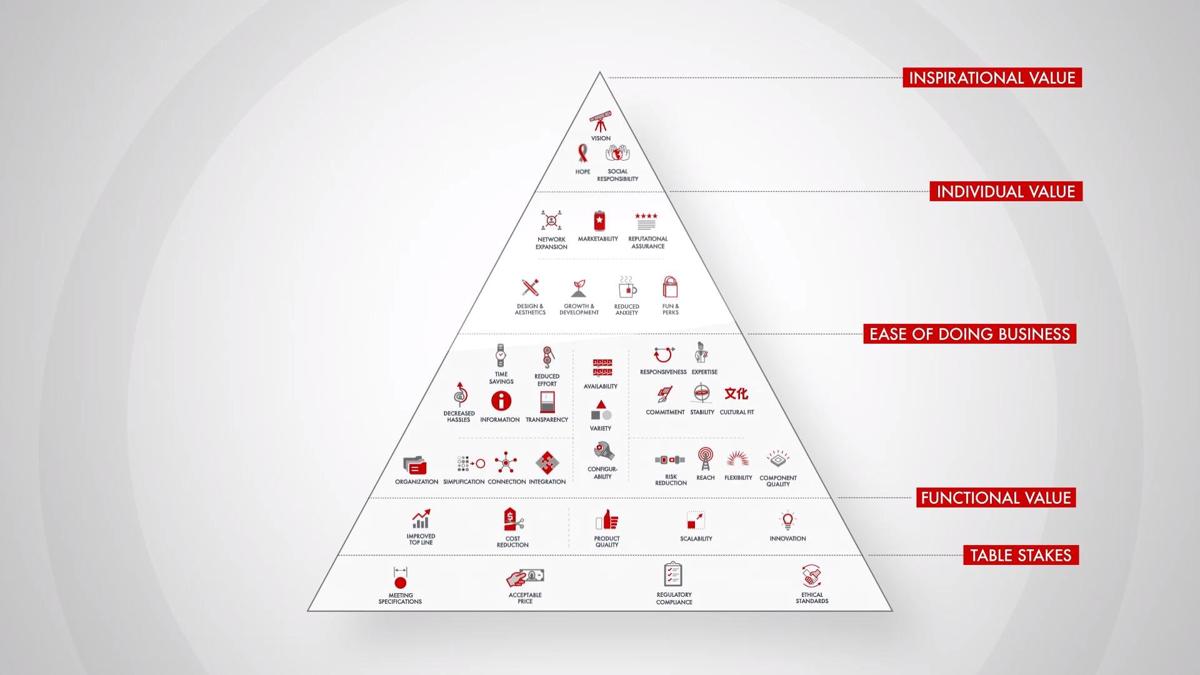
A separate, B2B-specific framework worth knowing is Bain’s B2B Elements of Value, which breaks buyer value into 40 elements across five categories, from table-stakes functional value up to elements that affect a buyer’s own career and reputation. It’s a useful checklist for finding value your competitors haven’t claimed yet.
What makes a good value proposition?
Clarity: it’s easy to understand.
It communicates the concrete results a customer will get from purchasing and using your products and/or services.
It says how it’s different or better than the competitor’s offer
It avoids hype (like “Never seen before!” or “Amazing miracle product!”), superlatives (“best”), and business jargon (“value-added interactions”).
It can be read and understood in about five seconds.
Also, in most cases, there’s a difference between the value proposition for your company and your product. You must address both.
Why does the presentation of your value proposition matter?
Noticed the value proposition more quickly when it had more text (i.e. took up more real estate on the page).
Spent longer on a value proposition as opposed to elsewhere on the page when there was more to read.
Recalled more services offered by the site when more services were listed.
Described more website advantages when there were more features and benefits available to read.
Preferred information in the form of bulleted lists.
Showed a preference for page design that was influenced by which variation they saw first.
A key role for the value proposition is to set you apart from the competition. Most B2B buyers still review several vendors before deciding, which means your offering needs to stand out during that research phase, not just on the final call.
That comparison happens early: A buyer experience report found that buyers evaluate an average of 5.1 vendors, and the eventual winner is already on their Day One shortlist 95% of the time.
7 great unique value proposition examples
Perfect value proposition examples are rare because they’re difficult to create. We find flaws or room for improvement in most value propositions we come across.
We’re also fully aware that we’re not the ideal customer for many of the examples shown below, and our critiques are educated hypotheses that should be tested. The screenshots below capture each homepage at the time of the original review; some companies have since updated their messaging, which is a useful reminder that a value proposition is never “finished.”
Here are some good examples along with our comments:
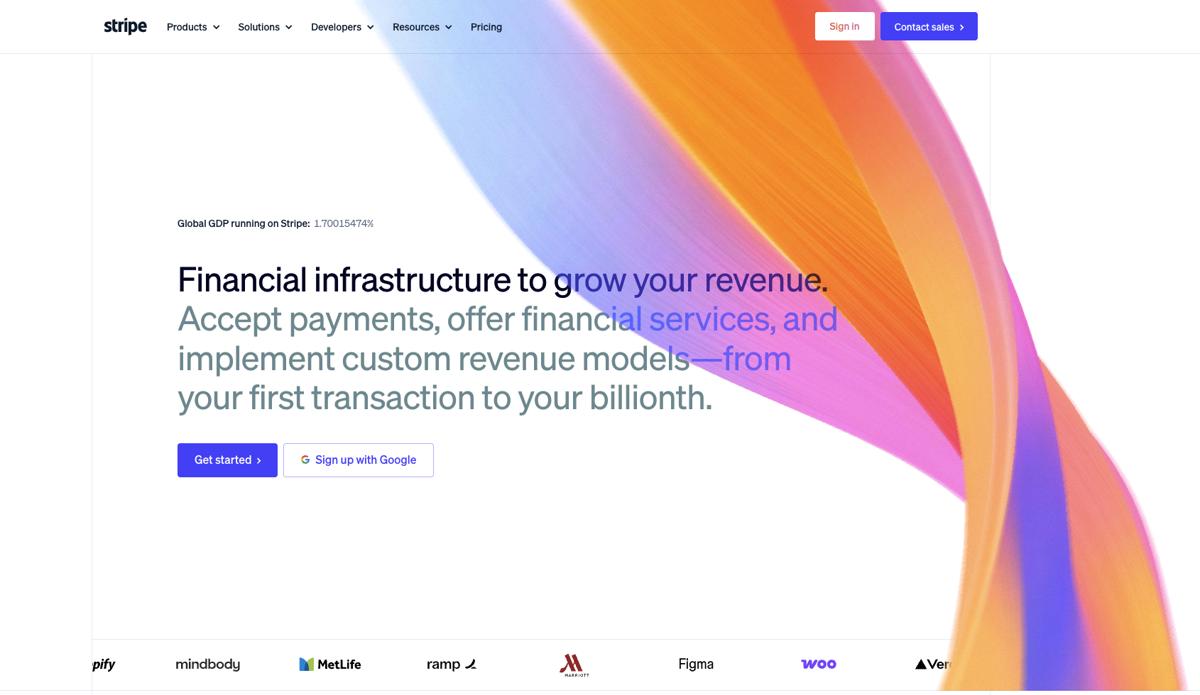
Stripe has since evolved this headline to lead with revenue growth rather than infrastructure alone, a small but telling shift toward benefit-first language over category description.
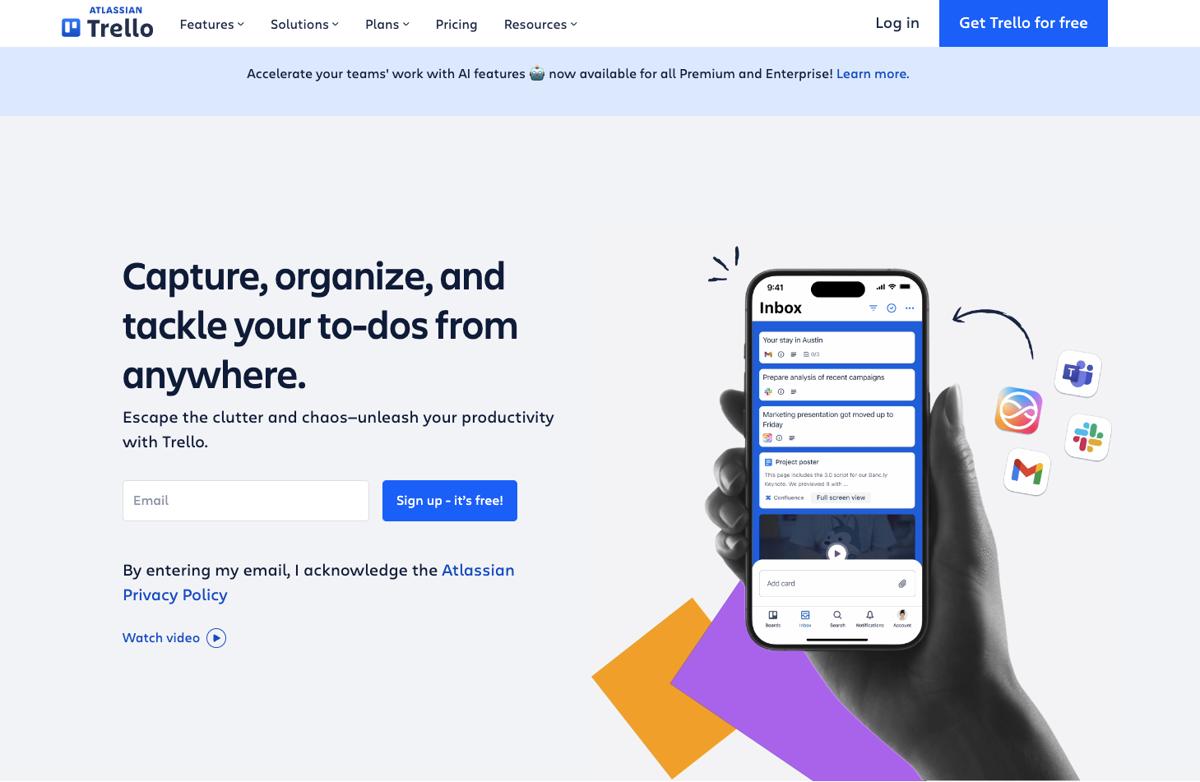
3. Trello
Comments
Clear statement about what Trello does for you in the sub-heading.
Elaboration on the benefits to the user for using this tool.
Relevant images that show collaboration in action.
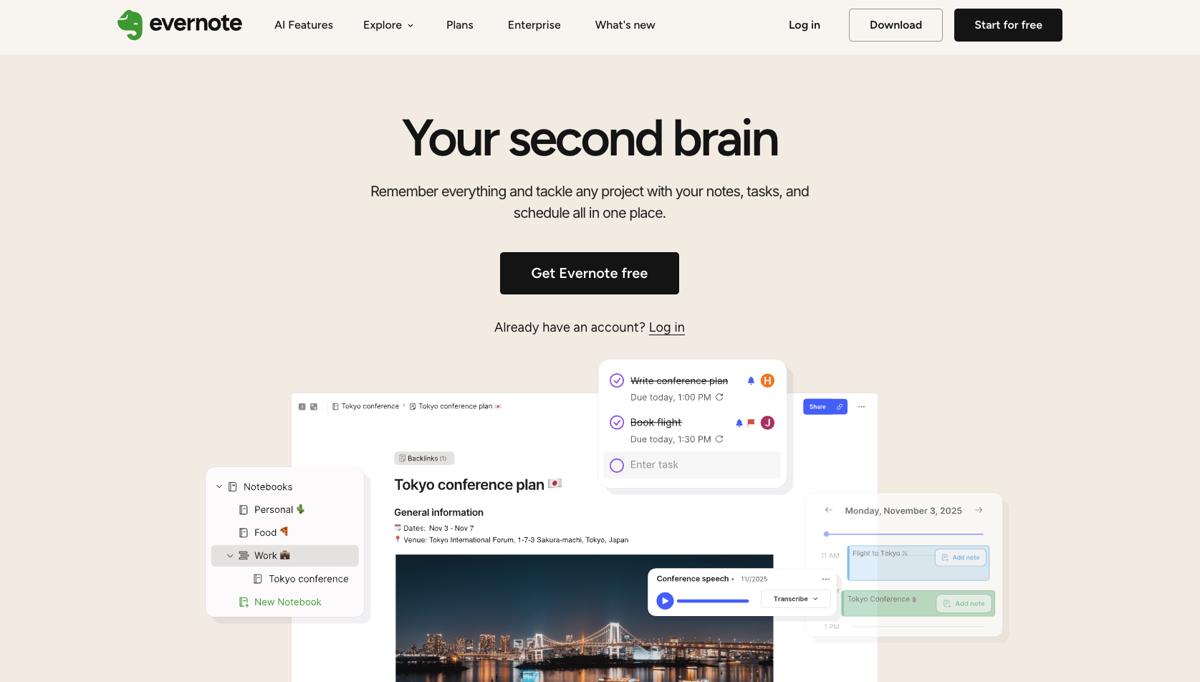
4. Evernote
Comments
Heading speaks to larger benefits for your life.
Subheading takes you into how Evernote delivers those benefits.
Clear call to action.
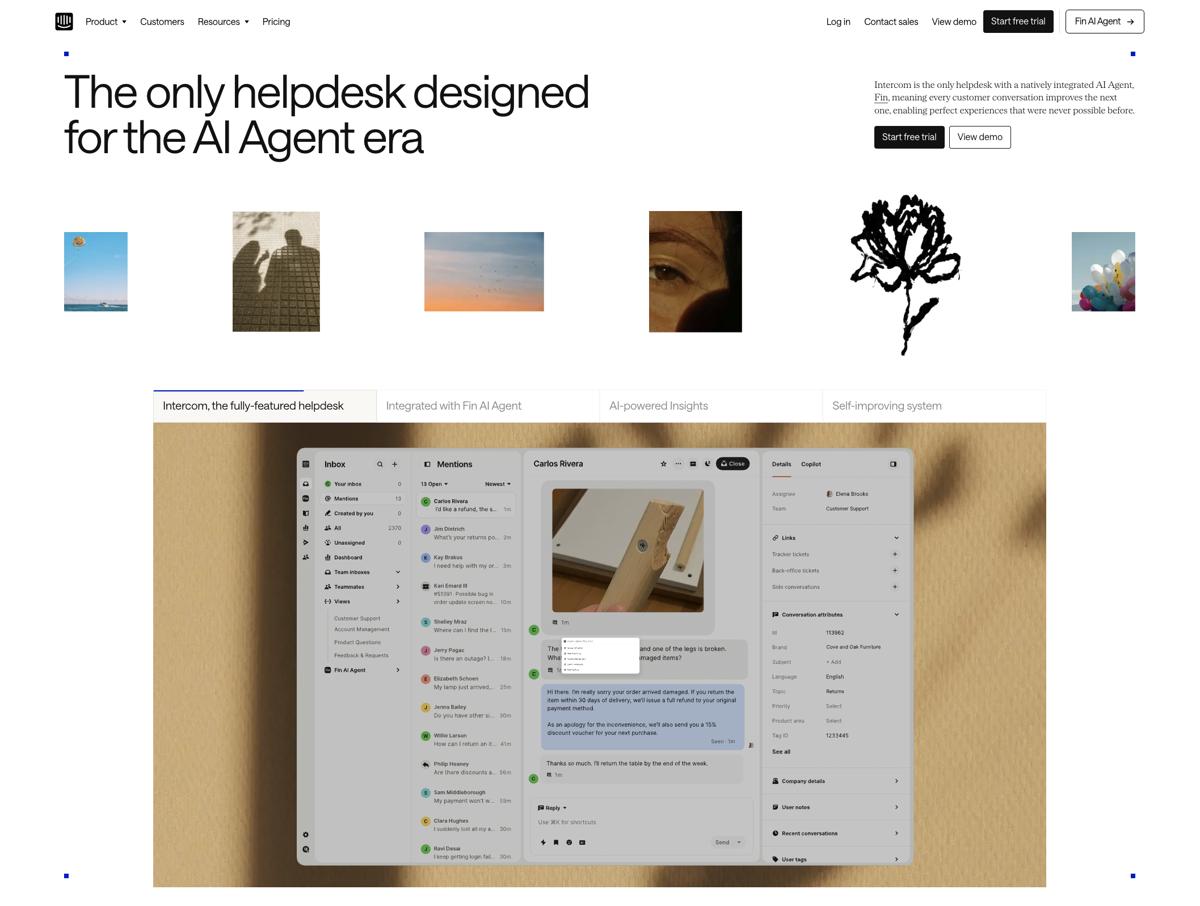
5. Intercom
Comments
Headline positions Intercom as the helpdesk built for the AI agent era.
Lead paragraph explains its native AI differentiation.
Relevant product imagery.
6. Webflow
Comments
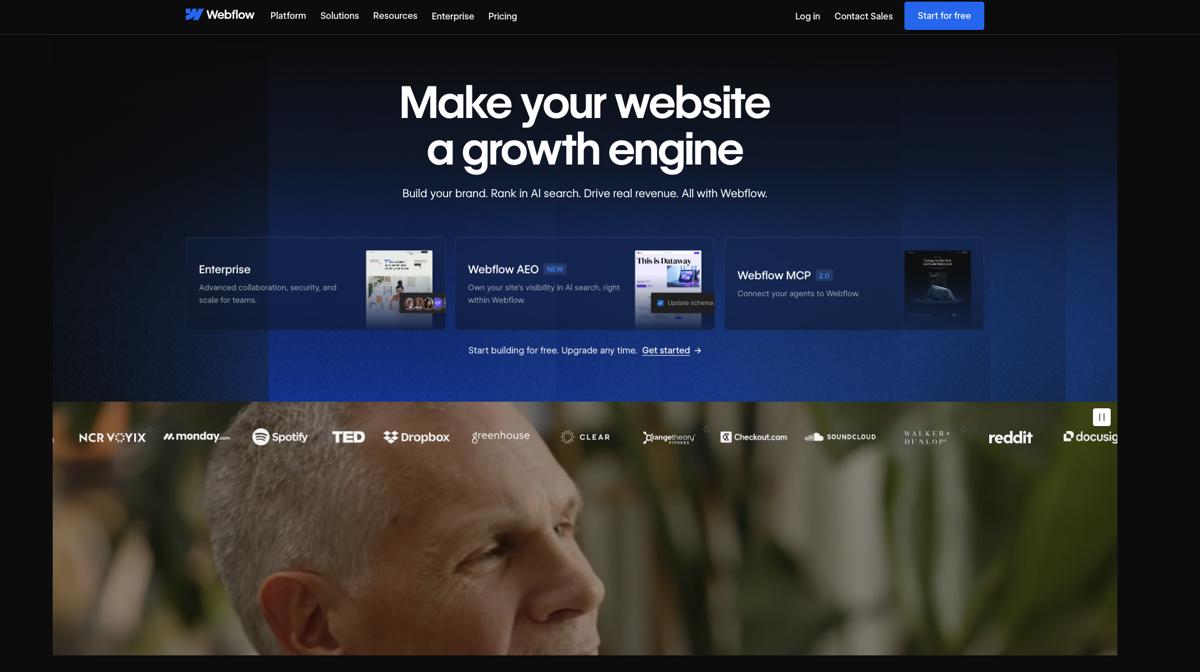
Headline clearly positions Webflow for modern website teams.
Lead copy combines building, optimization, and AI search in one platform.
Product-led visual reinforces the website-building proposition.
7. Prey
Comments
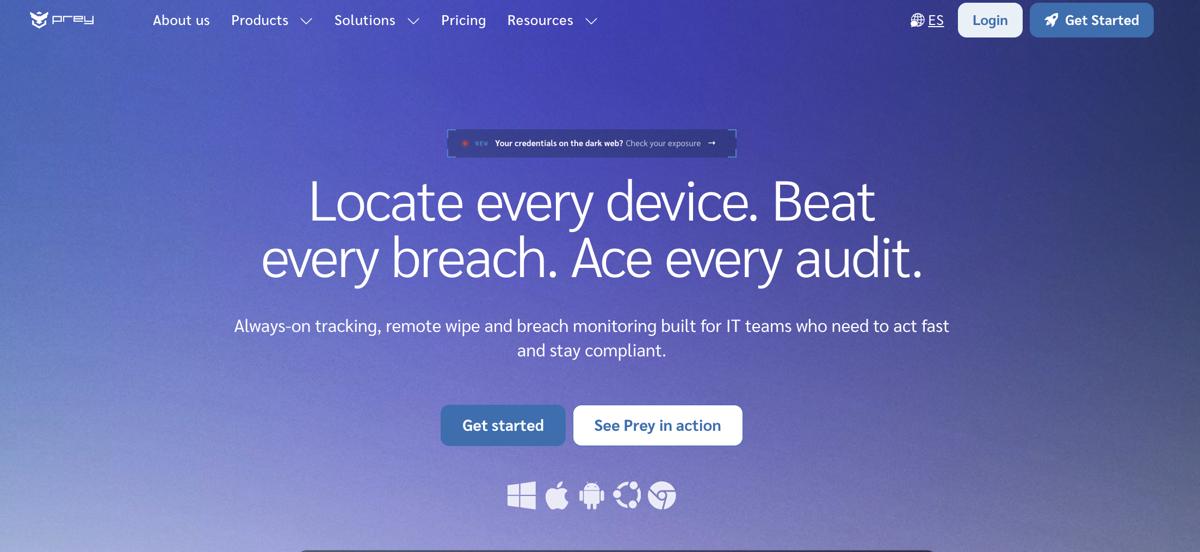
The headline is okay, but it could be clearer (e.g. “Keep track of your laptop, phone, or tablet. Get it back when it gets stolen or lost.”)
The following paragraph does a good job explaining how Prey is useful.
Offers an immediate test option (up the top).
Poor value proposition examples, and their updates
Some lessons from the department of “Don’t do this!”
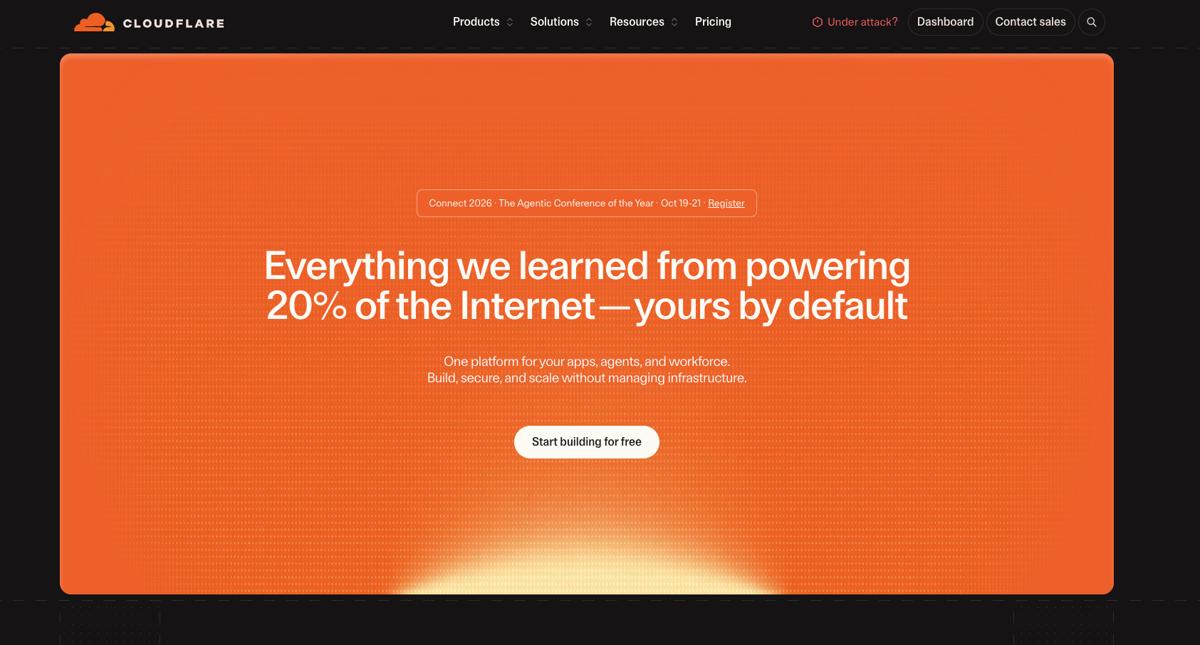
1. Cloudflare
Here’s Cloudflare’s evolution.
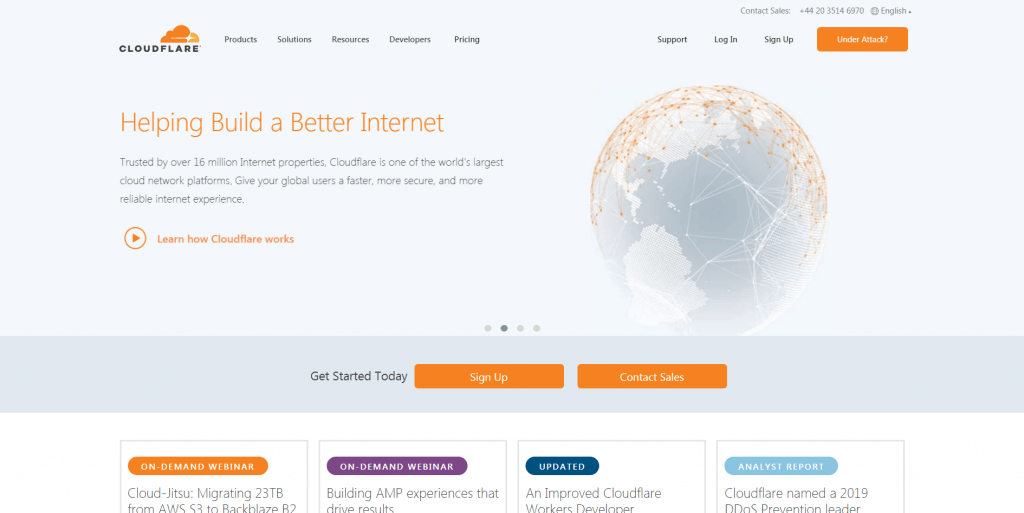
From this:
Comments
Awful clarity: “Helping Build a Better Internet”? Nobody will understand what that means, nor does it solve anyone’s problem.
Subheading offers some clarity and detail, but that information should be in the heading.
Image looks like a stock photo.
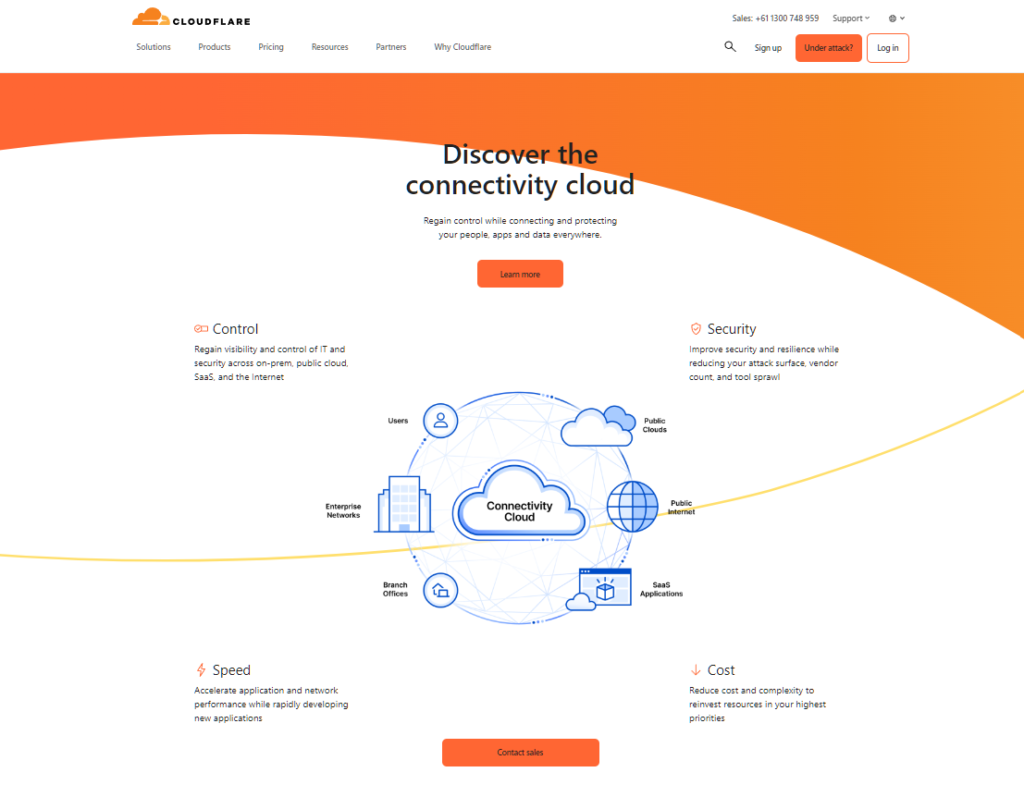
Then:
Comments
Still lacking clarity in the heading as to what benefits it’s offering.
Subheading is a lot more benefit-focused than the previous version.
Image is at least custom and applicable, but the placement of text around it is odd and doesn’t quite fit.
To this:
Cloudflare has moved again, leading with “Everything we learned from powering 20% of the Internet—yours by default,” backed by a clearer proposition: one platform to build, secure, and scale apps, agents, and workforces without managing infrastructure. The 20% figure adds concrete proof to the promise, while the supporting copy makes the customer value explicit.
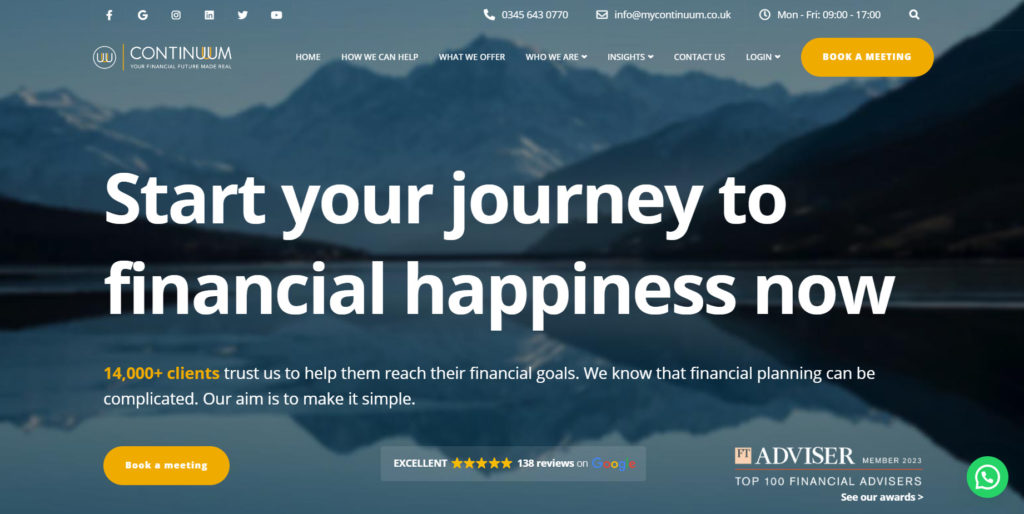
2. Continuum Financial
Here’s Continuum Financial’s evolution.
From this:
Comments
No proper value proposition in place at all: the headline congratulates the company on its five-year anniversary.
Awkward phrasing if not flat-out incorrect (“…we look forward continuing to deliver…” and “What stage of your financial journey are you at?”)
No imagery above the fold; those below are stock photos.
To this:
Comments
The heading at least refers to value the company can offer: financial happiness.
The subheading expands on the heading: the company offers trustworthy, simplified financial assistance.
Background image might not seem immediately applicable, but it alludes to the results people often hope for when reaching their financial goals.
So how do you make your offer unique? Often, it’s hard to spot anything unique about your offering. It requires honest self-reflection and discussion.
How do you write a unique value proposition?
If you can’t find anything, you’d better create something. Of course, the unique part needs to be something customers genuinely care about. There’s no point being unique for the sake of being unique (e.g. “the ball bearings inside our bicycles are blue”). Even if what you sell isn’t unique, you can still come up with a great value proposition.
What customers value matters more than novelty: Qualtrics’ research found that value for money was the leading reason consumers chose to do business with a brand (46%), followed by product or service quality (42%) and convenience (41%).
Here are two resources that can help you find a “theme” or angle for your value proposition:
How Uber measures value perception, a practical framework for identifying which parts of your offer customers perceive as most valuable.
Remember: you don’t need to be unique to the whole world, just in the customer’s mind. The closing of a sale takes place in a customer’s mind, not out in the marketplace among the competition.
Use “boosters” for your value proposition
Sometimes, little things tip the decision in your favour. If all major things are pretty much the same between you and your competitors, you can win by offering small value-adds. We call them boosters.
These work well against competitors who don’t offer them. Boosters can be things like:
Free shipping;
Fast shipping/next-day shipping;
Free bonus with a purchase;
Free setup/installation;
No setup fee;
No long-term contract, cancel any time;
License for multiple computers (vs. one);
(Better than) money-back guarantee;
A discounted price (for a product);
Customisable.
Think about what small things you could add that wouldn’t cost you much but could be attractive to some buyers.
Make sure the booster is visible alongside the rest of the value proposition.
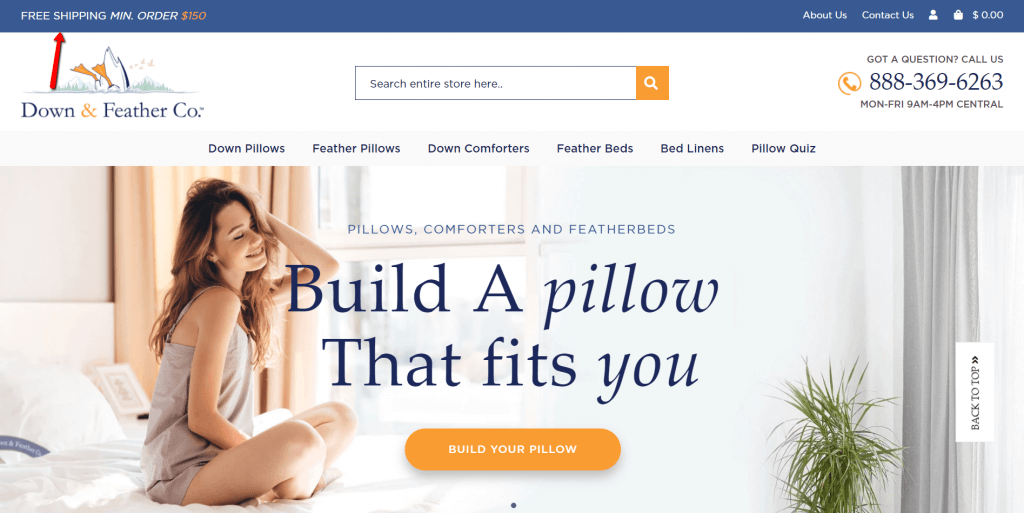
Example of a value proposition “booster”
The “Free Shipping” sign in the top left is a booster example.
How do you test your value proposition?
You have to test your value proposition. There are three main ways to do it.
1. Message testing
By far the best way to test your value proposition is to put it in front of the very people you’re trying to market to and get their perception of it. This is what message testing is for. It tells you exactly what your ideal target customers think:
Do they find it clear?
Is it relevant to them? Do they get that it’s for them?
Most importantly: do they want the value promised? Does it make them go “I want that”?
And finally, is it differentiated? Is it clear why they should choose you over alternatives?
You will get rich qualitative information on how and where it’s falling short, so you can improve it.
The best way to conduct message testing is with a tool like Wynter.
2. A/B testing
Another good way to test your value proposition is to craft two candidates (or more, if you have plenty of traffic) and split test them. This will take at least four weeks on most sites, and requires a minimum of 500 signups/conversions per month. (You need to do proper sample size calculations upfront to know exactly how many.)
The limitation here is that A/B testing will only tell you if B is better than A, and by how much. It tells you nothing about the “why.” It offers no insight into how to improve your value proposition, unlike message testing.
Another way to go about it is to use Google Ads or Facebook Ads. This can be costly and takes at least one to two weeks.
Split test ads with different value propositions that target the same customer. The ad with a higher click-through rate signals a possibly better attention grabber and interest generator, but on the downside, it doesn’t necessarily mean higher sales conversions.
Send the traffic to a corresponding landing page and test conversions, too.
How is AI changing value proposition testing?
AI has not changed what makes a value proposition work. Specificity, evidence, and customer language still beat clever copy. What has changed is the speed at which you can generate and test candidates.
Marketers can now use AI to draft a dozen headline and sub-headline variants from a single set of customer-interview transcripts in minutes, rather than one writer staring at a blank page. That’s useful for volume, but it introduces a new risk: AI-generated copy tends to default to generic, feature-forward phrasing unless it’s grounded in genuine customer quotes and data. CXL’s research on how B2B marketers use AI found that most teams are still stuck using AI for task-level acceleration, such as drafting faster, rather than using it to run the full message-testing and iteration loop end to end.
The practical workflow that holds up in 2026: feed AI actual customer interview notes, support tickets, or Wynter message-testing results, not just a brief, then have it draft variants against the headline/sub-headline/bullets/visual structure above. A human still needs to run the message test and make the final call, because AI models cannot tell you whether buyers want what you’re promising. Verifying that output against genuine customer signal is the skill gap CXL’s 2026 AI Maturity Benchmark flags most often among B2B marketing teams: most are comfortable using AI to draft, far fewer have built the trust and verification step needed to ship that output without a manual rewrite.
FAQ
What’s the difference between a value proposition and a unique selling proposition (USP)?
A value proposition describes the full promise of value to a customer: relevancy, quantified benefit, and differentiation, usually presented as a headline, sub-headline, and supporting bullets. A USP is narrower: it’s the single specific claim that sets you apart from competitors, often just one line within the larger value proposition. Every USP should support a value proposition, but not every value proposition needs a single standout USP to work. See more USP examples for the distinction in practice.
How long should a value proposition be?
Short enough to be read and understood in about five seconds for the headline, with a supporting sub-headline or short paragraph (two to three sentences) and three bullet points for detail. If a visitor has to reread it or ask “wait, what do they do?”, it’s too long or too vague.
Where should a value proposition appear on a website?
On the homepage above the fold, and at every other major entry point to the site: landing pages, category pages, and product pages. Visitors don’t only arrive through the homepage, so a value proposition that only lives there misses a large share of first impressions.
Can AI write my value proposition for me?
AI can draft variants quickly, but it can’t tell you which one is true, differentiated, or wanted by your buyers. The best current workflow uses AI to generate options grounded in genuine customer language (interview transcripts, support tickets, message-testing data), then has a human validate the result with actual prospects before it goes live.
How do I know if my value proposition is working?
Test it. Message testing (via a tool like Wynter) tells you whether target customers find it clear, relevant, wanted, and differentiated, plus why it’s falling short if it is. A/B testing tells you whether one version converts better than another, but not why. Use both: message testing to diagnose and improve, A/B testing to confirm the improvement holds up with real traffic.
How often should a company revisit its value proposition?
Whenever your market, competitors, or ICP shift meaningfully, and at minimum once a year. The Cloudflare example above shows a company revising its value proposition multiple times over several years as its business and buyers changed. A value proposition is a living asset, not a one-time deliverable.
Conclusion
You need a value proposition, and you need to communicate it clearly on all the main entry pages: homepage, product pages, category pages, and so on.
If you don’t state why users should buy from you, you will lose most of them. To craft a great value proposition:
Focus on clarity above all else.
Use the headline, sub-headline, bullets, and image formula.
Test, test, test.
Go deeper
If you want to build this skill systematically rather than one article at a time, these CXL resources go further:
B2B Product & Brand Messaging: a hands-on course for building a value proposition that makes your brand stand out and aligning messaging across marketing, sales, and product.
The AI Native Marketer programme, if you want to build the skill of using AI to accelerate research and copy testing without losing the judgement that makes a value proposition credible.
A/B testing is a controlled experiment that compares a control with one or more variations to determine how a change affects a defined outcome. Traffic is randomly allocated between variations, often evenly, although a 50/50 split is not required.
A reliable A/B test starts with a clear hypothesis, sufficient sample size, predefined success metrics, and a valid stopping rule. The goal is not simply to find a “winner,” but to reduce uncertainty and learn which changes improve customer and business outcomes.
More than 60% of marketers use 20+ marketing tools on a regular basis according to Airtable. For email marketing alone, more than half of small businesses use two or more tools according to Litmus.
On top of this, the number of sales and marketing tools each company uses is forecasted to continue to increase rapidly as the number of available tools and the amount of customer data grows.
At the same time, according to Mulesoft, only 28% of tools a company uses are integrated with other tools. More tools, more data, but limited integration—can you spot the issue here?
A six-week live cohort for marketers. Every week you build one AI native workflow you can use at work: a 90-minute live workshop on Tuesday, then you build it on your own data with us in the community, and demo it on Friday.
You don't need more AI tips. You need five working AI workflows. Starts 28 September.
Join 140,000+ marketers and get a weekly expert-led newsletter focused on helping marketing teams overcome growth challenges, punch above their weight, and crush their competition.