Everyone has heard a horror story about a website redesign. But there are still times when they are necessary or beneficial.
Deciding when is the right time is one important aspect of doing a redesign well. The other aspect lies in the process itself.
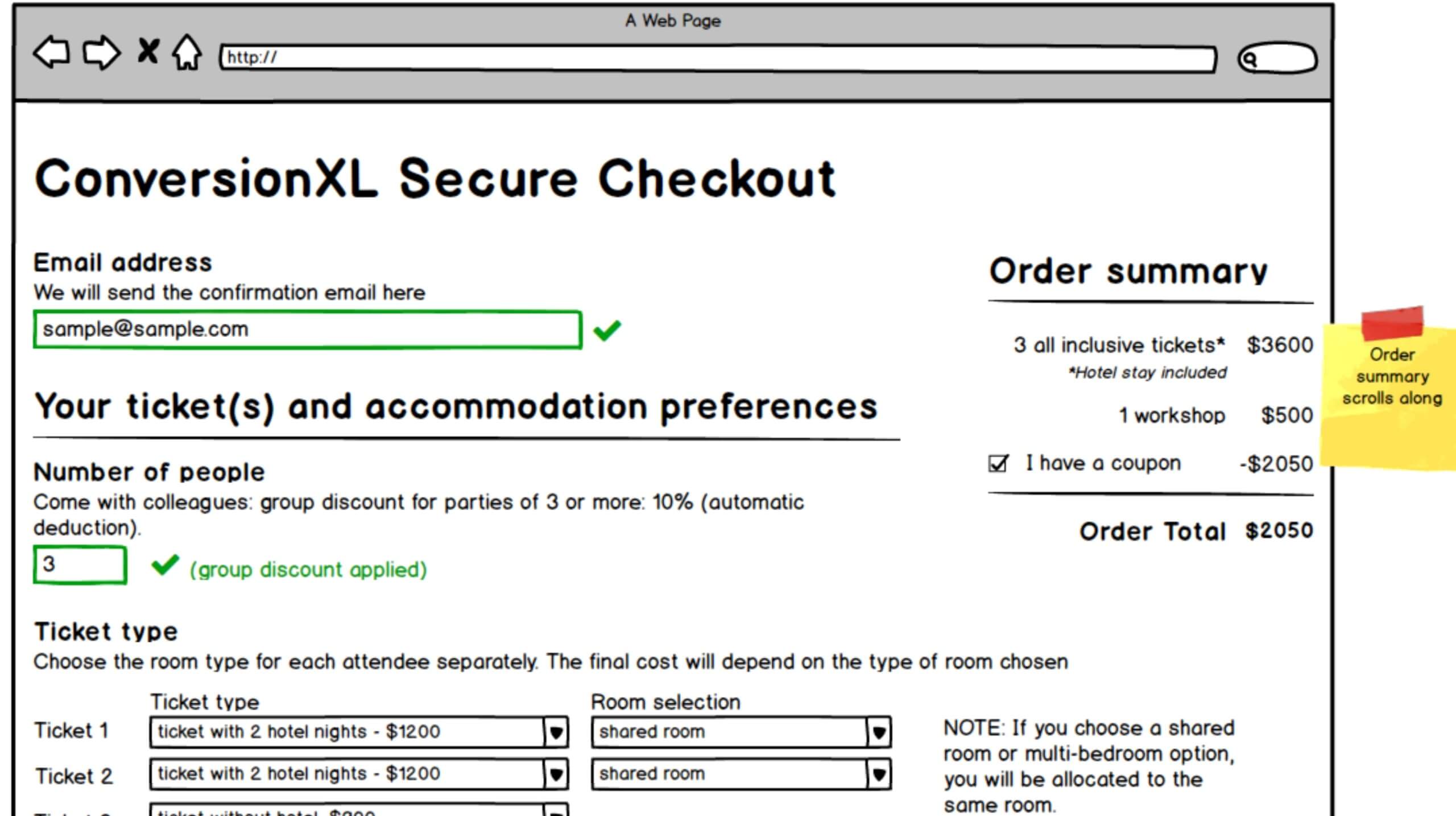
We can dramatically improve the performance of website redesign projects when we used a structured approach and we start testing all our assumptions.
Keep reading
If you’re part of a conversion optimization team, a big part of that job is communicating treatments to other specialists on your team (analysts, designers).
Depending on the scope of the changes, you could use a few different tools and methods.
Almost always, though, this includes wireframing – and it helps to be able to do wireframing decently well.
Keep reading
A/B testing is common practice and it can be a powerful optimization strategy when it’s used properly. We’ve written on it extensively. Plus, the Internet is full of “How We Increased Conversions by 1,000% with 1 Simple Change” style articles.
Unfortunately, there are experimentation flaws associated with A/B testing as well. Understanding those flaws and their implications is key to designing better, smarter A/B test variations.
Keep reading
If you’ve worked in marketing, sales, conversion optimization – any role that has to do with strategic communications/persuasion – you’re likely familiar with the work of Dr. Robert Cialdini and his principles of persuasion.
Since his last book, Influence, came out 30 some years ago, his work has done nothing but influence new generations of those of us in the strategic/persuasive communications space. Even if you haven’t read the book, you’ve probably heard of his 6 persuasion principles.
However, with Cialdini’s new book, Pre-Suasion, comes one new persuasion principle.
Keep reading
What makes a good product page?
Well, there are tons of elements that come together to make a successful product page. These include price, product image, product copy, layout, etc.
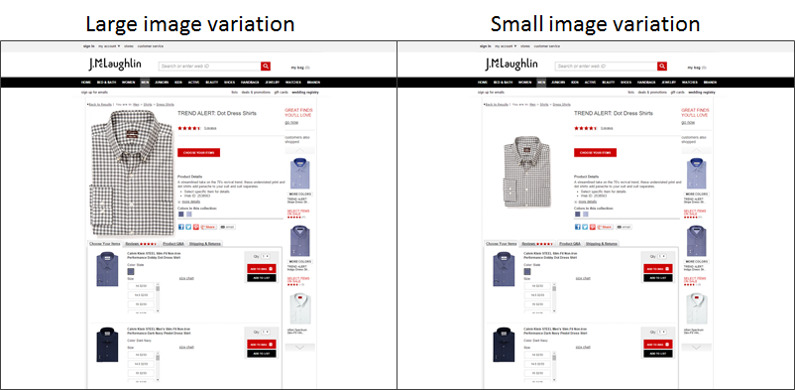
One element in particular, product image size, seems to affect the value perception of the product. In this study from CXL Institute (part one of three of a full eCommerce product page study, the others to come soon), we look at product page design, and in particular, how you can increase the value perception of your particular product.
Keep reading
If there were only one email campaign we could send for 350+ of our online retail and eCommerce customers for rest of their lives it would be this one….
The cart abandonment campaign.
Keep reading
If you’re a budget brand, there’s nothing wrong with a website that looks kinda cheap.
But if you’re selling expensive watches or clothes? Well, that’s not the message you want to be sending.
Keep reading
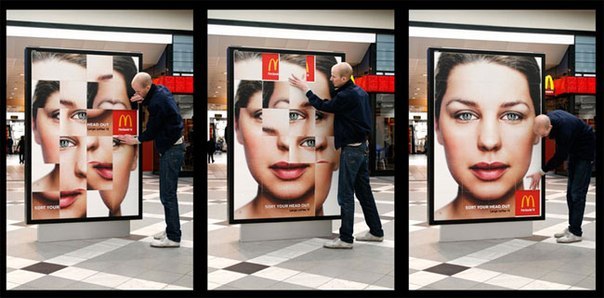
Interactivity tends to lead to better engagement, and it’s thought that better user engagement equals more conversions and more long term satisfaction with a brand.
The web is an inherently interactive medium, so there are infinite ways to implement interactivity onto your site.
Keep reading
Have you ever wished for a tap to call button on a mobile site? Or struggled to tap a tiny link? Have you ever wondered what would happen after you clicked a button on a site? Or, worse, wondered what to do next on a site?
If you answered yes to any of those questions, you’ve experienced a UX mistake. They’re more common than most people realize. Why? Perhaps it’s the curse of knowledge, ego or laziness. Whatever it is, it’s paramount that you learn to avoid (or fix) these mistakes.
Keep reading
Symbolism is a tricky thing. Different symbols mean different things to different people based on different backgrounds and past experiences. That’s why icons can easily flop, if they’re not properly tested. After all…
If the user can’t use it, it doesn’t work. [Tweet It!]
Keep reading