There’s a lot of hype around tools like n8n right now, people claiming it can replace entire teams or save thousands overnight.
To help differentiate between the hype and what’s actually possible, we hosted n8n Week, where five industry experts built live AI agent workflows, from idea to execution. We looked at what works, what doesn’t, and the manual steps that still require human input.
Here are the key takeaways from each n8n marketing automation session.
Table of contents
- Session #1: Building your first AI agent
- Session #2: Scaling content creation with AI workflows
- Session #3: Automating paid media insights with real-time data
- Session #4: Automate keyword research and audits
- Session #5: Automating ICP research and personalized outreach at scale
- Five sessions, five core shifts
- Next steps
- The gap isn’t the tool. It’s the architecture.
Session #1: Building your first AI agent
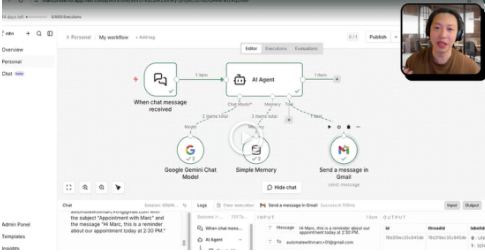
Prompts don’t scale. Systems do.
This is the foundational reframe: writing better prompts is a ceiling game. The real power lies in connecting systems, where each part feeds the next.
In this session, Marconi Darmawan broke down the fundamentals of n8n and showed how anyone can build their first AI-powered workflow.
Key takeaways:
- Start simple, then scale: You don’t need to overcomplicate things to get started. The best workflows begin small and evolve over time.
- AI agents have 3 core building blocks: LLM (the brain), memory (context), and tools (actions like Gmail, scraping, etc.). Get this right, and everything else becomes easier.
- Control over hype: Unlike tools that “magically” do things for you, n8n gives you full control over every step, which is essential for reliable marketing workflows.
- Guardrails matter: You decide when and how things happen, instead of letting AI run autonomously. That’s critical for brand safety and risk control.
→Access the session recording here
→Learn how to build your own AI agents to run your B2B marketing
Session #2: Scaling content creation with AI workflows
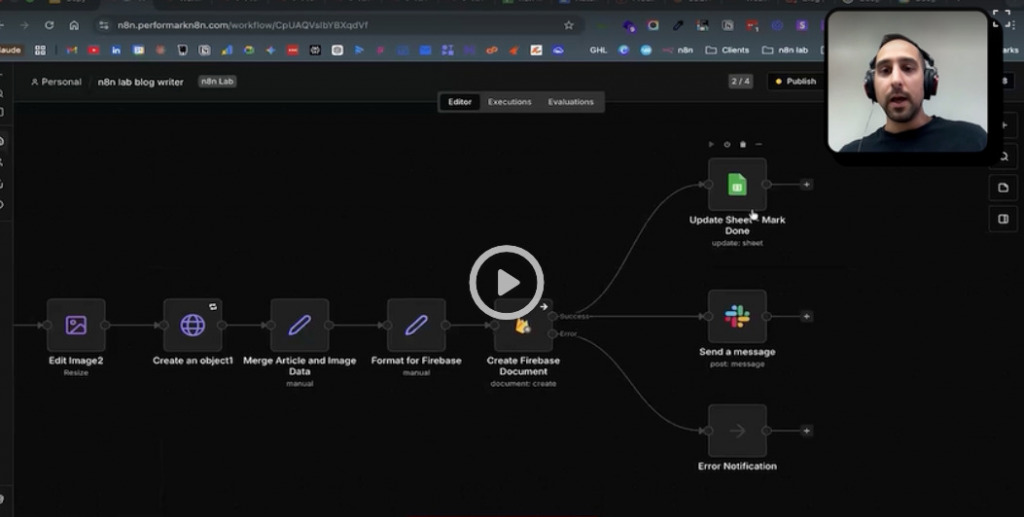
One super-agent does everything poorly.
The instinct is to build one powerful agent that does everything—research, outline, write, SEO-optimize, and publish.
Jovan Miljevic spent a full session explaining why this fails and how to fix it, showing how to build scalable content systems using n8n.
Key takeaways:
- Structure before automation: Before building anything, map your content process first (research → outline → writing → SEO → publishing). AI works best when it follows a clear system.
- Specialized agents outperform one “super agent”: Instead of one generic AI writer, use multiple agents with clear roles. This improves both quality and consistency.
- Internal data is your biggest advantage: The real value comes from combining external research with your own data, like sales calls, reviews, and product knowledge. This is what makes content relevant and differentiated.
- RAG systems unlock better outputs: By storing and feeding internal knowledge into your workflows, you reduce the need for constant prompting and get more consistent, context-aware content.
- Model selection matters: Different LLMs perform better at different tasks. It’s not just about prompts; it’s about using the right model for the job.
- Human oversight is still critical: Even with advanced workflows, human review is key for quality, brand voice, and accuracy.
→Access the session recording here.
→Learn how to use AI tools to create better content, do smarter research, and repurpose it effectively
Session #3: Automating paid media insights with real-time data
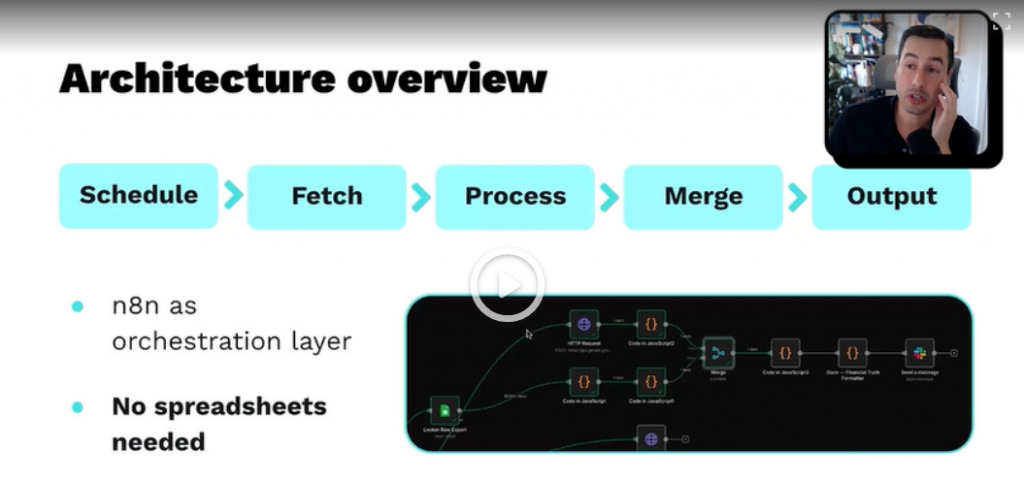
Stop checking dashboards. Start receiving alerts.
Here’s the real cost of the manual reporting loop: you discover problems after you’ve already paid for them.
The average performance marketer logs into Google Ads, opens Meta, pulls analytics, and manually reconciles numbers that disagree every single day. And by the time you spot the broken campaign, you’ve burned the budget.
Here’s the shift Nick Christensen demonstrated:
- Automation replaces dashboards: Instead of checking dashboards manually, push insights directly to where you work, such as Slack. You shouldn’t be chasing data every day.
- Speed is a competitive advantage: Real-time insights allow you to react instantly (pause campaigns, increase spend, and fix issues) instead of waiting days or weeks.
- Merge data to unlock insights: The real power comes from combining multiple data sources (Google Ads, analytics tools, product data) into one unified view.
- Automation reduces wasted spend: With anomaly detection and alerts, you can catch issues early and avoid wasting budget on underperforming campaigns.
- Start simple, then build layers: Even a basic workflow (2–3 data sources + Slack output) can already provide massive value before adding complexity.
One critical caveat on data: don’t trust a single source. Ad platforms, analytics tools, and your CRM will always show different numbers. The value is in combining them: where they intersect often reveals what’s actually happening at the business level.
→Access the session recording here
→Learn how to use AI to visualize ad variants and automate your daily campaign monitoring
Session #4: Automate keyword research and audits
Google rankings are half the game now
Rankings still matter. But there’s a second visibility surface most teams aren’t optimizing for yet: AI citations.
When a user asks ChatGPT, Perplexity, or an AI Overview a question in your space, does your content get cited? That’s now a distinct optimization target, and it requires a distinct approach. By creating a workflow that targets both AI citation and traditional ranking, you’re creating a scalable, visibility advantage in a channel that’s still mostly uncontested.
I outlined my approach in session four, and the segmentation is simple:
- SEO isn’t dead, it’s evolving: The fundamentals (great content, strong structure, and technical SEO) still matter, but the goal is expanding from ranking to also getting cited by AI.
- Optimize for citations, not just rankings: Content needs to be structured so LLMs can easily extract answers (clear definitions, direct responses, summaries).
- Top-of-page matters most: The majority of AI citations come from the top section of content, meaning answers should appear early, not buried deep in the page.
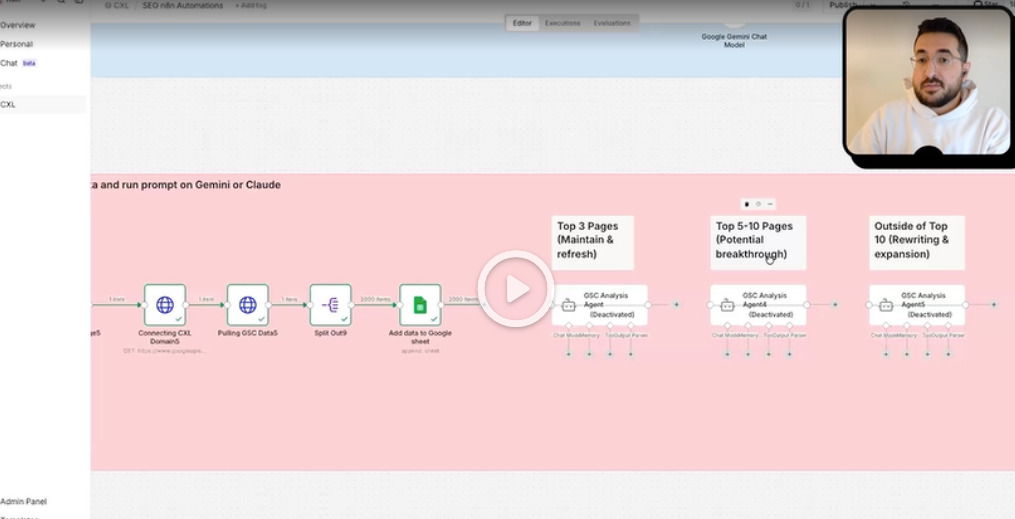
- Turn Google Search Console data into action: Automations can identify which pages to protect (top 3), improve (positions 4–10), or push to page one (positions 10–20).
- Reverse engineer competitors at scale: Scrape top-ranking content, analyze patterns, and generate clear gap analyses to understand exactly what you’re missing.
- Start with one workflow and build from there: One n8n marketing automation can evolve into multiple use cases (tracking, insights, and content briefs), creating a compounding system over time.
→Access the session recording here
→Learn how to use AI tools to automate keyword research and competitor analysis
Session #5: Automating ICP research and personalized outreach at scale
Manual ICP research is a bottleneck you’re mistaking for rigor.
Most teams are doing ICP research at a depth that doesn’t justify the decisions it’s informing.
You can do 10 accounts with real depth, or 1,000 accounts at surface level. Automation collapses that tradeoff.
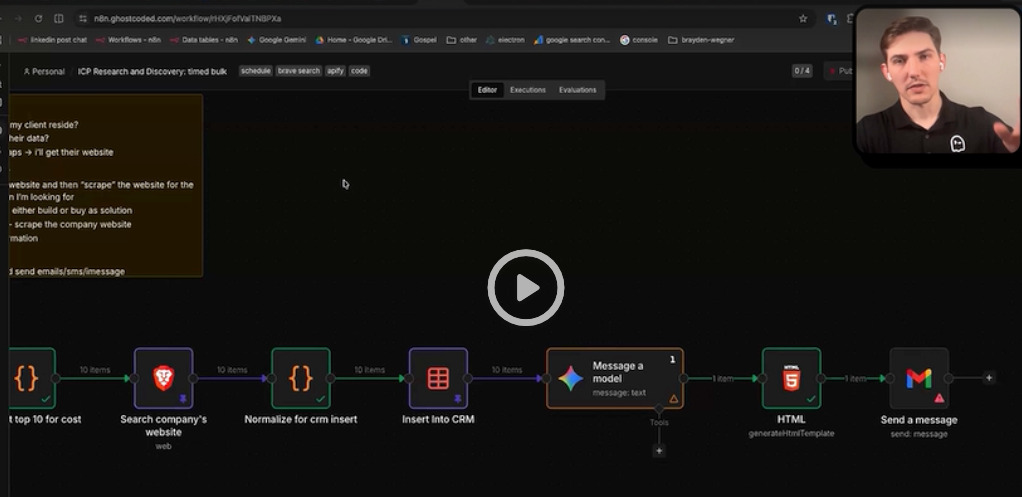
Tanner Woodrum‘s session showed how to build a full research and discovery system in n8n that turns scattered data, including LinkedIn signals, company news, job postings, and technographics, into structured insights at volume.
The framework for designing any workflow is answering three questions:
- What are the inputs (where does data come from?);
- What are the processes (how is it enriched and analyzed?);
- What are the outputs (what do you do with it)?
If you can’t answer all three before you build, the workflow will drift.
Key takeaways:
- Research is the foundation of everything: Great marketing and sales start with deeply understanding your ICP, but doing this manually doesn’t scale. Automation makes high-quality research possible at volume.
- Data is your biggest advantage: The more structured data you collect, the more powerful your AI outputs become.
- Use AI to make sense of complexity: Instead of manually analyzing large datasets, feed structured data into LLMs to generate insights, summaries, and personalized messages instantly.
- Speed + relevance wins: The combination of real-time data collection and AI-driven personalization allows you to reach the right people with the right message faster than competitors.
The maturity path: start with a linear workflow, layer in AI enrichment, then turn it into an agent that can answer sales questions on demand. You don’t need to build the agent version first. In fact, you shouldn’t.
→Access the session recording here
→Learn how to turn ICP research into scored and visualized ad variants
Five sessions, five core shifts
| Session | The core shift | The trap most teams fall into | The real unlock |
| AI Agents | Prompts → systems | Building better prompts instead of connecting the tools that already exist in your stack | LLM + memory + tools as a single architecture. Control every step |
| Content | One agent → specialized agents | A single “super agent” that does everything, producing inconsistent output with no brand voice | RAG systems fed with your internal data (sales calls, reviews, and documents) |
| Paid Media | Dashboards → alerts | Manual daily dashboard checks that surface problems after the budget is already spent | Anomaly detection pushed to Slack. Intervene when there’s actually something to do, not on a schedule |
| SEO | Rankings → rankings + AI citations | Optimizing purely for Google while a second, mostly uncontested visibility surface grows in AI answers | Direct answers early, structured definitions, GSC triage automated: protect top 3, push 4–10, target 10–20 |
| ICP Research | Manual research → structured systems | Doing ICP research at a depth that doesn’t scale, then making high-stakes decisions on shallow data | Inputs → processes → outputs framework. Structured account data fed into LLMs for personalized outreach at volume |
Next steps
- Map the workflow before you build it. Write out your process stages in order: research, production, review, and distribution. Automation layered on top of an undocumented process automates the chaos along with the work.
- Replace one dashboard check with a Slack alert. Pick the metric you check most often, such as CPL, keyword position, and pipeline movement, and build an n8n workflow that monitors for anomalies and pushes a notification. A two-source workflow with a single output already delivers value.
- Inventory your internal data advantage. Sales call transcripts, customer review archives, proprietary research: document what you have and structure it so it can be fed into your workflows via a RAG system. This is the moat. The LLMs are commodities.
- Split your single agent into three. If you have an AI writing workflow, break the agent into a researcher, an outliner, and a writer. Assign each a specific persona and output format. Quality improvement is usually immediate and measurable.
- Add one AI-citation optimization to your next content piece. Put your core answer in the first 100 words. Add a direct definition of the primary concept. Use headers that mirror the questions your audience actually asks. Track citation rates in Perplexity and ChatGPT alongside traditional rankings.
The gap isn’t the tool. It’s the architecture.
n8n is genuinely powerful. It’s also genuinely easy to waste.
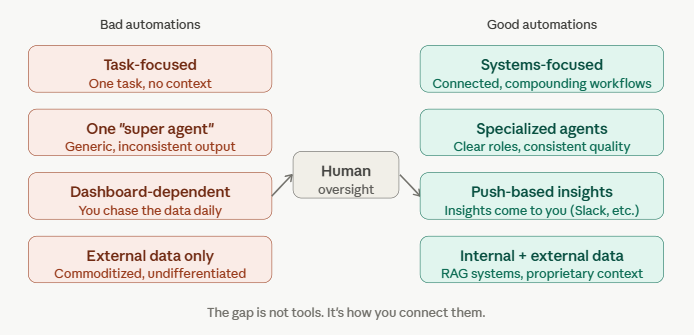
The most important step in n8n marketing automation is to design your system before you build it: know what data flows where, which agents have which roles, and where humans still need to be in the loop.
That last part matters.
Every practitioner in every session mentioned some version of it: keep humans in the review layer. Not because AI outputs are bad (they’ve gotten remarkably capable), but because brand voice, strategic judgment, and accuracy aren’t judgment calls you automate away. You automate the low-judgment work so your team can do more of the work that actually requires them.
Start with one workflow that connects two things that aren’t currently connected. Make it reliable. Then add the next layer. Compounding works, but only if the foundation holds.
If you want to learn how to build your own AI agent workflows, we’ve got 7 upcoming AI marketing courses (14 sessions) covering everything from content automation and SEO to ads, funnels, vibe coding apps, and AI agency readiness:
→ Content automation for B2B marketers with n8n
→ SEO automation with n8n and Claude Code
→ B2B buyer pain-led GTM strategy
→ B2B ad campaigns with Claude Code and n8n
→ Optimizing B2B content funnels with AI
→ Build apps as content with AI
→ AI-ready agencies: what clients see
Pick a session or get the full program and learn how to build your first real system that replaces manual work with leverage.
