
You and your competitors are publishing more content than ever. So is everyone else. From blog posts and LinkedIn carousels to email sequences, the internet is drowning in AI content that all sounds vaguely the same.
That flat, polished-to-death tone. The one that screams “I asked ChatGPT to write this.” It’s everywhere now, and it’s probably seen in your content, too.
Readers have grown tired.
This is what happens when your team is using personal ChatGPT accounts to churn out blog posts, social media captions, and email campaigns. Nobody’s following the same guidelines. Nobody’s feeding it your brand’s actual voice. Everyone’s just hitting “generate” and calling it done.
You’ve lost your brand voice. You need a custom GPT for marketing.
Table of contents
AI-generated content is everywhere
You can’t out-publish this flood. The volume war is already lost.
What you can do is out-sound it. Make your content immediately recognizable as yours. That’s the only moat left.
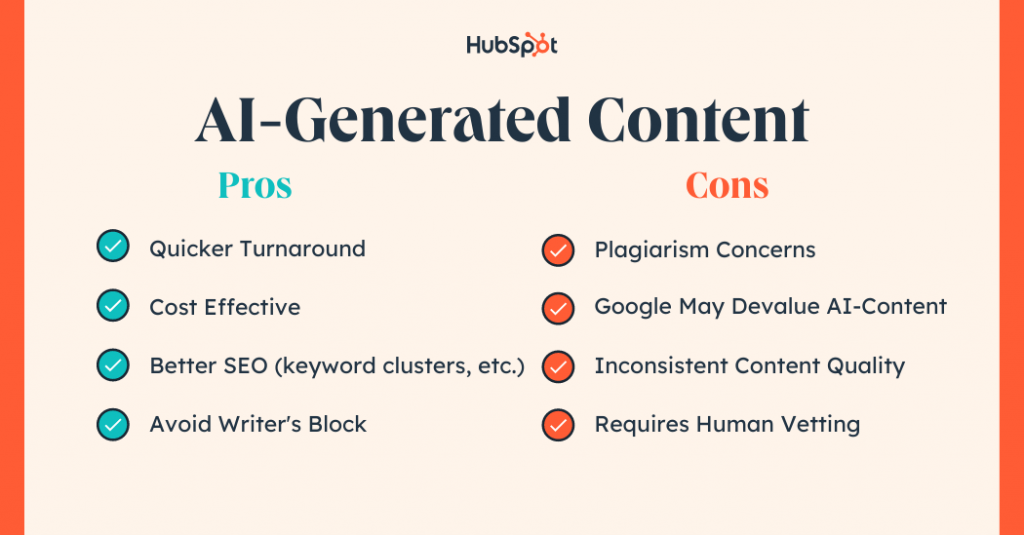
The problem runs deeper than most teams realize. Every time someone uses AI without guardrails, they’re chipping away at what makes your brand distinct.
In another blog, we’ve looked deeper into the problem of unmanaged AI content and how it undermines your brand voice.
Here, we’re going to focus on what you can do about it.
How to maintain brand voice with AI content
The solution isn’t banning AI. It’s giving your team a version that actually knows how you sound.
A custom GPT lets you bake your brand voice directly into the tool. Your tone guidelines. Your vocabulary. Your formatting preferences. Everything that makes your content recognizable gets programmed in, so every person on your team is working from the same playbook.
No more rogue ChatGPT accounts churning out generic fluff. No more playing editor to fix tone on every single draft. You build it once, and your voice stays consistent across everything.
Build your tone of voice doc into the AI tool itself
Your brand guidelines sit in a PDF somewhere (maybe a shared drive). Someone references them during onboarding, then never again.
Your brand guidelines need to live inside the tool your team actually uses, not in a PDF they’ll never open.
A custom GPT lets you embed your tone of voice directly into ChatGPT. Feed the AI brand guidelines once (your vocabulary, sentence structure, formatting rules, how you handle different content types), and it becomes the default for everyone who uses it.
Now, when someone needs to write an email at 4 PM on a Friday, there won’t be any compromise even with the use of AI. They type their prompt, and what comes back is on-brand by default.
This solves the real problem.
Your brand guidelines currently exist outside the workflow. A custom GPT for your business closes that gap. Your voice becomes automatic instead of theoretical, and the system enforces consistency almost effortlessly.
Once your voice lives inside the tool, you need systems to keep it consistent.
Set clear AI guardrails
AI content guardrails make sure the custom GPT supports your brand identity.
Train and control the model:
- Feed only approved brand content to your GPT.
- Embed your style guide, vocabulary, and formatting preferences.
- Include clear “do” vs. “don’t” examples, so the AI learns context, not just prompts.
Add operational checks inside the tool:
- Configure the model to flag or block off-brand phrasing automatically.
- Require internal review prompts for high-stakes or public-facing content.
- Limit generation of sensitive content to authorized workflows.
Support ethical and legal content creation:
- Program rules to prevent biased, discriminatory, or plagiarized content.
- Include data privacy and copyright constraints in the generation logic.
- Add reminders or disclaimers when AI is contributing to content.
Continuously refine the model:
- Monitor outputs for alignment with brand tone and accuracy.
- Collect feedback from users to retrain and improve responses.
- Update the AI with new content or revised style guides to keep it current.
Even with guardrails built into your business GPT, human review is still needed. Have someone review all public-facing AI content, and take a moment to fact-check prompts and confirm sources to make sure everything lines up.
For sensitive or high-stakes content, limit AI use to the authorized team members.
Align every team around a shared brand voice
Your brand voice matters not only to marketing. Every team writes something.
Product teams write feature descriptions and release notes. Sales crafts proposals and follow-ups. Customer support handles onboarding and help docs. Operations writes vendor emails and internal processes. HR sends offer letters and company updates.
Every function is now creating customer-facing content. And most of them are using AI to do it faster.
Without a shared system, each department invents its own version of your brand. Product sounds clinical. Sales sounds aggressive. Support sounds overly apologetic. Operations sounds like a legal document.
Your customers notice. They can’t figure out who you are because you sound like four different companies depending on where they interact with you.
The implications go beyond voice consistency. When everyone writes in the same voice, your brand becomes recognizable across every touchpoint, and trust builds faster.
Treat your custom GPT like infrastructure
Once every team is aligned on the need for a shared voice, you need the system to enforce it.
Custom GPTs for marketing teams aren’t just faster ways to write. They’re systems for enforcing consistency. Think of them like code repositories. You wouldn’t let developers push directly to production without version control and testing. But that’s exactly what most companies do with content.
A well-trained business GPT becomes the single source of truth for your brand voice.
Here’s what a custom GPT for marketing enables:
- Standardize content across every department. Product, sales, support, and marketing all pull from the same voice bank instead of improvising their own versions.
- Train new hires faster. The GPT acts as an always-on brand coach. They don’t need someone to explain what “conversational but authoritative” means. They see it in every output.
- Shrink editing cycles. First drafts land closer to final because the baseline is already right.
- Scale without sacrificing quality. More posts, more emails, more documentation don’t automatically mean worse writing.
- Maintain consistency during growth. Your voice stays stable instead of drifting with every new person who joins.
Maybe most importantly, institutional knowledge stops walking out the door. Brand decisions live in the system, not in someone’s head. When people leave, your voice doesn’t leave with them.
But even the best system fails if people don’t use it the same way. That’s where control and compliance come in.
Centralize AI use under your custom GPT
Building a tailored GPT for your business is the easy part. Keeping people from using personal AI tools is where most brands fail.
You can’t protect your brand voice if everyone’s prompting in different tools. The fix starts with control and ends with accountability.
Lock down access. Block all unauthorized AI tools on company networks and devices. ChatGPT, Claude, Gemini—if it’s not your company-specific GPT, IT should treat it like any unapproved software.
Make it a compliance issue. When someone uses an unapproved AI tool for company content, it’s a risk to brand integrity. Document every incident. Address it promptly. Escalate repeated violations.
It may sound strict. But consider the alternative. Every unauthorized AI interaction is a potential brand violation. Every rogue prompt erodes consistency.
You wouldn’t let employees store sensitive files in random cloud folders. The same logic applies here.
The policy should be crystal clear:
- All AI-assisted content creation must use the approved branded GPT
- Personal AI accounts are prohibited for work-related content
- Managers are responsible for ensuring team compliance
- Violations will result in disciplinary action
In short, if someone’s creating content for your brand, they use your brand’s GPT. No exceptions.
Best practices when using Custom GPTs for marketing
Building a business GPT is as much an organizational effort as it is a technical one. The details—how you train and maintain it—decide whether it becomes a lasting brand asset or another unused tool.
Here are best practices for how to train a custom GPT and use it.
Capture your brand voice in full context
Don’t stop at tone guidelines. Include real examples, “don’t” cases, and short explanations of why each choice matters. Context teaches the model judgment, not just rules.
Map prompts to use cases
List the most common writing scenarios—emails, blog intros, product updates—and create optimized prompt templates for each. This keeps quality high and reduces drift across teams.
Design for edge cases early
Feed the GPT tricky content: sensitive announcements, apology notes, technical releases. How it handles nuance will reveal where tone breaks down—and where training needs work.
Add a short feedback loop after each use (e.g., “Was this on-brand?”). Patterns in responses surface gaps faster than static QA reviews.
Version and document changes
Treat your business GPT like software. Keep a changelog for updates to tone rules, vocabulary, or sample data so teams always know what changed and why.
Train champions in every department
Nominate one or two brand GPT advocates per team. They keep usage consistent, gather input, and prevent old habits from creeping back in.
Audit quarterly for drift
Run a simple brand tone audit every few months. Compare new GPT outputs with past campaigns or known brand anchors to ensure your voice hasn’t subtly shifted.
Refresh data regularly
Update your training set with new content that performed well, recent campaigns, or revised positioning. A living model reflects a living brand.
Taking the time to build and maintain your brand’s GPT pays off over time.
Following these best practices isn’t a quick fix—implementing a Brand GPT takes coordination, patience, and ongoing attention. But understanding what it really takes makes the benefits that much clearer.
Brand GPT implementation reality check
Building a brand GPT takes planning, coordination, and patience. Success depends on creating a system that grows with your brand, not a one-off project.
Again, expect to invest time in training, refining, and embedding the tool into daily workflows—so it becomes a seamless part of how your teams create content.
The benefits of a custom GPT
While competitors rely on generic AI tools, your branded GPT gives you a long-term edge. Over time, it learns:
- Your industry nuances. How your market talks, what customers care about, and what language builds trust.
- Your customer language. The tone, phrasing, and expressions your audience naturally responds to.
- Your positioning. How you differentiate from competitors and what your brand stands for.
Custom GPT advantages:
- Stronger recognition. Your content sounds unmistakably yours, wherever it appears.
- Faster decisions. Prospects understand and trust you more quickly.
- Higher retention. Customers stay engaged because every message feels familiar and aligned.
Greater efficiency. Teams spend less time rewriting and more time creating.
Your voice becomes a strategic advantage—consistent, recognizable, and built to scale.
The hidden costs of brand voice inconsistency
You can’t fix what you don’t measure. And most teams never measure the cost of an inconsistent voice.
But the effects show up everywhere your brand interacts with people.
- Longer sales cycles. Prospects hesitate because they can’t quite read who you are.
- Higher churn. Customers lose connection when your tone shifts from one message to the next.
- More support tickets. When messaging is confusing, people ask questions that shouldn’t need asking.
- Slower hiring. An unclear employer voice makes it tough to attract the kind of people who’d thrive with you.
- Weaker partnerships. External partners struggle to describe your brand with confidence.
This is where brand decisions start showing up on the balance sheet. When your voice drifts, clarity disappears. And clarity is what decision-makers need to build trust and keep them coming back.
Take control or lose the voice entirely
You’ve already seen how quickly a brand voice starts to fade when teams write in different tools and follow their own rules.
A branded GPT keeps that voice anchored. It brings every writer under one system, makes tone consistency effortless, and keeps your brand language clear as you grow.
Getting your custom GPT to where you want it takes work, but the cost of leaving brand chaos unchecked is far greater.
The motivation is simple: protect the voice you’ve built and make it easier for your teams to use it well, every single day.
If you want a step-by-step approach to building and maintaining a business GPT that keeps your content on-brand, check out my course Standardizing On-Brand Content With a Custom Brand GPT at CXL Institute.
Related Posts
-

Branding is everything. But, do you really understand how hard it is to build a…
-

Expanding your reach and scaling your marketing strategy becomes a lot easier when every employee…
-
Do you get several messages a day from customers asking for a discount or coupon…
-

Discover insider secrets on how to successfully build a high-performing growth team. How can you…


.png?width=1300&height=680&name=ai-generated%20content%20pros%20and%20cons%20(3).png)