Most B2B marketers chase traffic like it’s the end goal: blogs, webinars, social content, the whole top-of-funnel engine.
You’ve got traffic. You’ve got leads.
Then someone asks about revenue, and suddenly the numbers don’t add up. That’s the real issue: traffic doesn’t convert. Bottom-of-funnel (BOFU) content does, and that’s where most teams fall short.
The result is lost sales.
Table of contents
Your funnel leaks where it should convert
We audited hundreds of B2B sites and saw the same pattern every time:
- Case studies written like PR fluff, not customer proof
- Comparison pages missing context, clarity, or evidence
- Documentation that informs but doesn’t sell
In these cases, buyers ready to convert bounce instead.
SEMrush found that comparison and review pages convert two to five times higher than general blog content. Yet they remain the most neglected part of most funnels.
Why your bottom-of-funnel content fails to scale
Programmatic SEO isn’t only for top-of-funnel blogs. Used well, it can turn bottom-of-funnel content into a conversion engine that’s scalable, structured, and designed to capture high-intent traffic.
Think of it like a product: it needs a clear framework, measurable outcomes, and ongoing iteration.
And don’t leave your TOFU assets hanging. Link them directly to BOFU content to guide buyers down the funnel and create a smoother path to revenue.
Say you publish a blog post titled “How to Improve Team Collaboration in Remote Work”—your top-of-funnel (TOFU) content—link naturally within it to your bottom-of-funnel (BOFU) assets, such as “Best Team Collaboration Software: Comparison Guide” or “See How [Your Product] Boosts Remote Productivity.”
The 5-step BOFU playbook that actually converts
Here are some BOFU content strategies you can try right away.
1. Target keywords with buying intent
Forget broad traffic plays and focus on search terms that signal a decision is near; queries like:
- “Best [X] for [Y]”;
- “[Competitor] vs [Your Brand]”;
- “Alternative to [Tool]”;
- “[Tool] pricing.”
These searches have strong buyer intent signals. And that’s where programmatic SEO starts driving real revenue.
2. Let data reveal your gaps
Conduct a BOFU audit to pinpoint opportunities:
- Which competitor comparisons are you missing in search rankings?
- What industries lack relevant case studies?
- Where does your documentation fail to drive conversions?
Teamwork, a project management software company, collaborated with GetUplift to optimize its product comparison page, resulting in a 54% increase in conversion rate.
Use the answers to shape your content roadmap and prioritize the ones that move buyers. You don’t need to aimlessly experiment and guess your strategy.
3. Build scalable templates that deliver
Create modular templates so you don’t have to start from scratch each time:
- Comparison pages: Side-by-side breakdowns, pros and cons, and social proof.
- Case studies: Industry-specific, outcome-first storytelling.
- Documentation: Crafted to convert, not just inform.
Structured templates speed up production and make results repeatable. This allows you to scale quality at the bottom of the funnel.
4. Design pages that prompt action
Every BOFU asset should guide the buyer toward a decision. Include:
- CTAs with benefit-first copy: Ditch generic “Learn More” buttons.
- Trust signals: Logos, proof points, and testimonials.
- Friction reducers: Trials, guarantees, or demos.
HubSpot increased conversions by 20% simply by optimizing BOFU CTAs, proving that small changes can drive big results.
5. Optimize relentlessly
Use schema to improve visibility in search results:
- Review schema for case studies
- FAQPage schema for comparison pages
- HowTo schema for documentation
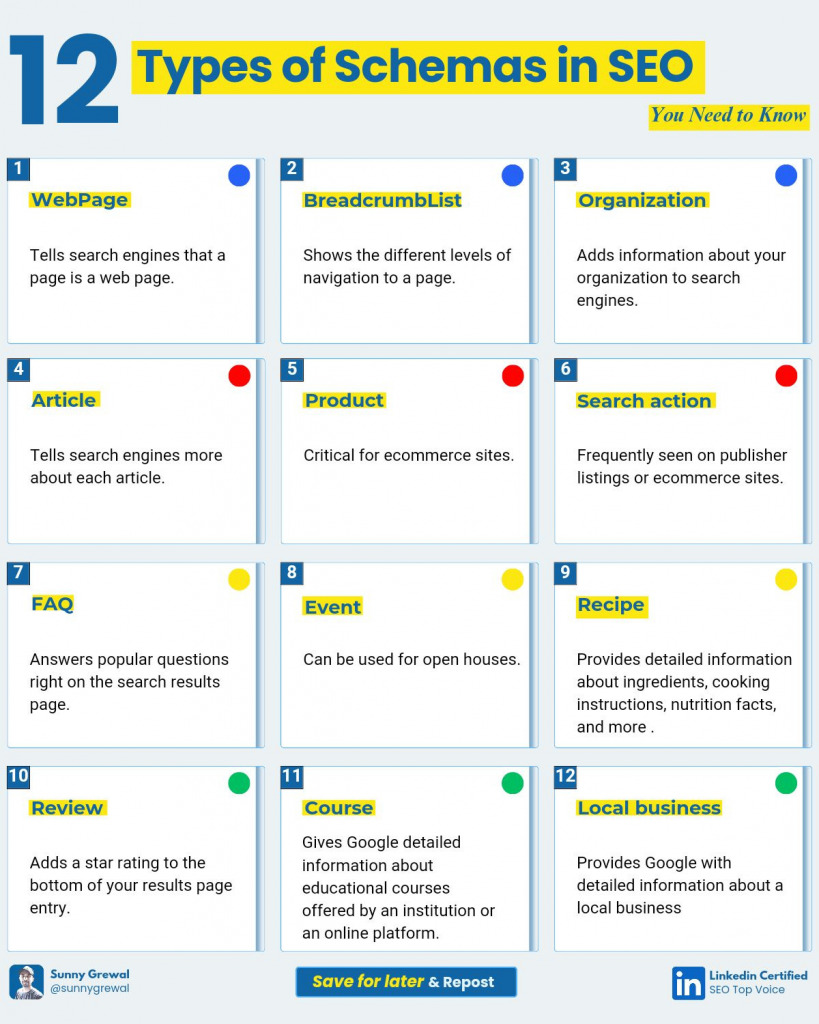
Not all schemas are created equal. From WebPage and Article to FAQ, Product, and Local Business, each type helps search engines understand your content and display it more prominently.
Track heatmaps, test CTA placement, and refresh your best-performing pages each month. And remember to connect TOFU content to BOFU assets. That’s how you create a guided path for buyers instead of just piling up content.
Related articles:
- The Secret to B2B SEO: Build Authoritative Content with Your SMEs
- How to Use Content Layering to Grow B2B Product Rankings
How Leaders Are Winning at BOFU
Top-performing companies don’t leave bottom-of-funnel content to chance. They treat it like a revenue engine. By structuring pages, testing CTAs, and linking strategically, they turn interested prospects into buyers faster. Here’s how some leaders are doing it:
HubSpot’s BOFU system:
- Templates for competitor pages
- Persona-based case studies
- Feature-specific landing pages
- Strategic internal linking
Results: 25% more conversions, 40% shorter sales cycles
Backlinko’s SaaS pivot:
- Closed competitor gaps
- Created case study templates
- Built a refresh system
- CTA testing by content type
Results: 40% conversion lift in six months
Turn your BOFU content into a sales engine and stop losing conversions
Systems will help you scale your content:
- Target high-intent queries.
- Use repeatable, high-performing templates.
- Personalize by persona and use case.
- Optimize visibility and user flow.
- Connect TOFU content to BOFU assets intentionally.
Programmatic SEO at the bottom of the funnel isn’t optional. It’s how traffic becomes revenue.
So if your bottom-of-funnel content isn’t driving sales, the issue isn’t traffic but strategy.
Learn from CXL’s Programmatic SEO course and discover the systematic approach top performers use to capture high-intent search traffic and turn it into a predictable pipeline with data-driven strategies.
Related Posts
-

Content marketing education is often saturated with surface-level advice and theoretical frameworks that rarely produce…
-
There’s a difference between creating content and creating value. Most B2B marketing teams are doing…
-
Most B2B SaaS teams are lighting cash on fire chasing SEO traffic that doesn’t convert.…
-
Do you know who is Ira Glass? You better. He's the host and producer of…