Brand Marketing vs. Product Marketing: What's the Difference and Which Should You Invest In?

Brand Marketing vs Product Marketing Article Header

In 2018, after two short years and $3 million raised in startup funds, recruitment AI company Ansaro shut down due to bad market fit. As it turned out, their AI interview notetaker didn’t address a huge pain point.

Muun found a market need but failed to compete with bigger names that provided customers with authoritative content and resources. Muun’s more well-known competitors had more features and better pricing.

Both companies suffered from a fatal lack of marketing. One neglected its positioning by failing to target the biggest pain point, and the other failed to build a brand that its customers could trust above the other major players. 

To succeed in today’s crowded market, you need to harmonize product marketing and brand marketing.

In this article, you’ll learn the difference between brand marketing and product marketing, and how to balance both to stand out above the crowd.
Keep reading

brand marketing header

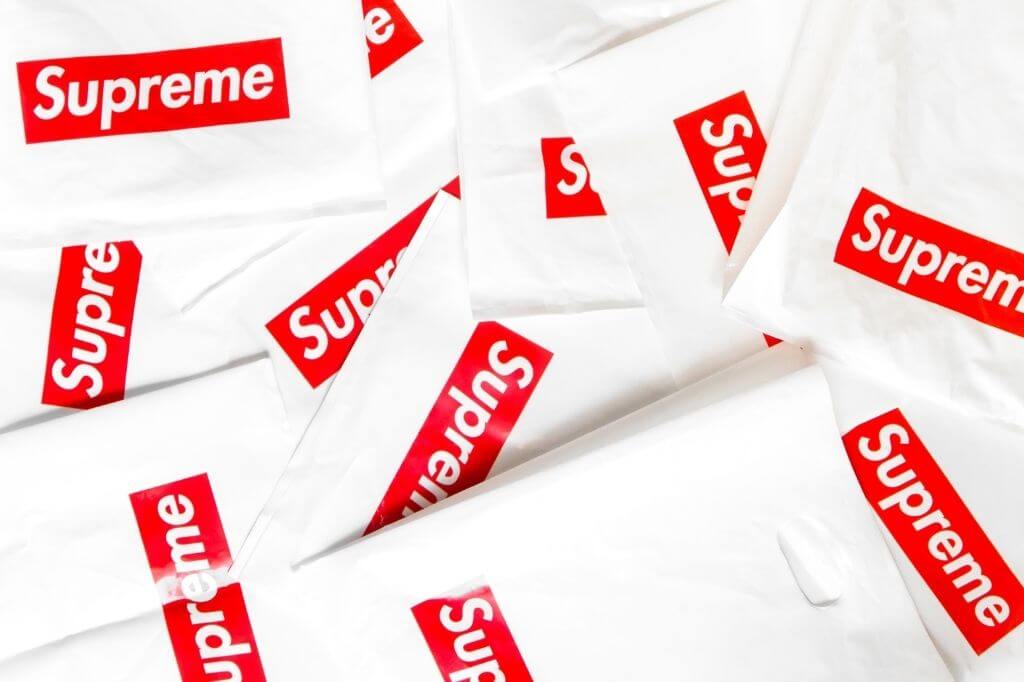
Jeff Bezos’s private space technology company Blue Origin was founded back in 2000. You’d think that no one could recreate a product so sophisticated and advanced as space rockets, right?

In 2002, Elon Musk created Space X. He was swiftly followed by Richard Branson and Virgin Galactic in 2004. 

With enough resources, products can always be copied. It’s tough to compete on product alone and you’re likely to see diminishing returns.

The solution: build a brand. The moat you create with brand is harder to replicate.

According to Edelman research, when that trust is built, 61% of people will become vocal advocates, 57% of people will purchase more products, and 43% will stay loyal. 

In this article, you’ll understand how to build a memorable brand that your customers want to buy from. Learn how to identify what your customers want from your brand, how to build momentum with content, and then explore some brands that excel at brand marketing.

Keep reading

User onboarding

There’s a popular user experience quote: “A user interface is like a joke. If you have to explain it, it’s not that good.” While clever, that statement is far from true.

User interfaces shouldn’t be complicated, but you can’t expect a new user to understand a new interface without any direction. Similarly, you can’t expect an existing user to understand an updated interface or a new feature without any help.

Keep reading

Apple Store

Perception isn’t always the same thing as reality, even when it comes to something as “objective” as your product’s value.

In fact, the perceived value of your product is fairly malleable. There are countless studies, as well as anecdotes, that support the notion that you can tweak small things to increase your product’s value perception.

Keep reading

Google Optimize

Update: Google has announced that Optimize and Optimize 360 will shut down on September 30, 2023. After that, all experiments will end and the tool will no longer be usable.

If you are looking for A/B testing alternatives to Google Optimize, check out our post on the best A/B testing tools.

Chances are, you’ve heard of Google Optimize by now. It’s Google’s solution for A/B testing and personalization. Over the years, it has become a popular solution for optimizers around the world who wanted a freemium tool to do A/B testing.

In this post, you will learn what you can really expect from this tool. How do you configure it properly? How do you run your first experiment? Let’s go into details:

Keep reading

“Surveys are the most dangerous research tool,” says Erika Hall, author of Just Enough Research. “If you write bad survey questions, you get bad data at scale with no chance of recovery.”

As attention spans get shorter, there’s growing pressure to make surveys lean. More and more people take surveys on their phones, and if the survey is too long, they drop out.

How can we make the survey short and still get the information we need? By writing better questions. This post separates the good questions from the bad—and shows you exactly how to write them for seven scenarios:

  1. Current customers;
  2. Engaged prospects;
  3. Recent converters;
  4. User testers;
  5. Churned customers;
  6. Site visitors;
  7. Content strategy.

Keep reading

79% of consumers trust an online review as much as they would a recommendation from a friend.

And 94% of shoppers state that just one bad review has convinced them not to buy from a company.

Reputation management is the practice of actively influencing what people think of your brand and what they see others saying about your company when they look online.

In this guide, we’ll discuss how to implement a brand reputation management strategy, use personal branding to develop a good reputation, and protect your company from developing a negative one.

Keep reading

Your relationships and reputation are intangible assets. 

Foster your personal brand, and you’ll build perceived value, trustworthiness, credibility, and reliability—ingredients that contribute to audience building and revenue. 

But to showcase your expertise and stand out, you need to have something interesting to say. And you need to say it consistently.

In this article, we’ll share tips for how to build your personal brand, grow your audience, and expand your online presence.

Keep reading

Total digital ad spending worldwide exceeds $450 billion. By 2024, that figure will rise to $645 billion.

This kind of spending means crowded ad platforms, which makes it more difficult to stand out. 

If your business has a five- or six-figure digital advertising budget, you can put more money behind campaigns. But this is exactly what has caused online ad prices to increase by an average of 45% on Google and Facebook (and up to 1000% in some sectors). 

If you don’t have those kinds of resources or would rather not continually increase spending, you need to think outside the box.

In this article, we’ll talk about some less saturated digital advertising strategies you can use to get ahead. We’ll also show you what it takes to create advertising that gets people to act.   

Keep reading

Categories

AI agents for B2B marketing

Automate content, SEO, and ads. Add buyer strategy, content funnels, apps, and AI readiness.

This program is designed to keep you up-to-date with B2B marketing and AI.

Check out the program