The AI search conversation has devolved into a mess of conflicting data points, breathless predictions, and cherry-picked statistics.
One report tells you to panic while another says nothing’s changed. Meanwhile, marketing buzz swings between “Google is dead” and “AI is overrated,” depending on which study dropped that week.
Three major studies from SEMrush, Ahrefs, and Datos & SparkToro dropped between April and October 2025. We’ve analyzed all three studies to find where they agree, where they diverge, and what you should do about it.
The data shows something surprising, and according to SEMrush, you have roughly three years before the platform shift truly takes hold. Here’s how to use them.
Table of contents
- Google isn’t dying. It’s just getting less generous.
- Page 1 rankings don’t matter to AI. Usefulness does.
- Informational SEO is getting cannibalized. And it’s not coming back.
- Your high-intent pages are actually safer than you think.
- Comparison Summary
- Your action plan
- AI search rewards depth, not rankings.
Google isn’t dying. It’s just getting less generous.
Much of the AI search panic follows a familiar pattern: new technology emerges, thought leaders declare the old system dead, and marketers scramble. But the behavioral data tells a different story.
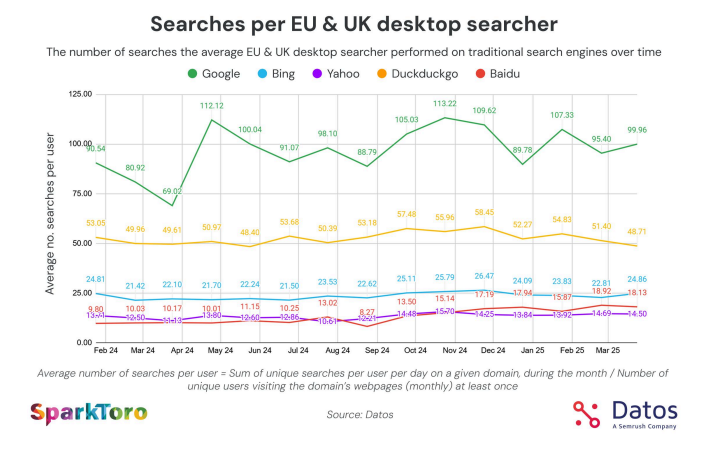
Datos and SparkToro tracked actual user behavior in Q1 2025. Google still held a 90.15% desktop user share in the U.S. and 92.49% in Europe. Total search volume grew throughout 2024, outpacing ChatGPT’s growth. This suggests reports of Google’s death are wildly exaggerated.
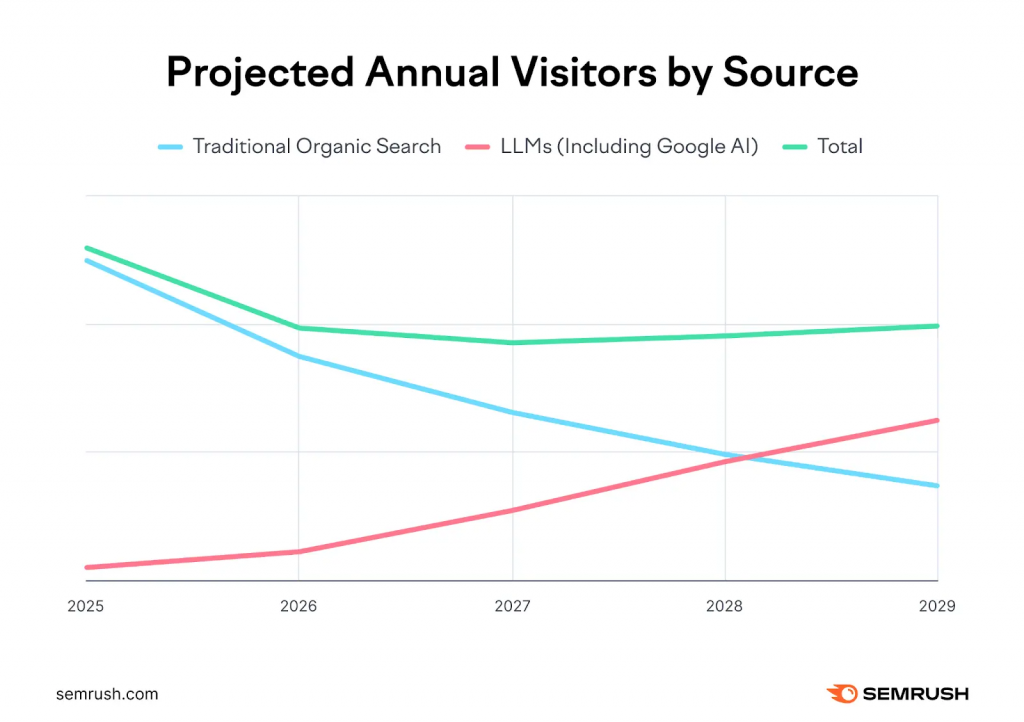
SEMrush’s predictive model, however, shows where this is heading. They project the “Traffic Flip” (when AI platforms send more qualified traffic than traditional search) will happen in 2028. That’s a roughly three-year runway to adapt your strategy before the platform shift truly takes off.
Now, here’s the part that flips the table. Visitors from AI platforms convert 4.4x higher than traditional search traffic. You might get fewer visitors, but they’re pre-qualified and ready to buy.
The math changes everything.
If you’re currently getting 10,000 monthly visitors from Google with a 2% conversion rate (200 conversions), and AI search cuts that traffic by 50% but converts at 8.8%, you’re still getting 220 conversions, from half the traffic.
So no, Google isn’t dying. It still controls access to most of the web. But the volume game is coming to an end, making way for conversion quality metrics to take center stage.
Page 1 rankings don’t matter to AI. Usefulness does.
The rule for 20 years was simple: no Page 1, no visibility. SEMrush’s data suggests that rule no longer holds.
90% of citations in ChatGPT come from pages that rank 21st or lower in traditional Google results, or pages that don’t rank at all. LLMs don’t simply scrape the top three results with the most authoritative domains. They hunt for the best answer.
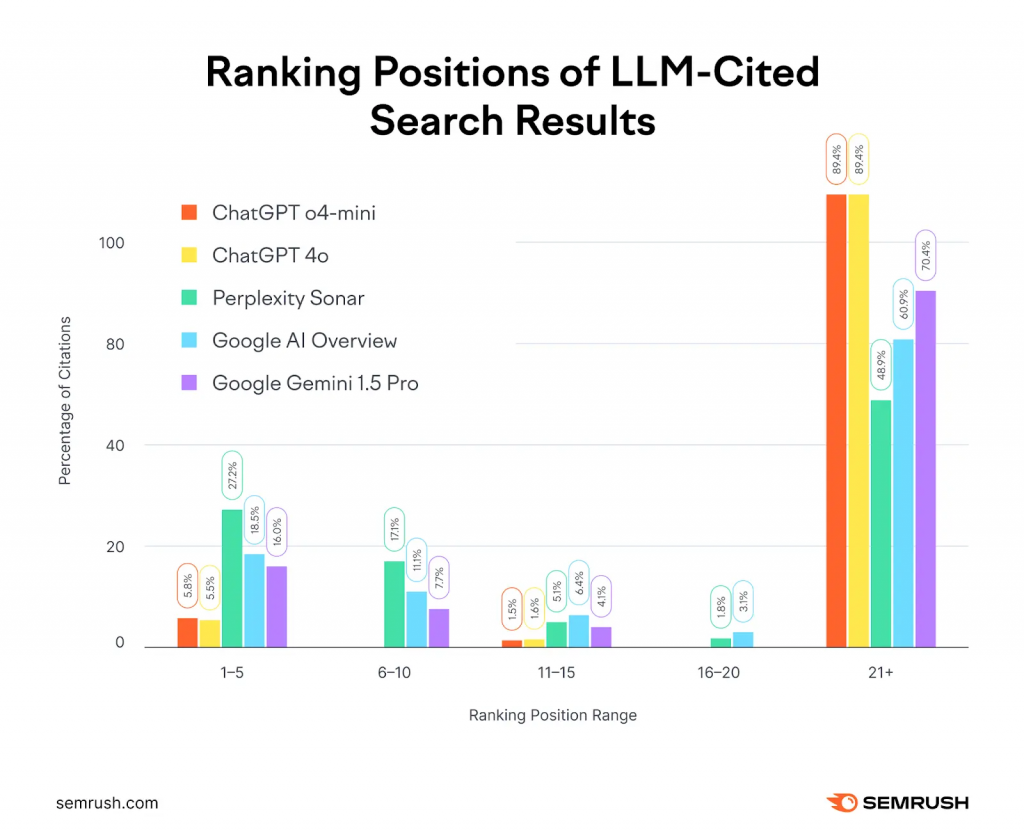
This is the democratization of search, and it’s already reshaping who gets visibility.
Both SEMrush and Ahrefs point to Reddit and Quora as leading sources in AI citations. LLMs aggressively prioritize human-generated answers and discussions over corporate blogs, which means real conversations are outperforming optimized content.

But here’s where it gets interesting. SEMrush released updated data in October 2025, and the dynamics had already changed:
- LinkedIn jumped to the #2 most-cited domain across LLMs. Professional perspectives and real experience are driving what surfaces.
- Quora dropped significantly. It overperformed in Google AI Overviews but fell behind in cross-LLM datasets, indicating that its strength was Google-specific.
- Research-grade sources rose. Wikipedia, NIH, arXiv, MDPI, and Microsoft climbed higher, revealing that LLMs pull from deeper, reference-style content.
- Traditional publishers faded. NYTimes, CNET, and Business Insider appeared in earlier data but didn’t make the October list.
The data changed while people were still analyzing the July report. This goes to show that what works today may not necessarily work tomorrow. The only advantage now is staying curious and updated, and adapting fast.
Search is no longer about rankings. It’s about usefulness. AI breaks the old hierarchy by ignoring Page 1 entirely and rewarding whoever delivers the clearest, most “human” answer.
Informational SEO is getting cannibalized. And it’s not coming back.
All three studies point to the same trend: AI Overviews are systematically displacing informational content.
Ahrefs analyzed 56 million AI Overviews and found that over 97% target informational queries. If your content answers “how to” or “what is,” AI will summarize it before anyone clicks.
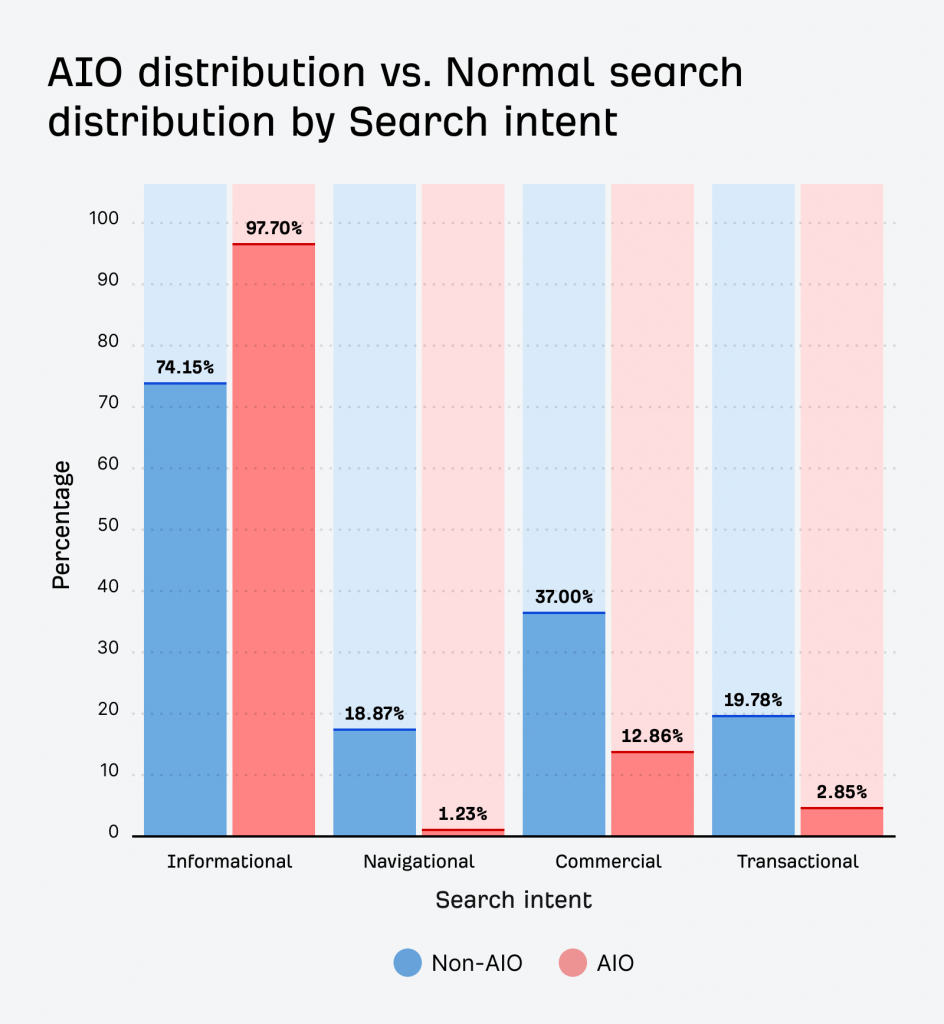
This isn’t theoretical traffic loss. It’s happening now.
Datos shows users are moving from passive consumption to action-based platforms. Stack Overflow used to be the go-to platform for developers’ searches. By 2025, GitHub surged ahead because developers want to build and try things, rather than just reading explanations.
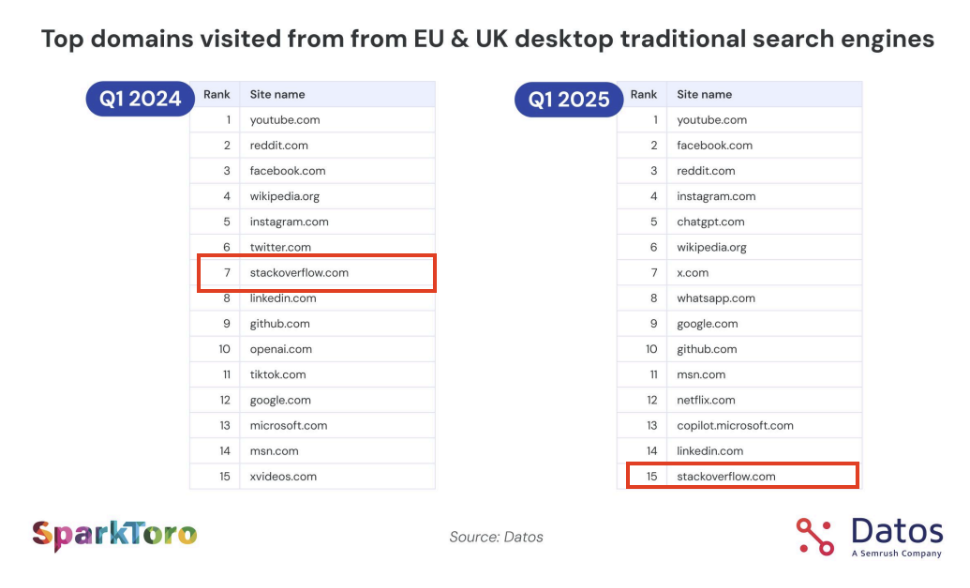
Takeaway: The internet is shifting from knowledge wikis to hands-on platforms.
YouTube is becoming the new search engine. Datos data shows it’s now the #1 external destination from Google Search in the U.S., growing faster than Reddit and AI tools.
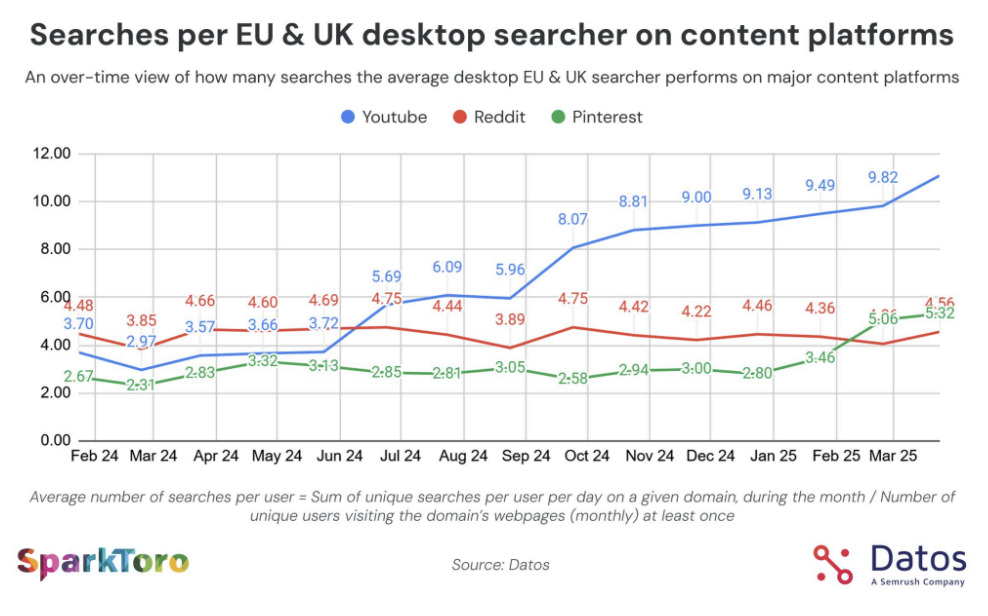
Takeaway: People prefer watching the answer instead of reading it.
The pattern is clear. Passive learning is losing relevance as users make a conscious shift from browsing information to actively solving problems.
Your high-intent pages are actually safer than you think.
If you’re worried AI might hurt your sales, the data says the opposite. Your revenue pages are actually safer than your blog.
At the end of the day, Google is still a business, and it protects the parts of search that generate revenue.
Ahrefs found a strong negative correlation between ad cost and AI presence. Around 70% of all AI Overviews appear on keywords with a Cost Per Click (CPC) under $1. High-CPC keywords (the ones that signal buying intent) are protected.
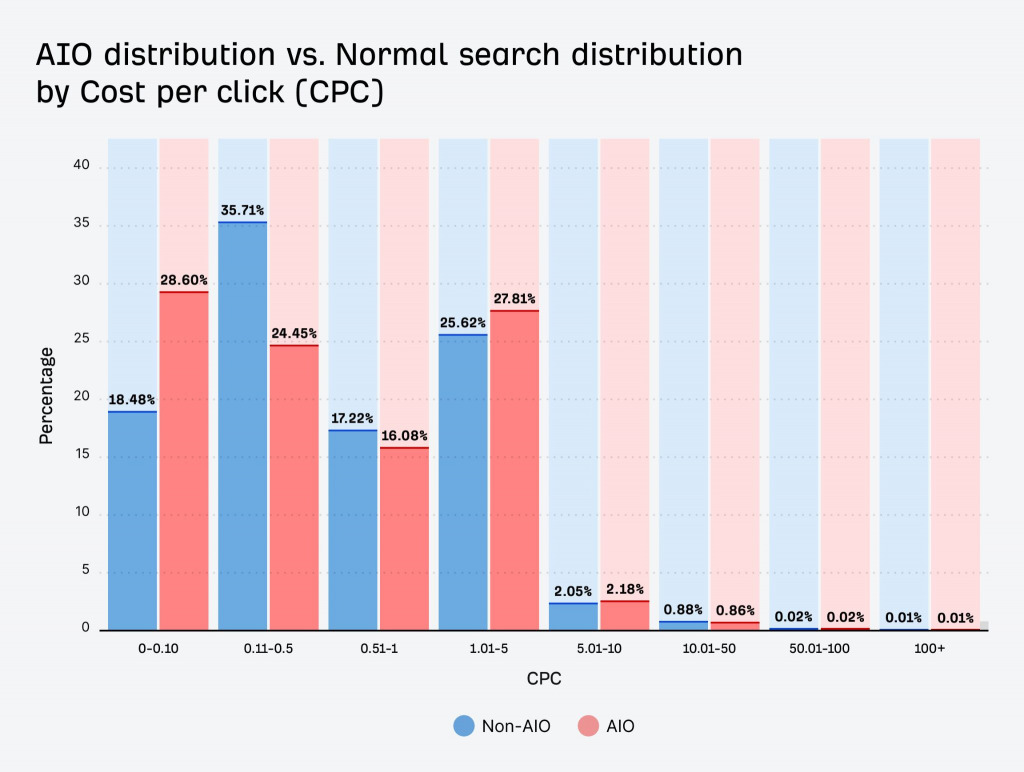
Think about it from Google’s perspective.
If they show an AI Overview on “best project management software” (CPC: $47), they kill the ad revenue from multiple advertisers bidding on that term. They won’t do it. The economics don’t work.
Datos confirms e-commerce platforms saw almost no traffic drop. Amazon consistently captures over 50% of all desktop e-commerce visits in the U.S. Buying habits haven’t changed. Users still want to compare options, read reviews, and make informed purchase decisions.
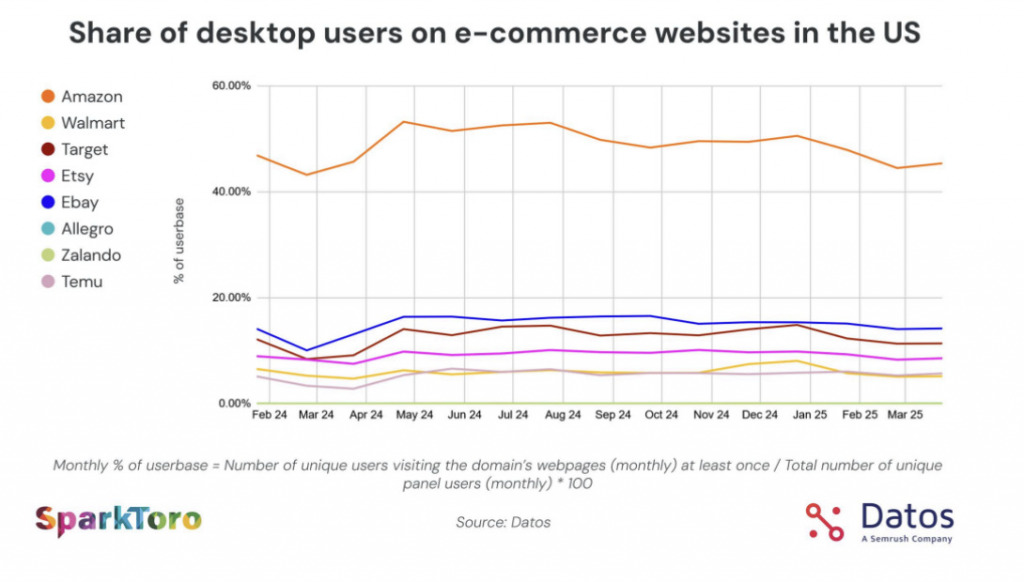
The takeaway: You can predict if AI will eat your traffic by looking at CPC. If your ads are expensive, Google won’t burn that revenue by showing a zero-click AI answer. Your high-intent pages are safe for now, so keep optimizing them.
Comparison Summary
| Key Insight | Semrush | Ahrefs | Datos / SparkToro |
|---|---|---|---|
| Is Google Dying? | Predicts AI search volume will overtake Google by 2028. | — | Google search volume grew in 2024 and still holds over 90% market share. |
| Who Does AI Trust? | 90% of citations come from pages ranked 21st or lower. | Reddit & Wikipedia are the primary sources powering AI answers. | YouTube is now the #1 destination users visit after searching on Google. |
| Less Clicks? | AI leads to fewer visitors but 4.4× higher conversion rates. | CTR drops significantly (up to −34.5%) when AI Overviews appear. | Overall organic click rate remained stable (~34%) despite AI launch. |
| What Is Safe? | Transactional queries show <2% AI Overview presence. | High-CPC keywords rarely trigger AI results. | E-commerce platforms like Amazon saw no traffic decline. |
| Behavior Shift | The internet is shifting from knowledge to execution. | AI appears when users need help doing, not just knowing. | GitHub, YouTube, and tools now outperform blogs & wikis. |
Your action plan
Rather than chasing every trend or getting paralyzed by conflicting data, focus on the fundamentals that all three studies agree on.
1. Create experience-based content that AI can’t replicate.
AI covers basic explanations. What it can’t replace is lived experience, original data, or case studies with screenshots and dollar amounts.
So, instead of a “What is AI search?” 2,000-word blog post, write “AI Search Playbook: 6 Experiments We Ran (and the Prompting Workflow that Lifted Organic Conversions +19%).” Include real results, screenshots of SERP/AI Overviews, your measurement setup, and a downloadable checklist (including prompt templates, a tracking sheet, and a decision tree).
In this example, AI can summarize AI search concepts, but it can’t replicate your experiments, benchmarks, or proprietary workflow.
2. Double down on product and category pages.
High-intent “buy” or “compare” keywords are rarely replaced by AI Overviews.
Filter your keyword list by CPC.
- If CPC is over $5, that’s a protected keyword, and AI likely won’t touch it. Optimize these pages for conversion.
- If CPC is under $0.50, AI will likely eat that traffic. Pivot those pages into a different format, like video or templates.
3. Shift from information to utility.
Users are bypassing explanation content and moving to tools that help them do the job. Audit your explanation pages: add a free calculator, downloadable template, or checklist at the top of the page.
An AI summary may be able to tell users what ROI is, but it can’t calculate it for them. Tools force a click.
4. Optimize for LLM citations through original research.
You don’t need a high Domain Authority to win in AI search. You need unique data points. SEMrush found 90% of pages cited by ChatGPT rank 21st or lower in Google. The common thread is that they created data; they didn’t curate it.
Run a survey, analyze your customer data, and interview five experts. Publish that data. LLMs cite the primary source of statistics. If you’re the source, you get the citation, even if you’re a small blog.
5. Experiment with YouTube for how-to content.
AI summarizes text-based guides on the search results page, but it can’t replace demonstrations.
Find your top 10 how-to blog posts that lost traffic. Then turn each into a YouTube video and embed it at the top of the article. This recaptures the intent that AI deflected, giving you presence in both search ecosystems (Google and YouTube).
AI search rewards depth, not rankings.
SEMrush showed us where things are heading. Ahrefs showed us where risk already exists. Datos showed us where users still are.
The studies don’t signal panic. They signal direction.
- The traffic flip is coming in 2028, but the quality of that traffic will be substantially higher;
- Google traffic remains relevant, but the volume game is ending;
- Page 1 rankings matter less than being the clearest, most useful answer;
- Informational SEO is getting cannibalized, but Google’s business model protects high-intent pages.
You have roughly three years to adapt. Use them to create content that delivers real value, rather than solely focusing on rankings.
- Create tools, instead of explanations;
- Publish original data, not curated summaries; and
- Show your work, rather than just your conclusions.
AI won’t kill your traffic. But it will expose who was actually delivering value all along.
→ Want to see how top B2B companies attract new audiences with content optimized for AI search citations? Check out our live course on B2B Content strategy for LLM visibility and changing search habits
→ Learn how to capture lost revenue and revive stalled accounts and attribute success accurately: Fix ABM measurement with funnel attribution and outcome modeling
→ Need help filling your funnel faster and cheaper than ever before? Save your seat and learn to improve ad efficiency with LinkedIn thought leader ads→Find out how to achieve +10% higher lead reply rates and a fixed CPL: Build an all-bound marketing enginethe CXL live cohort on Competitive AI Customer Research.
