How to Build Robust User Personas in Under a Month

Customer personas are often talked about in marketing and product design, but they’re almost never done well.
Customer personas are often talked about in marketing and product design, but they’re almost never done well.
In 1999, David Weinberger, a technologist and co-author of The Cluetrain Manifesto, wrote, “Personalization: the automatic tailoring of sites and messages to the individuals viewing them so that we can feel that somewhere there’s a piece of software that loves us for who we are.”
Two decades later, ironically, personalization is being used by companies attempting to make the online experience more human.
Personalization has grown rapidly since David’s statement. So much so that personalized experiences have become the norm, not an option. [Tweet it!]

Often, marketing creativity encounters technical limitations. A web page can load only so fast. UX is constrained by browsers. Cutting-edge solutions are accessible only to those with large budgets.
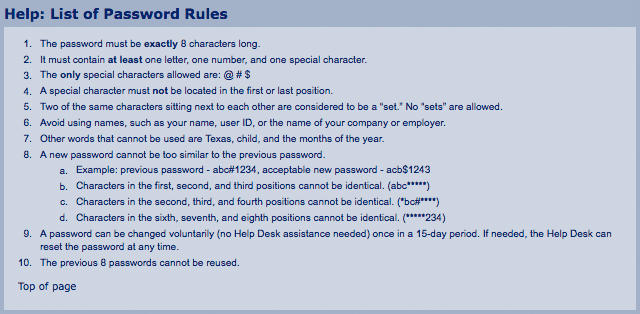
Nothing is more frustrating than filling out a badly designed form.
It’s a common experience, though. How many times have you entered a password only to be taken back with red ink proclaiming “Error! Password needs a capital letter, two numbers, a special character, and a quote from a Fetty Wap song.”
Humans are value-rating machines. Every day, all day long, we size up different decisions by appraising the value proposition of that action.
Should I buy this product? Sure, that’s the obvious one. But also:
When most marketers think about a value proposition, they’re thinking of the 10,000-foot-view—an overall company value proposition. This can make them feel powerless, especially in a large organization. The CEO controls the company value prop. What can you do?
Single Keyword Ad Groups (SKAGs) are ad groups in Google Ads with just one keyword in them. They help PPC marketers gain more control and a cleaner account structure.
Improving your Quality Score, increasing your click-through rate (CTR), reducing your ad spend without compromising results… These are all top-of-mind for PPC marketers using Google Ads.
We increased our CTR by 28.1%, improving our Quality Score from 5.56 to 7.95 (out of 10). How did we do it?
Through single keyword ad groups. While this tactic is not as widely-known as some others, smart marketers are using it to maximize their PPC spend. Here’s what you need to know to do it too.

You got people to sign up for your free SaaS trial—great! Trouble is, a significant percentage of users sign up for the trial, log in once, and never come back. You might as well have burned the money it took to acquire them.
The reality is, you’ll never retain all of your customers, and some of those reasons you can’t control:

Most product descriptions are either terrible or non-existent and often overlooked by brands in conversion optimization strategies. But for companies doing it right, writing excellent product descriptions is a great way to sprinkle brand personality in a place most people don’t expect.
In fact, some companies do product copy so well that it’s almost a feature of the product itself. But, is product page copy actually that important?

If 500 different people go to Amazon.com, they each a different version of the home page. How come? It’s personalized! It’s no secret why Amazon does that: content personalization makes money.

You have a landing page and plenty of traffic, but no one is clicking the submit button on your lead generation form. What gives?
If you’re like most people, your first instinct is to remove form fields to reduce friction. Sounds simple and, well, pretty obvious, right? If you want more people to complete your form, ask less of them. A best practice was born.