The Presenter’s Paradox: When More Is Actually Less Valuable

If I gave you a 750 page book and a 150 page book, which one would you guess to be the better (more valuable) book?
If I gave you a 750 page book and a 150 page book, which one would you guess to be the better (more valuable) book?

NPS isn’t the end-all be-all of customer data. But it does give you some insight into customer loyalty and satisfaction.
One of its greatest powers is segmenting customers into three parts: detractors, passives, and promoters. This lets you market to them in different ways. You can send targeted campaigns to promoters, try to convert passives into promoters, and try to solve the problems that detractors complain about.
But can you turn a detractor into a promoter?
Analytics is a field that moves fast.
Most changes have happened as a result of the transition from PC computing to mobile. Mobile is still a new space for analytics. Things are happening quickly, and everyone’s looking for the newer, better, and faster solution.

As optimizers and business owners, you’re striving to better understand your audience. Who visits your site? What are they looking for? What will make them convert to paying customers?
To help answer these questions, buyer modalities were created to help categorize visitors and their purchase behavior. The only problem?
Buyer modalities are meaningless and personality models as a whole are extremely difficult to apply to online marketing and optimization.

You finally decide to invest the time and money into building an email list. Tons of articles explain the importance of email marketing for your business, but you continue to fail at achieving results. Instead, you experience:
So what are all the other successful email marketers doing that you’re not? Are they smarter than you? Is there some secret tool everyone is keeping to themselves?
No.
Here’s the difference: You’re “spraying & praying” by sending the same emails to your entire email list.
And this needs to end.

Would you rather optimize the path your visitor will actually take or optimize the path you think he should take?
If you’d rather the former, then there’s something you need to know about linear funnels… they’re not a completely accurate representation of reality. The question is, what should you do about it and what is an accurate representation of reality?
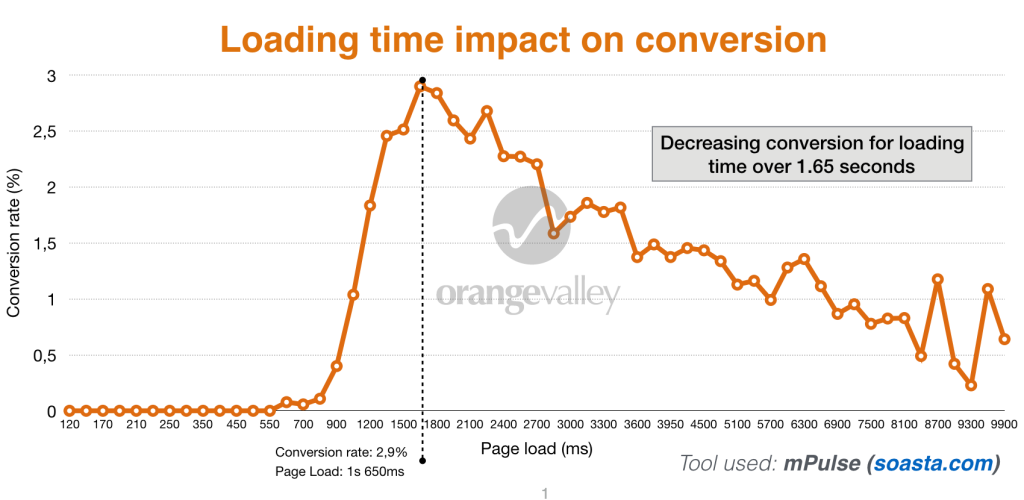
Both your visitor and Google prefer your site to be fast. Increasing site speed has been shown to increase conversion rates as well as increase SERP rankings, both resulting in more money for your business.
You’re doing A/B split testing to improve results. But A/B testing tools actually may slow down your site.

Raise your hand if you’ve ever made an impulse purchase.

Who are you more likely to trust to tell you the truth: a preschool teacher or a used car salesman? A firefighter or a magician? A child or a politician?
Some people are simply deemed more or less credible based on surface-level factors. The same is true for websites. [Tweet It!]
You have to know what makes your site the child or the politician.

Have you ever wished for a tap to call button on a mobile site? Or struggled to tap a tiny link? Have you ever wondered what would happen after you clicked a button on a site? Or, worse, wondered what to do next on a site?
If you answered yes to any of those questions, you’ve experienced a UX mistake. They’re more common than most people realize. Why? Perhaps it’s the curse of knowledge, ego or laziness. Whatever it is, it’s paramount that you learn to avoid (or fix) these mistakes.