Buyers no longer move through conventional stages in a neat, predictable order.
They’re smarter, more informed, and frankly, far less patient.
The old funnel (gated content, MQLs, nurture emails, and sales outreach) assumes that downloading an ebook signals intent.
It doesn’t.
You might generate a flood of “leads” chasing those metrics, but most aren’t anywhere near ready to buy.
This model no longer works. You want to focus on revenue-driving B2B demand generation strategies.
B2B marketing should measure progress by meaningful engagement and real buying signals.
Table of contents
The in-market vs. out-of-market reality
Research from The B2B Institute and Ehrenberg-Bass Institute reveals that only 3–5% of your total addressable market (TAM) is actively buying at any time. The remaining 95–97% aren’t ready to purchase yet. TAM is the entire pool of companies that could ever buy from you.
Your prospects exist in just two states:
- In-market: roughly 3% are actively evaluating solutions right now
- Not in-market: the other 97% will buy eventually, but they’re not ready today

This two-state reality changes how marketing works. You can’t rely on catching buyers only when they’re ready because by then, it’s often too late.
Other research shows that 80–90% of B2B buyers already have a shortlist of vendors in mind before they begin formal research, and 90% end up buying from that initial list (Bain & Company and Google, cited by Harvard Business Review).
Your job isn’t to force buyers through predefined stages. It’s to build mental availability with future buyers, so that when they enter the market, your company is already on their shortlist.
Achieving this means doing two things in parallel: capturing existing demand and generating future demand.
Demand capture vs. demand generation

Demand capture (targeting the active 3% buyers)
Demand capture focuses on the segment of your market actively looking for solutions. The goal is to appear where these buyers are searching and make it easy for them to choose you.
To make that happen, you have to have at least the basic demand capture tactics:
- Search advertising for solution-related keywords: Bidding on terms buyers use when they’re ready to purchase
- SEO for high-intent terms: Ranking for keywords that indicate strong buying intent
- Strong profiles on comparison sites: Presence on platforms like G2 or Capterra where buyers evaluate vendors
- Conversion rate optimization on your website: Removing friction so interested visitors can take action quickly
- Strategic direct outreach: Targeting prospects showing signals of active interest, such as demo requests or product inquiries
While essential, demand capture is highly competitive and expensive. Everyone is chasing the same small pool of prospects. The challenge is delivering messaging that stands out at the exact moment a buyer is ready to act.
Demand generation (building preference with 97%)
Demand generation targets the 97% of your market who aren’t actively looking yet. The goal is to build familiarity, trust, and preference so that when these prospects eventually enter the market, your company is top-of-mind.
Key demand generation tactics you can apply:
- LinkedIn content, organic and paid: Share insights, thought leadership, and practical guidance to stay visible in front of future buyers.
- Newsletters and other social platforms: Provide ongoing value that keeps your brand relevant over time.
- Podcasts and educational content: Offer deep-dive expertise that positions your company as a trusted resource.
- Speaking at industry events: Build credibility and create opportunities for relationships before buyers are actively evaluating vendors.
The long-term opportunity is in consistently nurturing these future buyers. Companies that focus too heavily on the 3% of active buyers miss the chance to build preference with the 97% who will drive the majority of revenue down the line.
Aligning marketing and sales around demand
In the old funnel mindset, marketing simply “hands off” MQLs to sales and hopes they convert. In a modern demand approach, both teams work together across the entire buying journey, building future demand while capturing current intent.
Marketing’s role is to create mental availability with future buyers (the 97%), while sales focuses on converting the 3% who are in-market now. When aligned on what really counts (revenue, not leads), marketing builds familiarity and trust that shorten sales cycles, increase win rates, and grow deal size.
Instead of chasing every form fill, sales engages only when buyers show clear intent signals, such as:
- Multiple visits to high-intent pages
- Attendance at webinars or product demos
- Deep content engagement
- Research activity on competitors or your brand
Tools like 6sense and Demandbase reveal when prospects are actually shopping (not just browsing your pricing page once). This way, sales can prioritize real opportunities while marketing keeps nurturing future buyers.
B2B demand generation strategy
Before launching campaigns, get your foundations right. A demand generation strategy only works when you know exactly who you’re trying to reach and what they care about.
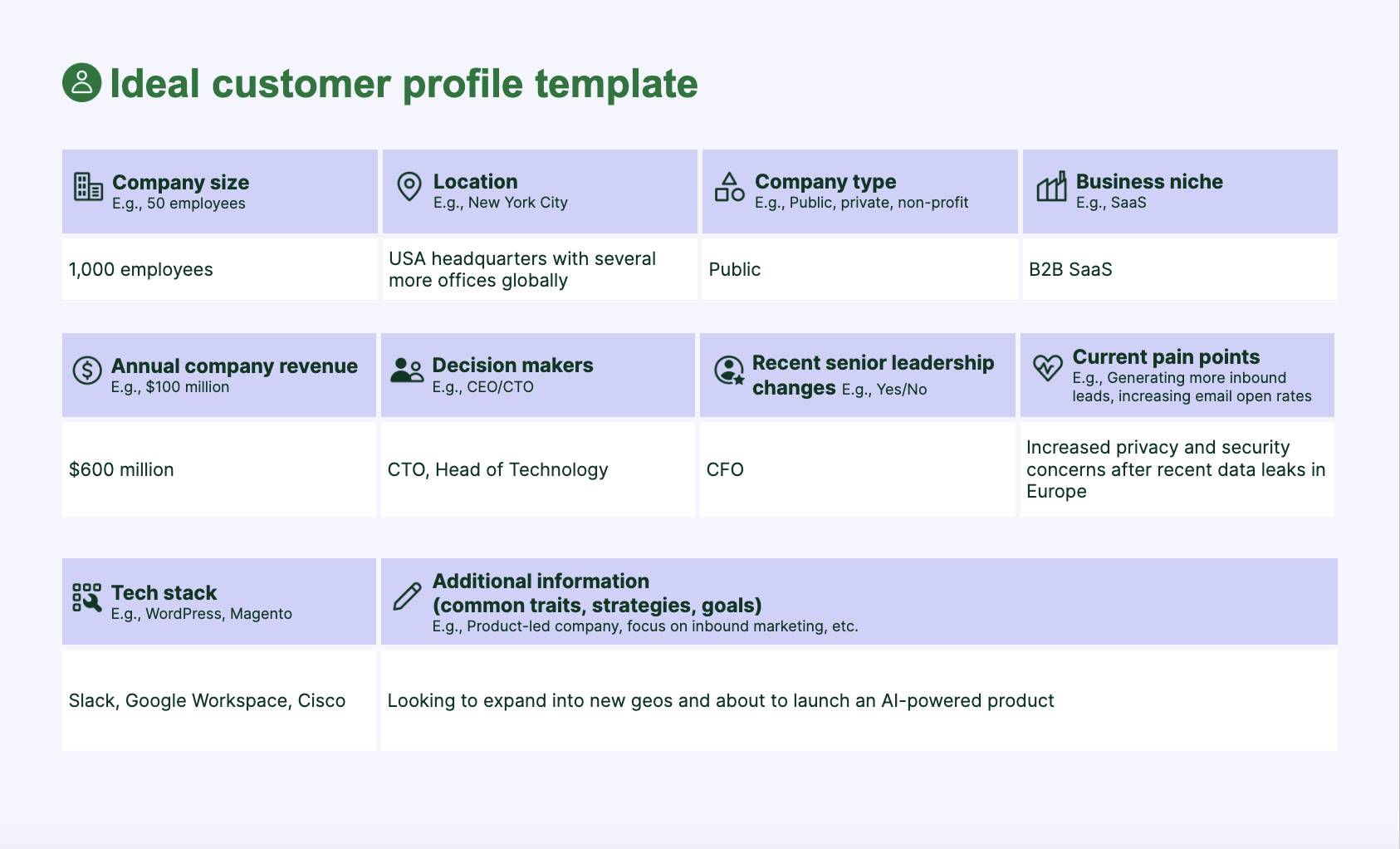
Define your ideal customer profile (ICP)
Go beyond broad firmographics. A useful ICP is specific and practical. Focus on:
- Most profitable clients: Those who contribute the highest revenue or lifetime value
- Clients you can serve best: Those whose needs align with your product or service strengths
- Clients you enjoy working with: Relationships that are efficient, collaborative, and sustainable
Map the details that shape how they buy: company size, industry, location, decision-makers, buying committees, current solutions in use, and typical objections or concerns. This clarity focuses your efforts and sharpens your messaging.

But here’s where most companies stop, and where the real opportunity begins. Once you have your core ICP, create micro-segments within it based on buying maturity and change readiness.
A fast-growing SaaS company replacing legacy tools needs different messaging than an established enterprise optimizing existing processes, even if they’re the same size and industry. Think Slack replacing email systems vs. Microsoft optimizing existing Office workflows.
Research deeply to understand them
Once you know who to target, learn how to reach and influence them:
- Qualitative interviews: Have 30–90-minute conversations with 5–10 people in each ICP segment to uncover real language, motivations, and pain points, surveys miss.
- Channel research: Identify where they spend time—LinkedIn, podcasts, newsletters, industry events, or niche communities—so your content appears where they already engage.
- Audience targeting tools: Use LinkedIn Sales Navigator for role-based targeting, Cognism for contact data, or Clay for account enrichment.
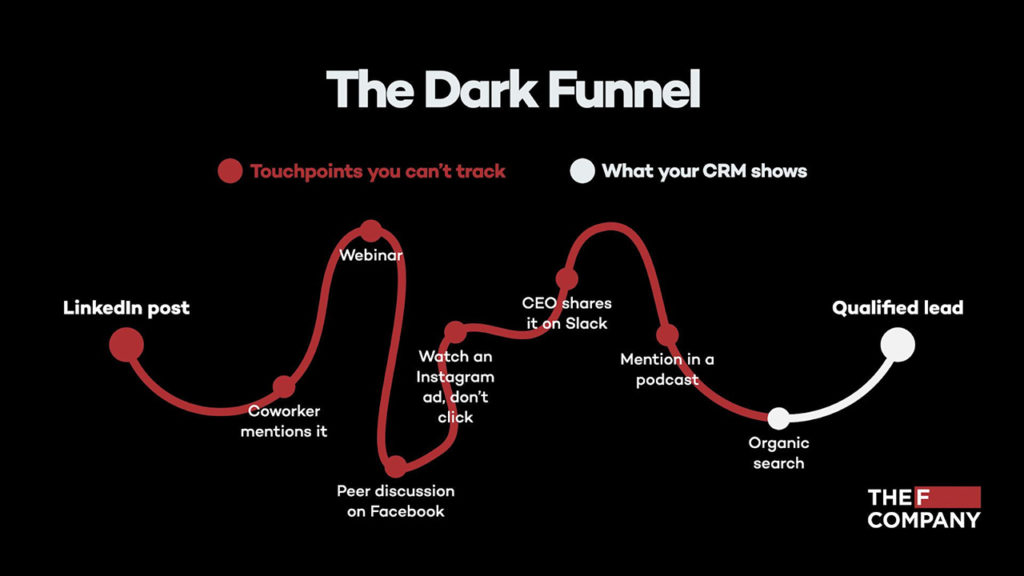
You might uncover out-of-sight touchpoints in your research—what’s often called the Dark Funnel. These are the untrackable interactions that shape buying decisions long before prospects show intent: seeing your LinkedIn posts, hearing about you on a podcast, or getting referred by peers months before they reach out.

These touchpoints happen across multiple channels and are invisible to traditional attribution models, so the impact of demand generation is often underestimated. Influencing these unseen moments helps build awareness and trust well before prospects enter the market.
Don’t just research what they consume—understand how they consume it. Group prospects by engagement patterns: heavy content consumers, event attendees, peer network participants. Each behavioral cohort reveals different preferences for how they want to be educated and influenced.
Create content that connects
Develop educational content that demonstrates expertise and solves problems your audience actively faces. Examples include:
- Case studies showing peers overcoming common challenges;
- short videos explaining tricky concepts;
- thought leadership articles addressing industry trends.
Mix formats to match consumption habits revealed in your research. Avoid pure promotion—content should build trust, educate, and guide prospects toward solutions.
Instead of creating isolated pieces of content, build content ecosystems. Develop 8-12 interconnected pieces around a single topic that prospects can consume in any order—blog posts, case studies, videos, templates, and tools. This creates multiple entry points into your expertise and keeps prospects engaged longer.
Use progressive disclosure: start with broad industry insights, then guide interested prospects toward more specific, solution-oriented content that demonstrates your unique approach.
You can also create comparison frameworks, evaluation guides, and implementation checklists that subtly highlight your advantages without directly attacking competitors.
Distribute consistently
Consistency isn’t just about frequency. You want strategic presence across multiple channels. Stagger content types (LinkedIn posts, newsletters, podcast snippets, event talks) so prospects encounter your brand repeatedly without feeling spammed. Use scheduling tools and repurpose content efficiently to maintain visibility over time.
The same core message needs different packaging for different channels. LinkedIn content should be visual and brief, newsletters allow for detailed analysis, podcasts work best with conversational insights, and events need interactive demonstrations.

It’s also strategic to do content repurposing across channels: popular LinkedIn topics become newsletter deep-dives, which become webinar presentations, which become case study material. This approach maximizes the value of each insight while maintaining consistent messaging across touchpoints.
Coordinate across buying committees
Enterprise B2B sales involve multiple stakeholders. The CFO, CTO, and end-users need different value propositions delivered through different channels at different times in their evaluation process. Map your content and outreach to address each role’s specific concerns and decision criteria.
Measure what matters
Measuring the impact of demand generation isn’t just about counting clicks or impressions. Success comes from understanding how your efforts influence awareness, engagement, and ultimately pipeline.
Self-reported attribution
Self-reported attribution means asking leads directly, “How did you hear about us?” Sales teams can also gather this insight during first calls. These qualitative responses reveal touchpoints that traditional tracking misses, showing the hidden influence of early-stage campaigns and brand-building efforts.
Beyond initial lead capture, regularly interview recent customers to dive deeper into their entire buying journey—which content pieces influenced them most, what made them trust your brand, and when they first became aware of you. This creates feedback loops that help you double down on the most effective tactics and improve your approach over time.
Content consumption metrics
Beyond clicks, track whether the right audience engages with your content. Use LinkedIn demographics, website analytics, or email engagement data to see company size, roles, industries, and locations. This ensures you’re reaching your ICP and that your messaging resonates with the people who matter.
Attention metrics
For paid campaigns, measure deeper engagement such as dwell time on content, video completion rates, and other meaningful interactions. These metrics indicate whether your content is holding attention and delivering value, not just generating superficial views.
Qualified pipeline
The ultimate measure of success is high-quality inbound leads—opportunities with the right company, role, and problem. Focus on leads that match your ICP and show genuine intent. Tracking pipeline impact ties demand generation directly to revenue, proving the ROI of your efforts.
Quick list of B2B marketing metrics to track
On top of the metrics already mentioned above, here are more meaningful B2B marketing metrics worth tracking to gauge the real impact of your demand efforts:
- Marketing-sourced pipeline and revenue: Value of deals influenced or sourced by marketing efforts.
- Opportunity creation rate: The percentage of engaged accounts that turn into sales opportunities.
- Sales cycle length: How long it takes for marketing-sourced leads to become closed-won deals.
- Win rate by source: The conversion rate of marketing-sourced opportunities versus other sources.
- Account engagement score: Aggregate engagement across buying committees within target accounts.
- Brand search volume: Changes in branded keyword searches showing increased market awareness.
- Content-assisted deals: Number of closed deals that engaged with specific content pieces along the journey.
- Customer acquisition cost (CAC): Total spend to acquire a new customer, including marketing and sales costs.
- Customer lifetime value (CLV): Long-term revenue from acquired customers, showing quality of acquisition.
Metrics like impressions, raw clicks, social likes, and page views can be attractive but rarely tie to revenue or pipeline impact.
These are considered vanity metrics—numbers that make performance look good without proving that marketing is driving meaningful business outcomes. They’re useful for directional insights, but they shouldn’t define success.
Build systems that scale
Create workflows that turn one piece of research or insight into 8-10 different content formats for different channels and stages of awareness. Use automation to maintain consistent touchpoints while preserving the human elements that build trust and relationships.
As you grow, assign team members to specific aspects: one person focused on thought leadership content, another on case study development, another on community engagement. This specialization improves quality while maintaining strategic coordination.
Deliver from demand to demo
Demand generation is a long-term game. You need to track trends across weeks and months, not obsess over daily performance. But don’t forget to celebrate small wins along the way—improved engagement from a target segment, a spike in brand searches, or prospects finally engaging with your content after months of silence. These moments matter, even while you maintain focus on long-term ROI.
All the long-term effort you put into demand generation ultimately gets rewarded when those prospects finally enter the market and start actively evaluating vendors.
Harvard Business Review research reveals that 72% of buyers reported that the vendors they ultimately chose outperformed the rest in demos and trials. Your demand generation efforts create the foundation, but you also need to deliver at critical touchpoints like demos and trials. All that brand building won’t save a poor demo.
If you want to dive deeper into building a comprehensive B2B marketing strategy that connects demand generation to revenue outcomes, check out CXL’s Fix Your B2B Marketing Playbook course.ying process begins.
Stop chasing the 3% who are actively buying today. Start building relationships with the 97% who will be buying tomorrow.
Related Posts
-

Listen up, because I'm only going to say this once: If you're not using AI…
-
Sales intelligence platform Cognism cut their lead generation efforts by 90% in 2021. Then they…
-
Bootstrapped startup Omnisend carved out a $19 million niche in an already saturated vertical. How…
-

Are you in B2B / lead gen? Qualifying leads a challenge? There's a new (non-enterprise)…