Scarcity is one of the oldest principles in persuasion: when access to something feels limited, people tend to place more value on the opportunity and make decisions faster.
In marketing, that might mean low stock, a limited release, fixed capacity, or a genuine deadline. Recent research still links perceived scarcity with greater urgency, but scarcity can also backfire when the constraint feels artificial or misleading.
This article explains how scarcity works, when to use it, and 16 current examples of brands putting it into practice.
TL;DR
- Scarcity makes availability part of the decision. The constraint can be quantity, time, access, or availability.
- Scarcity and urgency are related but different. Scarcity is the constraint; urgency is the pressure it creates to act.
- The constraint needs to be credible. Fake stock limits and endlessly resetting countdowns can damage trust.
- Scarcity works best when the product already has value. It should strengthen a reason to buy, not replace one.
- Common examples include low-stock warnings, limited editions, seasonal products, ticket limits, expiring prices, and fixed booking windows.
Table of contents
What is the scarcity principle?
The scarcity principle is the phenomenon where, when a product or service is limited in availability (or perceived as being limited), it increases its value and becomes more attractive.
This makes sense in a traditional economic way, where less supply and more demand drive up prices. It also makes sense on an intuitive level. When mom said you couldn’t have a toy, didn’t you want it more?
The principle is primarily discussed in terms of natural resources. It’s defined as a situation where demand for a natural resource exceeds supply, leading to a decline in available resources. Their scarcity usually implies that the current use is unsustainable in the long term.
Scarcity examples typically involve non-renewable resources, such as oil, precious metals, and helium. But renewable resources can be scarce too if they’re being consumed faster than they can replenish (e.g. over-fishing, excess use of fresh water).
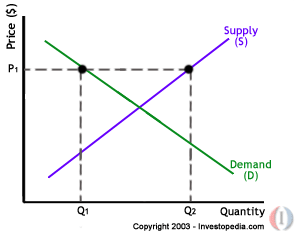
That makes scarcity a psychological trigger as well as an availability signal. But why does it change how people make decisions?
Why product scarcity works (FOMO, playing hard to get, and more)
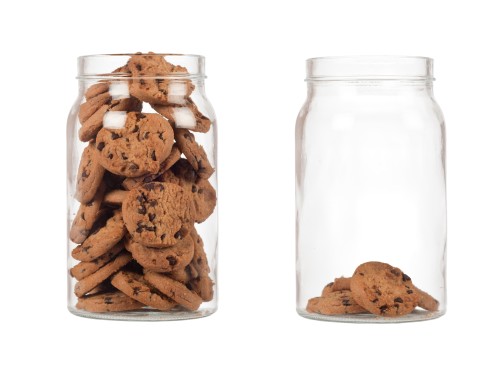
One of the most well-known scarcity studies was conducted by Stephen Worchel in 1975. He and his colleagues offered subjects cookies in a jar. One jar had 10 cookies, and the other jar had two.
Subjects preferred the cookies from the jar with two in it, even though the cookies in both jars were identical.
Since then, research has continued to support the effect of scarcity in marketing.
For example, a research paper notes:
When something is rare, it’s alluring—true whether you’re talking about precious gemstones or a pristine edition of the first issue of Action Comics (which introduced Superman). And psychologists have long known that you can make a consumer good more desirable by making it appear rare.
Why is this? Much of it comes from the fear of missing out (FOMO).
A paper describes FOMO as decision-making shaped by anticipated regret and by what others in a social peer group are doing.
That connection is also supported by more recent research. A 2026 study published in Behavioral Sciences found that perceived scarcity had a strong and statistically significant effect on urgency, while urgency in turn increased FOMO. The researchers found that scarcity affected FOMO indirectly through this sense of urgency.
Scarcity marketing is heavily predicated on the idea that other people desire the product or service and that, to avoid missing out, customers need to act now.
It’s not always a simple function of FOMO, however. People also seem to want things more when access to them is restricted.
For example, there was a study in which women were shown a photograph of a potential romantic partner. Half were told he was single, and the other half were told he was in a relationship.
The results: 59% said they would be interested in pursuing the single man, but that number jumped to 90% when they thought he was taken.
If something is rare or harder to obtain, it can become more desirable.
Even Aristotle noted the pleasure of rarity, remarking:
that is why what comes to us only at long intervals is pleasant, whether it be a person or a thing; for it is a change from what we had before, and, besides, what comes only at long intervals has the value of rarity.
Changingminds.org puts it well:
If something is not scarce, then it is not desired or valued that much. Praises from a teacher who seldom praises are valued more than praises from a teacher who is liberal with his or her praise.
Scarcity is a non-linear process. As something becomes more scarce or less scarce, the desire for it does not change in a proportionate way.
If everything is scarce, then scarcity itself lacks its value and people become too used to it. Studies of retail sales have shown that if more than about 30% of goods have “sale” stickers on them, the effectiveness of this method decreases.
Human behavior is such that people are more likely to act when they believe an opportunity is genuinely limited, whether because stock is running out or an offer will soon expire. If customers believe they may miss out, scarcity can give them a reason to make the decision sooner.
When the scarcity principle works (and when it doesn’t)
Scarcity works best when people believe the constraint is real.
A 2026 Journal of Retailing study found that supply-driven quantity limits can backfire when the amount available feels unexpectedly low. In those cases, perceived retailer sincerity fell, which also reduced purchase intention.
Time pressure alone isn’t enough either. Research published on Gen Z consumers found that product relevance and personal interest were stronger drivers of purchase behavior than a limited timeframe by itself across four online product categories.
So scarcity should strengthen an offer customers already want. It works best when there’s an obvious reason for the constraint:
- Stock is genuinely running low;
- An event has fixed capacity;
- A product is being discontinued;
- A seasonal product is available temporarily;
- A promotional price has a real end date;
- Access is restricted to a defined release or booking window.
If the scarcity looks manufactured, repeating it more aggressively is unlikely to fix the problem.
What are examples of scarcity in marketing?
There are generally two types of product scarcity you can use to increase sales:
- Quantity-related scarcity (e.g., “Two seats left at this price!”);
- Time-related scarcity (e.g., “Last day to buy!”).
The examples below show how 16 brands use those principles in practice, from low-stock warnings and product discontinuations to limited booking windows and expiring offers.
1. Booking.com
Booking.com does many things well, one of them being scarcity. Take a look at a search result for hotels in Dublin:
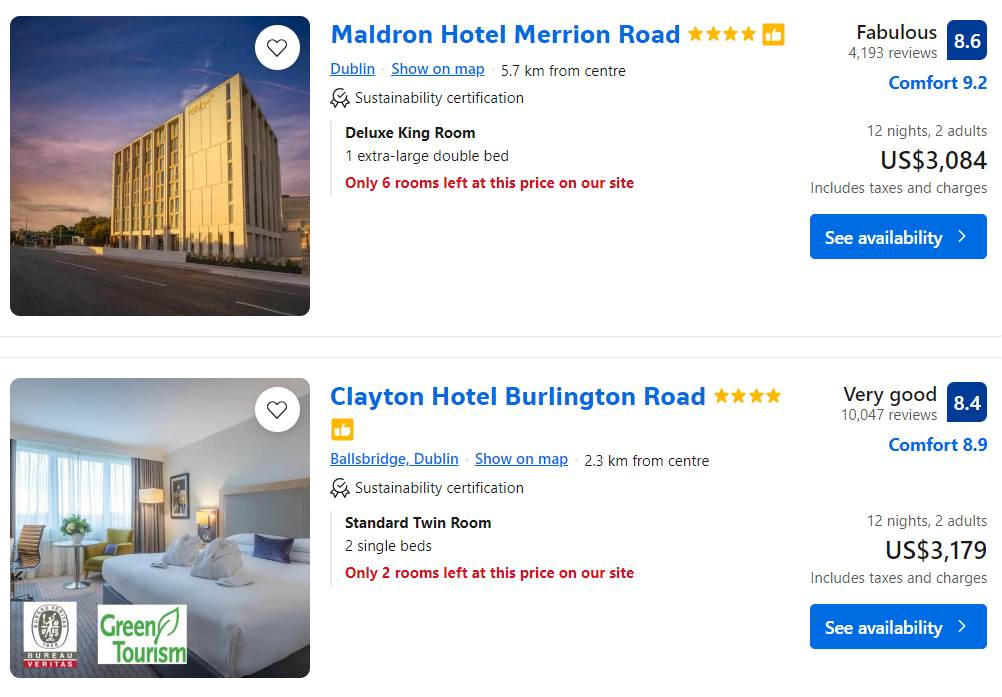
Now, there are two scarcity triggers at play here:
- Green Tourism, a sustainability certification that makes it more appealing to eco-conscious travelers.
- “Only 6 rooms left at this price on our site,” which suggests time is running out to book.
There’s a real limit to hotel rooms as there’s a certain quantity available. Thumbs up to booking.com for displaying this information accurately and persuasively with a clear call to action.
2. Amazon.com
You have, of course, shopped on Amazon. And you’ve noticed the warning of “only X left in stock”:
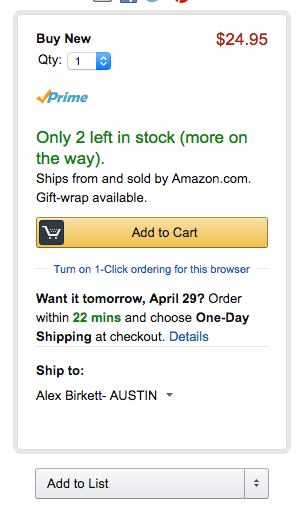
This, in combination with the urgency play for shipping (“Want it tomorrow?”), is an effective way of getting customers to take action and avoid the loss of the products they need.
3. Chubbies Shorts
Chubbies has long made scarcity part of its playful marketing.
Here’s an example of a promotion they used to run, Fourth of Julyber:
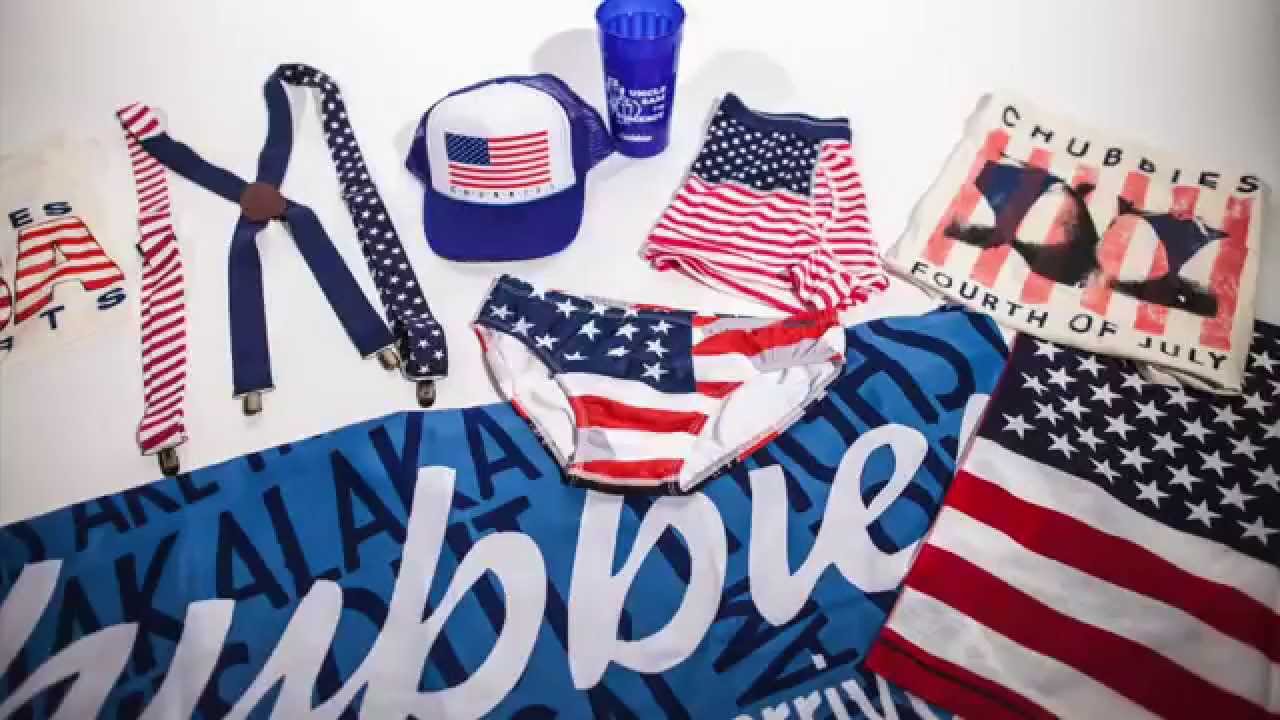
Basically, they released a “free gift” every hour with a purchase. This free gift was for a limited time – available only on that day, at that specific hour. So, if you want an American Flag speedo, act quickly. Chubbies also does an excellent time-based scarcity play here:
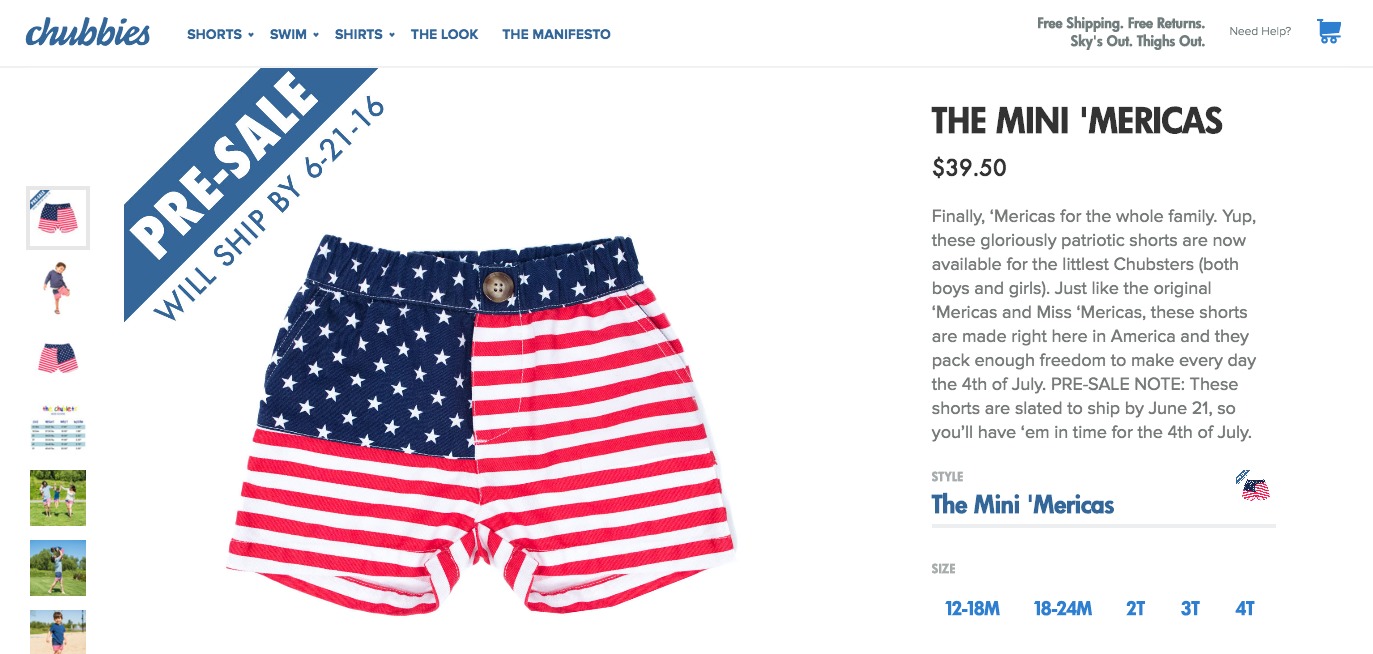
Chubbies still uses scarcity directly on its product pages today.
Current products can display messages such as “ONLY A FEW UNITS LEFT IN STOCK” followed by “Order soon – this item sells out quickly.”
The style has changed, but the principle is the same: limited availability gives shoppers a reason to make the decision now.
4. Starbucks
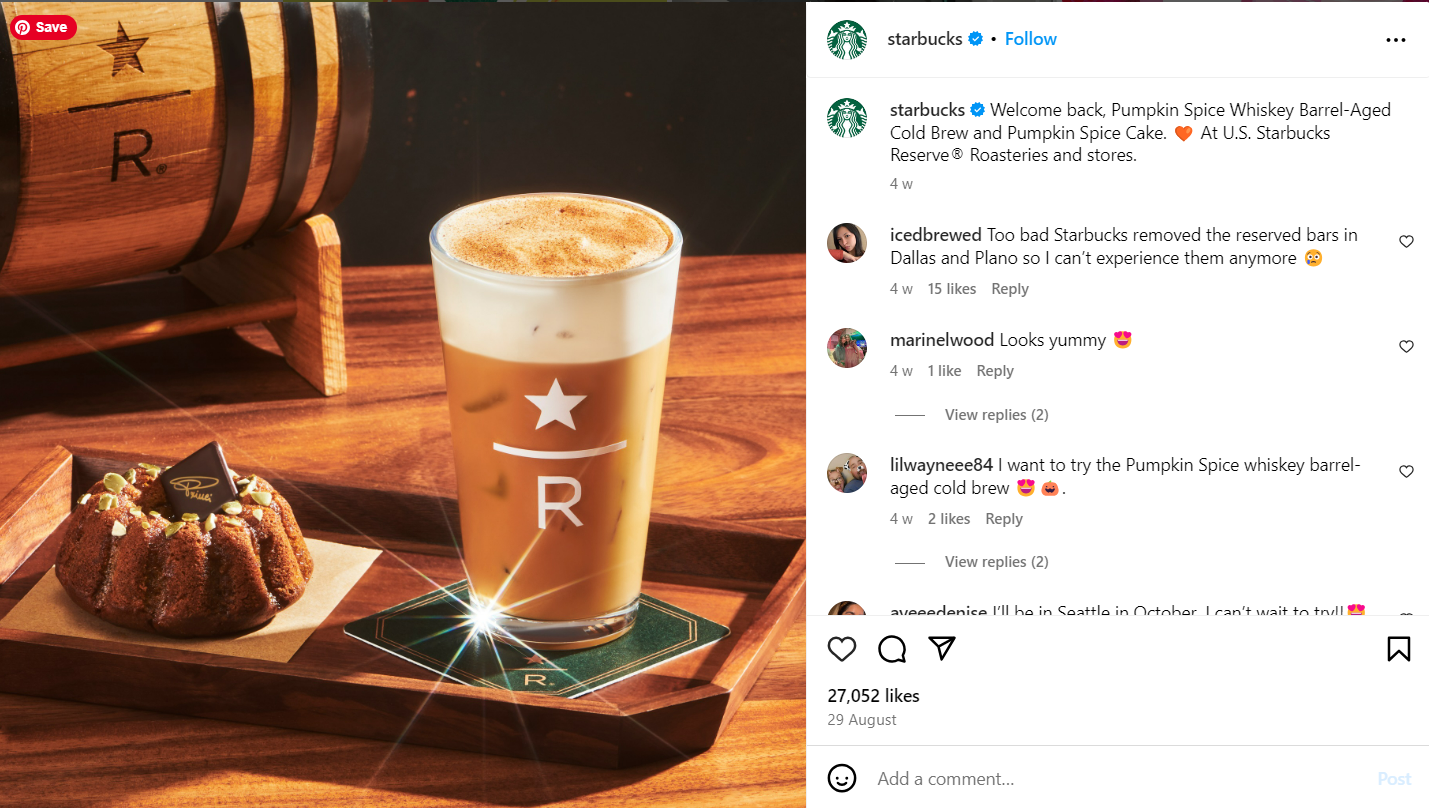
Starbucks is legendary when it comes to product scarcity. Enter the Pumpkin Spice range. From the Pumpkin Spice Latte to the Pumpkin Cream Cold Brew, coffee lovers nationwide eagerly await these specialty drinks, which are only available during the Fall.
There doesn’t need to be a “three left” warning for scarcity to work. Customers know these products will disappear again when the season ends, which gives the range a built-in deadline.
5. Lego
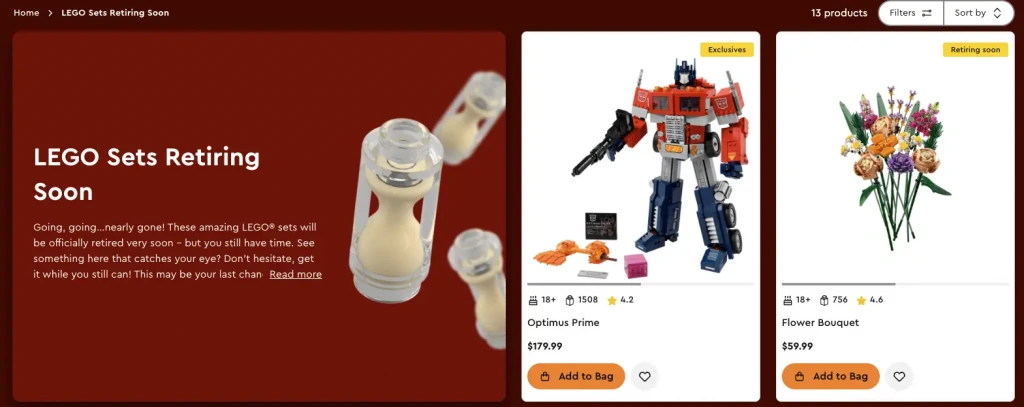
LEGO makes product scarcity particularly explicit with its “Sets Retiring Soon” collection.
Products on the page are labelled “Retiring soon,” while LEGO tells shoppers that the sets will soon be discontinued and that it may be their last chance to buy them.
This is a strong example because the scarcity is real. Once LEGO retires a set, production stops. Someone who wants it at the normal retail price has a genuine reason not to wait indefinitely.
6. Ralph Lauren
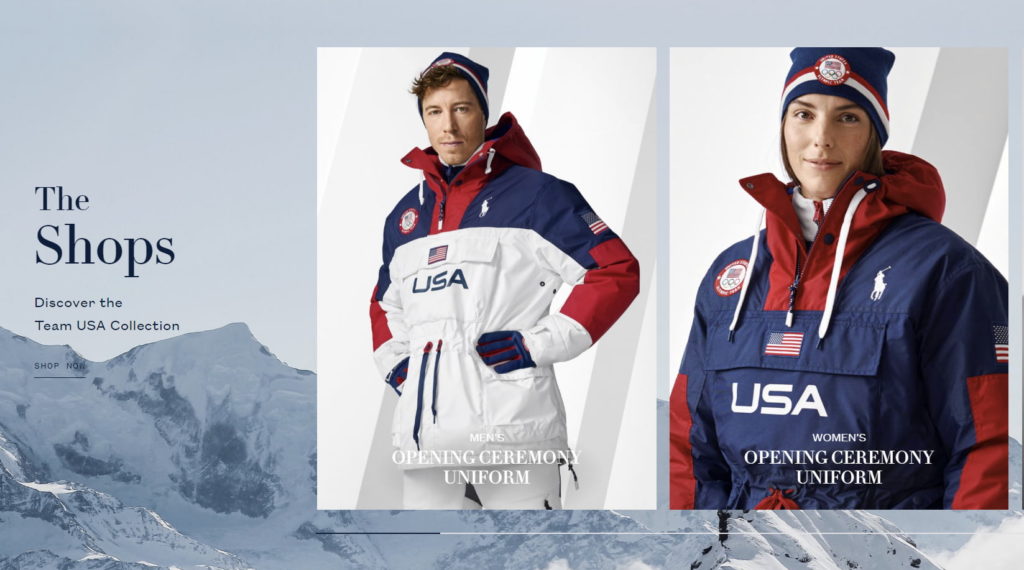
Ralph Lauren uses availability alongside its special-edition Team USA collections.
For example, its Team USA Mesh Pullover is described as a special-edition piece, while multiple sizes on the current product page are unavailable. Shoppers can instead select “Notify Me” to hear if the product becomes available again.
Scarcity doesn’t always need a countdown or a low-stock number. Showing unavailable options alongside the remaining inventory can make it clear that availability isn’t guaranteed.
7. Bumble
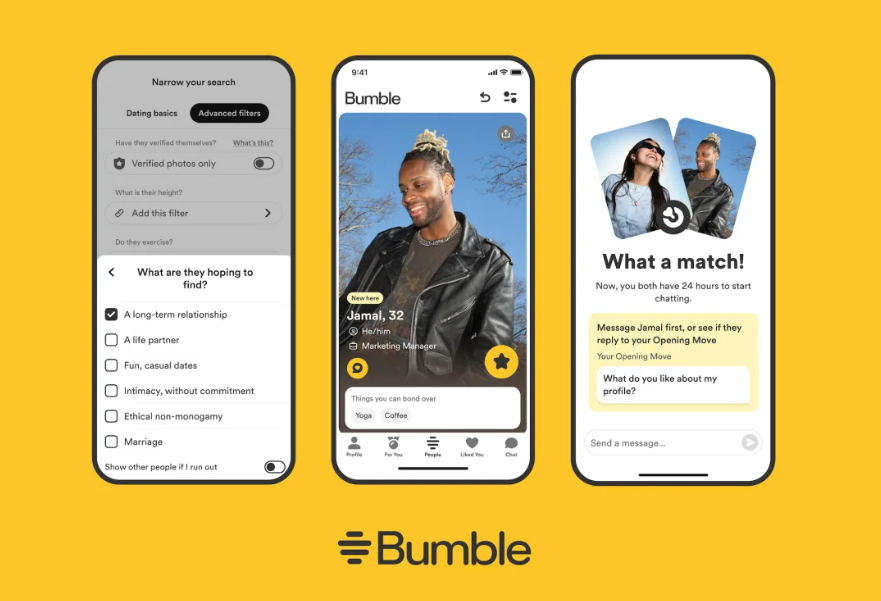
Bumble builds time scarcity directly into matching.
After a match, the person who can make the first move has 24 hours to start the conversation before the match expires. Opening Moves can also let matches respond to a preset question to get the conversation started.
Bumble’s Extend feature adds another 24 hours to the countdown. Users get one free Extend per day, while Bumble Boost and Premium offer unlimited Extends.
Here, the scarce resource isn’t a physical product. It’s time. The countdown gives users a deadline to act rather than leaving the decision open indefinitely.
8. Amazon Prime Now
Prime Now, Amazon’s 2-hour delivery shop that closed down in 2021, was another great example of scarcity:
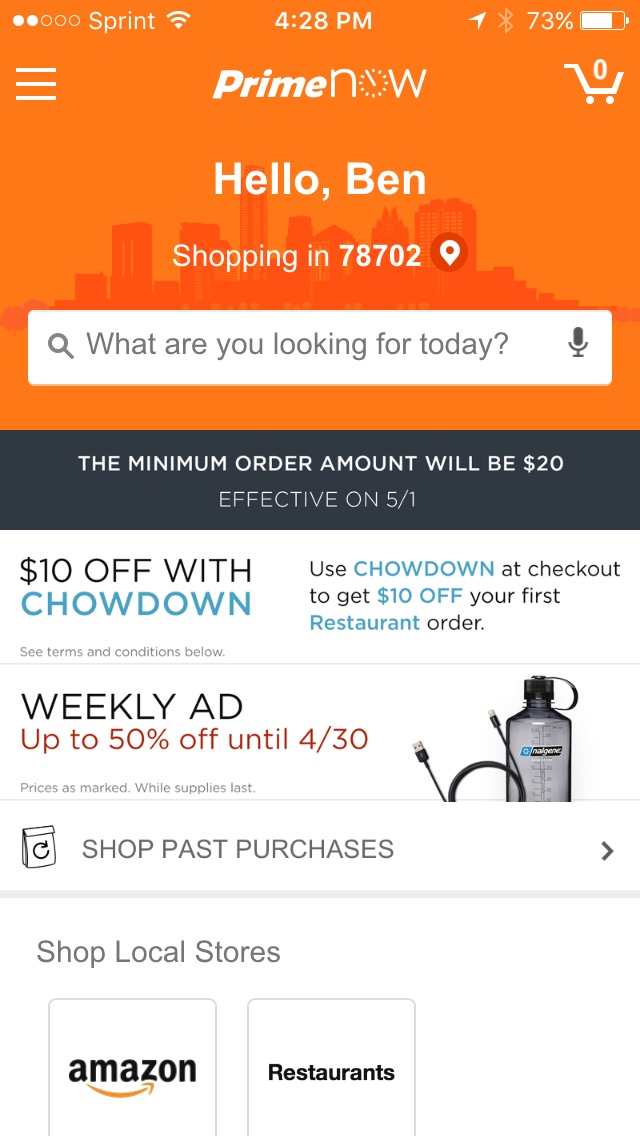
See it? The weekly ad is “up to 50% off until 4/30.” Excellent time-based scarcity example.
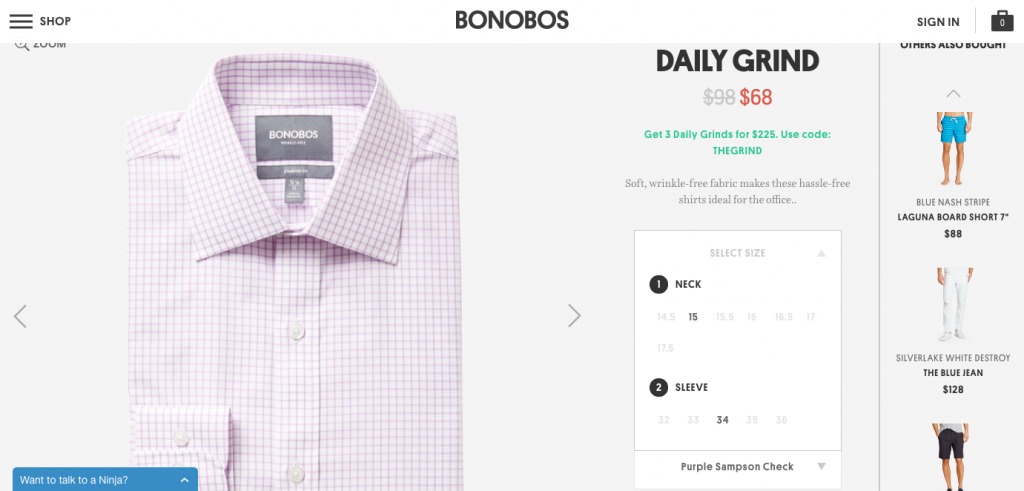
9. Bonobos
Bonobos employs scarcity by telling you which sizes and styles are out of stock right up front.
It’s an effective way to show you that the product is in high demand and low supply:
10. Modcloth
ModCloth currently uses “Back by Demand” as a scarcity and demand signal.
Its Back by Demand collection identifies products that have returned after previously becoming unavailable or selling through demand. The label appears directly on individual products across the collection.
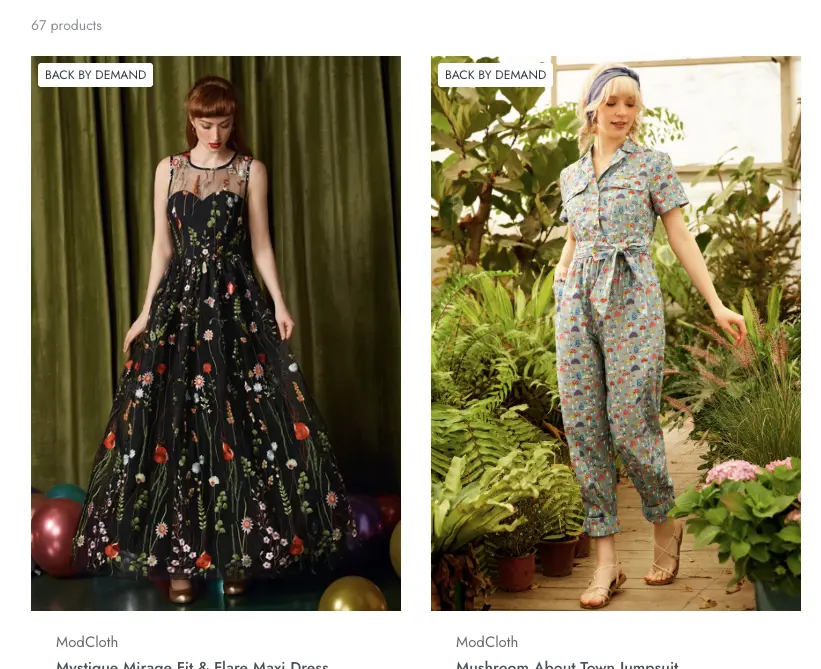
It works slightly differently from a traditional “Only 2 left” warning.
Instead of telling shoppers how little inventory remains, it reminds them that demand has already been strong enough for the product to disappear once before.
11. Optinmonster
OptinMonster uses urgency in its own promotional messaging.
In this example, the site highlights a “Special Introductory Offer” with the message “Purchase today and get up to 7 months free!” That adds a clear incentive to act now rather than wait.

This is a straightforward time-based urgency play. The value isn’t just the discount itself. It’s the suggestion that the deal is available now as part of a special offer, which makes delaying the purchase feel riskier.
Like any urgency-based promotion, it works best when the offer is genuine and clearly time-bound.
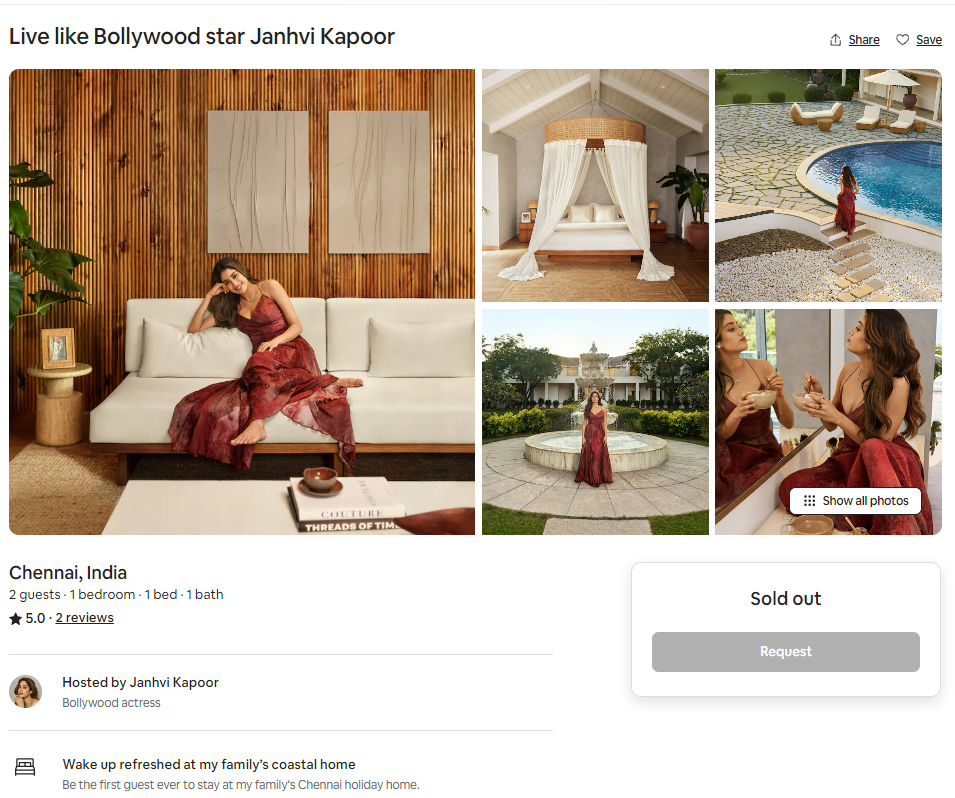
12. Airbnb
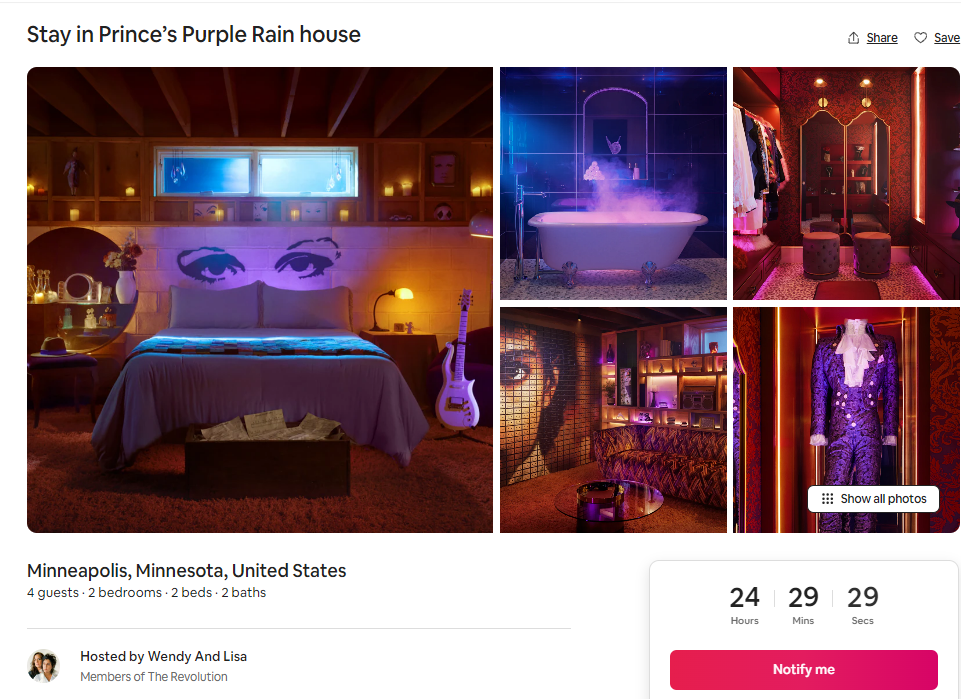
Airbnb is an expert at making its customers feel special. From its rare finds features to exclusive limited experiences, no brand does scarcity quite like the short and long-term homestay and experience company.
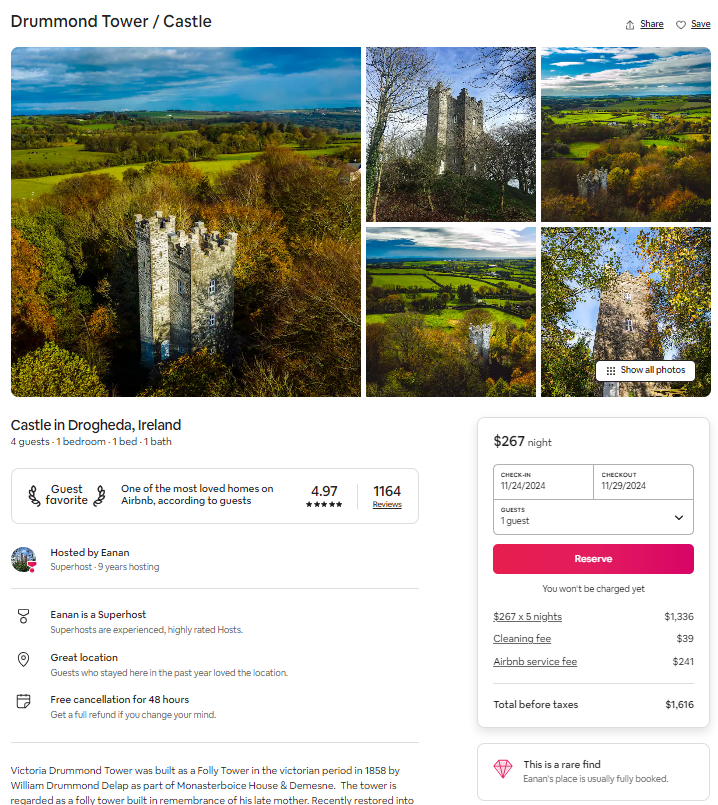
Whether enjoying a VIP speakeasy evening with Kevin Hart, experiencing life as a Bollywood star, or living out your Purple Rain fantasy, Airbnb adds to the excitement of its experiences by showcasing a countdown timer to alert users when they can make their reservations.
13. Sephora
Sephora combines two scarcity signals directly on its product pages.
For selected products, shoppers can see “Only a few left” alongside a “Limited Edition” label. For example, the current Gucci Guilty Love Edition fragrance displays both messages next to the available size.
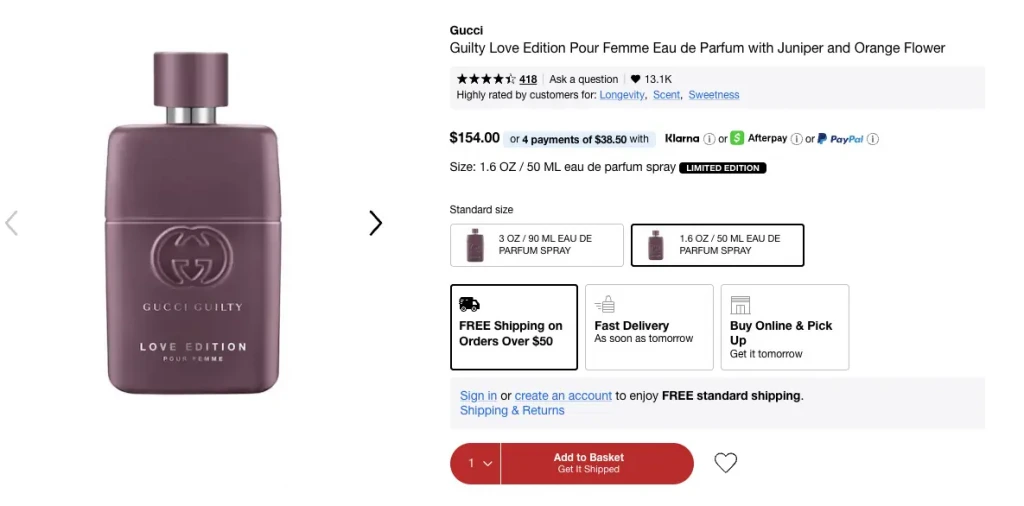
The two messages reinforce each other. “Limited Edition” tells shoppers the product will not be available indefinitely, while “Only a few left” shows that the remaining stock is already running low.
It gives customers a clear reason not to assume they can come back and buy the same product later.
14. Stubhub
Ticket marketplaces are a natural fit for quantity scarcity, and StubHub makes the remaining supply highly visible.
Current event pages can show “Only 1% of tickets left” at the event level, while individual listings are marked “Last tickets” and “Only 2 left.”
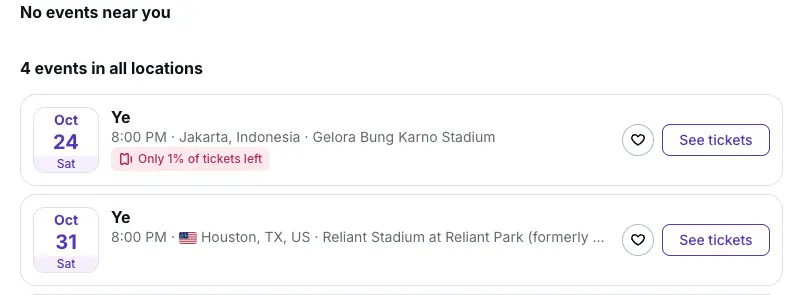
That gives shoppers two scarcity signals at once: the overall pool of tickets is shrinking, and the specific seats they’re looking at may also disappear.
Unlike manufactured urgency, event ticket inventory really is finite.
15. ASOS
ASOS uses demand-based scarcity by flagging products as “Selling fast.”
The label appears directly on product listings while shoppers are browsing, including current clothing categories where multiple items carry the message.
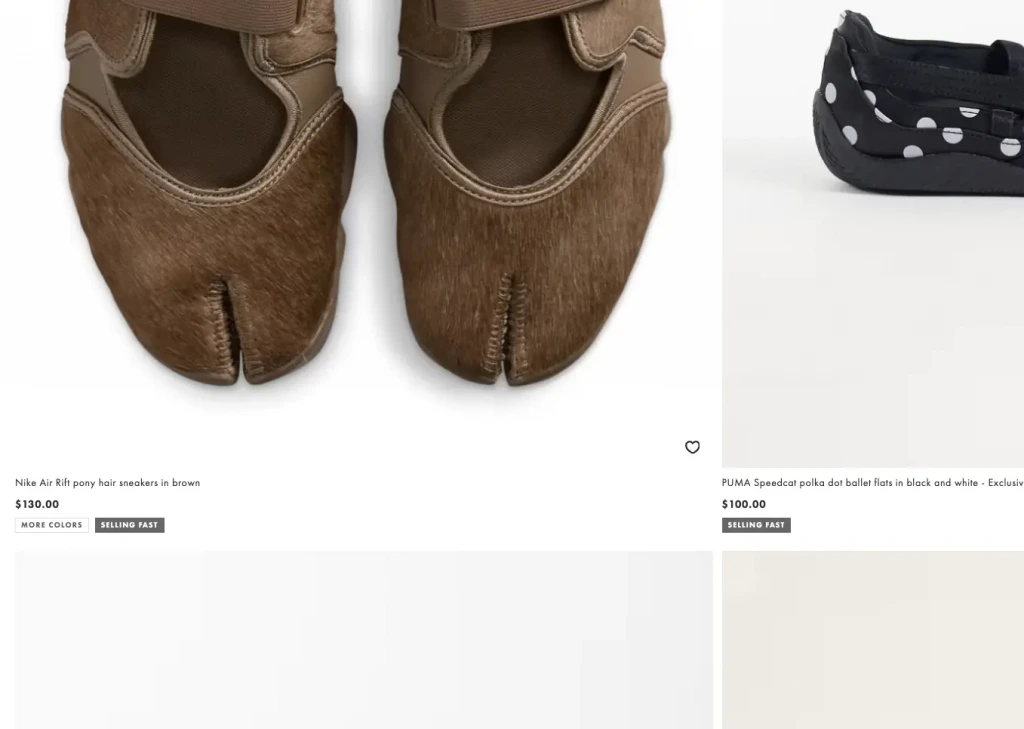
Unlike a fixed countdown, this signals that other shoppers are actively buying the product and that availability may change quickly.
It’s a subtle form of scarcity: ASOS doesn’t need to claim that only a specific number remain. The “Selling fast” message is enough to tell shoppers that waiting could mean missing their preferred item or size.
16. Anthropologie
Anthropologie often combines time scarcity and quantity scarcity on the same product page.
For example, current furniture listings can show a discounted price marked “Limited Time!” while also displaying “Only a few left!” directly above the purchase button.
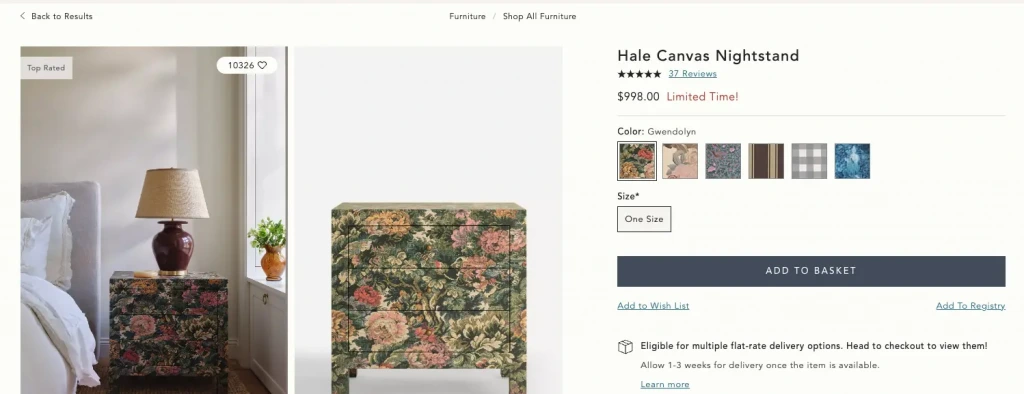
That gives shoppers two reasons not to wait: the lower price may end, and the remaining stock may sell out.
It’s a good example of how multiple scarcity signals can work together without needing a countdown timer.
This presumes that it had been sold out due to massive popularity. If you want the pair, you should jump on it before it happens again!
Scarcity principle gone wrong: what not to do
Scarcity works well, unless customers have reason to think it’s fake.
The example below was previously highlighted by CXL founder Peep Laja. Monthly access to a digital product was supposedly limited and close to selling out, while yearly memberships remained available.
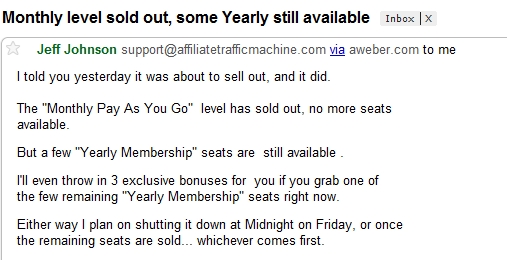
As Peep noted:
We’ve all read Cialdini’s Influence, right (if you haven’t yet, do it now)? We’ve all been victims of the scarcity principle (‘only 4 seats left at this price!’), and many of us have used it successfully in our campaigns.
It really does work well—unless the reason for scarcity is blatantly made up! Monthly access to a digital product is “sold out,” but yearly access is still available? Come on!
What does this do to your credibility? People stop believing you. And that’s kind of important.
Peep Laja
The problem isn’t subtle: if access to the same digital product remains available through another billing option, the claimed supply constraint becomes difficult to believe.
Scarcity also can’t compensate for a weak offer. The product still needs clear value, relevance, and a credible reason for customers to buy it. Scarcity should communicate a real constraint, not manufacture one.
Communicating scarcity effectively
Scarcity works best when it communicates something that is actually true.
If inventory is low, show it. If an offer ends on Friday, state the deadline. If only 100 tickets exist, tell customers how many remain.
A few rules keep scarcity credible:
- Be specific. “3 left” is clearer than “selling fast” when the exact inventory is available.
- Use real deadlines. Don’t reset a countdown when it reaches zero.
- Explain unusual constraints. If access is deliberately limited, give customers a reason why.
- Remove expired messages. Scarcity stops being credible when “last chance” appears every week.
- Don’t let scarcity replace value. Customers still need a reason to want the product in the first place.
The goal isn’t to manufacture pressure. It’s to make genuine limits visible at the point where they matter.
FAQs about scarcity marketing
What is scarcity marketing?
Scarcity marketing uses genuine limits on quantity, time, or access to encourage customers to make a decision sooner. Common examples include low-stock warnings, limited editions, seasonal releases, ticket limits, and expiring offers.
What are the two main types of scarcity?
The two most common types are quantity scarcity, where only a limited number of products, places, or tickets are available, and time scarcity, where an offer or opportunity is available only for a defined period.
What is the difference between scarcity and urgency?
Scarcity describes the constraint: for example, only three products remain. Urgency is the pressure to act because of that constraint. A countdown creates urgency because the available time is becoming scarce.
Does scarcity increase sales?
It can increase urgency and affect purchase behavior, but it does not guarantee higher sales. Research also shows that implausible or artificial scarcity can reduce trust and purchase intention.
What is fake scarcity?
Fake scarcity is a limit that isn’t genuine—for example, a countdown that automatically resets, an invented low-stock message, or a supposedly limited offer that remains continuously available.
When should marketers use scarcity?
Use it when a real constraint exists: limited inventory, fixed capacity, a genuine deadline, seasonal availability, a discontinued product, or restricted access. Scarcity is most effective when it makes an existing limitation clearer rather than creating one artificially.
Related Posts
-

In today's review I'm reviewing 2 different ecommerce product pages. Watch this 5-minute review: Pages…
-

Want to know how to deal a serious blow to your landing page conversions? Have…
-
.... That concludes the list. Instead of looking for a quick fix, you have to…
-

On-point product marketing is why Webflow was able to enter the no-code website market with…





GreAt article ! I love issues about psychological marketing. Keep doing this!
Thanks!
Combining the ideas that tons of people are after something (ex. like ebay does with its little “viewed in past hour” + the limited number of items left OR a time cuttoff is really where you want to be with your offers.
A remarketing ad that keeps reinforcing this cutoff or a decrease in stock will also absolutely crush it for you.