Top 10 Most Read Articles of 2017

We publish a lot of well-researched content. Among all the new posts that were published in 2017, here are the ones that got the most attention.
We publish a lot of well-researched content. Among all the new posts that were published in 2017, here are the ones that got the most attention.

Google Analytics and Google Tag Manager are tools that most marketers use on a daily basis. New stuff is added to both of them all the time.
What’s something new and useful that was added in 2017 the top experts love?

In 2015, the nine-figure apparel retailer Karmaloop.com filed for bankruptcy. The company had been bleeding cash, losing six figures per month.
That summer a private equity fund acquired the assets of the company. They brought me in as CMO.
Within three months all marketing KPIs had improved.

If you’re invested in improving your A/B testing game, you’ve probably read dozens of articles and discussions on how to do a/b testing.
In reading advice about how long to run a test or what statistical significance threshold to use, you probably saw claims like “Always aim for XX% significance” or “Don’t stop a test until it reaches YYY conversions” – where XX% is usually a number higher than 95%, and YYY is usually a number higher than 100.
You might also have heard it’s best to come up with many variants to test against the control to improve your chance of finding the best option.
No matter what rule is offered, such advice seems to rest on the assumption that there is a one-size-fits-all solution that works in most situations.

At TelTech, it took our product-marketing organization more than a year to get to something that resembled a true growth team, running high tempo testing.
So, if you are struggling to implement the growth hacking methodology, I get it. We assembled a team, achieved product-market fit, and identified our growth levers, but got stuck when we tried to put process behind our testing.
If you’re at a similar stage in your development, you’ll probably get stuck there too. Eventually, we found some practical methods to help us succeed.
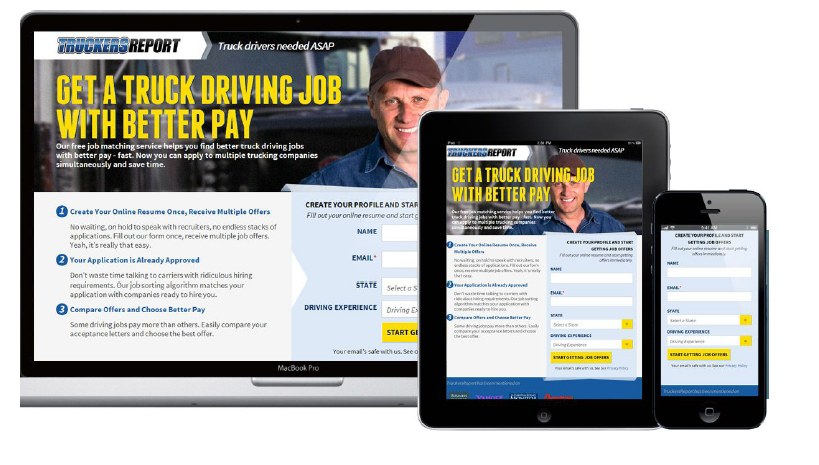
It took us six rounds of tests until we landed on a variation that was doing 79.3% better than the version our client had before coming to us.

If you ask most marketers, they will tell you that A/B testing and personalization are two completely different things. I respectfully disagree, and I think this disagreement is at the root of how to use them best together.

Learning stuff online is the new standard for learning. It’s not just “how to tie a tie” how-to videos, it’s also learning hard skills. In fact, according to a recent report 59% of employed data scientists learned skills on their own or via a MOOC.
But how can we take better advantage of online learning? What’s the most efficient way to learn as much info as quickly as you can?

You run an A/B test, and it’s a winner. Or maybe it’s flat (no difference in performance between variations). Does it mean that the treatments that you tested didn’t resonate with anyone? Probably not.
If you target all visitors with the A/B test, it merely reports overall results – and ignores what happens in a portion of your traffic, in segments.
Did you know CXL Institute is an authorized education provider on LinkedIn?