The Wrong (and Right) Ways to Test Content Titles

When it comes to traffic acquisition, the money is in the headline.
When it comes to traffic acquisition, the money is in the headline.

In this 2016 State of Conversion Optimization Report, we gave a 48 question survey to 722 people who work in the optimization space.

CXL Live 2016 was a smashing success. The speakers were amazing, the resort phenomenal, and the networking world-class.

Many modern psychology researchers have suggested that the human brain has three (figurative) parts:
Until fairly recently, many fields of study (notably economics) believed that our decisions were largely rational. However, neuromarketing as a field has suggested that the old brain, the old primitive “fight or flight” part, makes most of our decisions.
So how do we influence the old brain for greater growth?

Symbolism is a tricky thing. Different symbols mean different things to different people based on different backgrounds and past experiences. That’s why icons can easily flop, if they’re not properly tested. After all…
If the user can’t use it, it doesn’t work. [Tweet It!]

When you’re doing conversion optimization, one of the hardest parts is finding opportunity areas to optimize. Finding places people are dropping out is important in setting up a prioritized testing plan.
Equally valuable is finding activities that correlate with higher customer success – whether that be RPV, LTV, or whatever metric you’re optimizing for.

When you’re trying to boost revenue and the number of paying users for a SaaS, your website and signup page are only one piece of the puzzle. Optimizers tend to forget that the entire funnel requires optimization.
Focusing on your signup page will help you increase trial signups upfront. But the major questions are:

UX mistakes often go undetected because they are quiet. They aren’t a broken image or a misspelled word or a form that isn’t sending. No, UX mistakes are foundational.
To visitors, UX mistakes are loud, whether they consciously detect them or not. In fact, IBM is credited for the saying, “Ease of use may be invisible, but its absence sure isn’t.” [Tweet It!]
We often talk about online conversion optimization without mentioning that many businesses, especially B2B, rely on offline sales to produce revenue.
The two aren’t disconnected, though. There’s a lot we can do online to help increase sales. It starts with sales enablement.
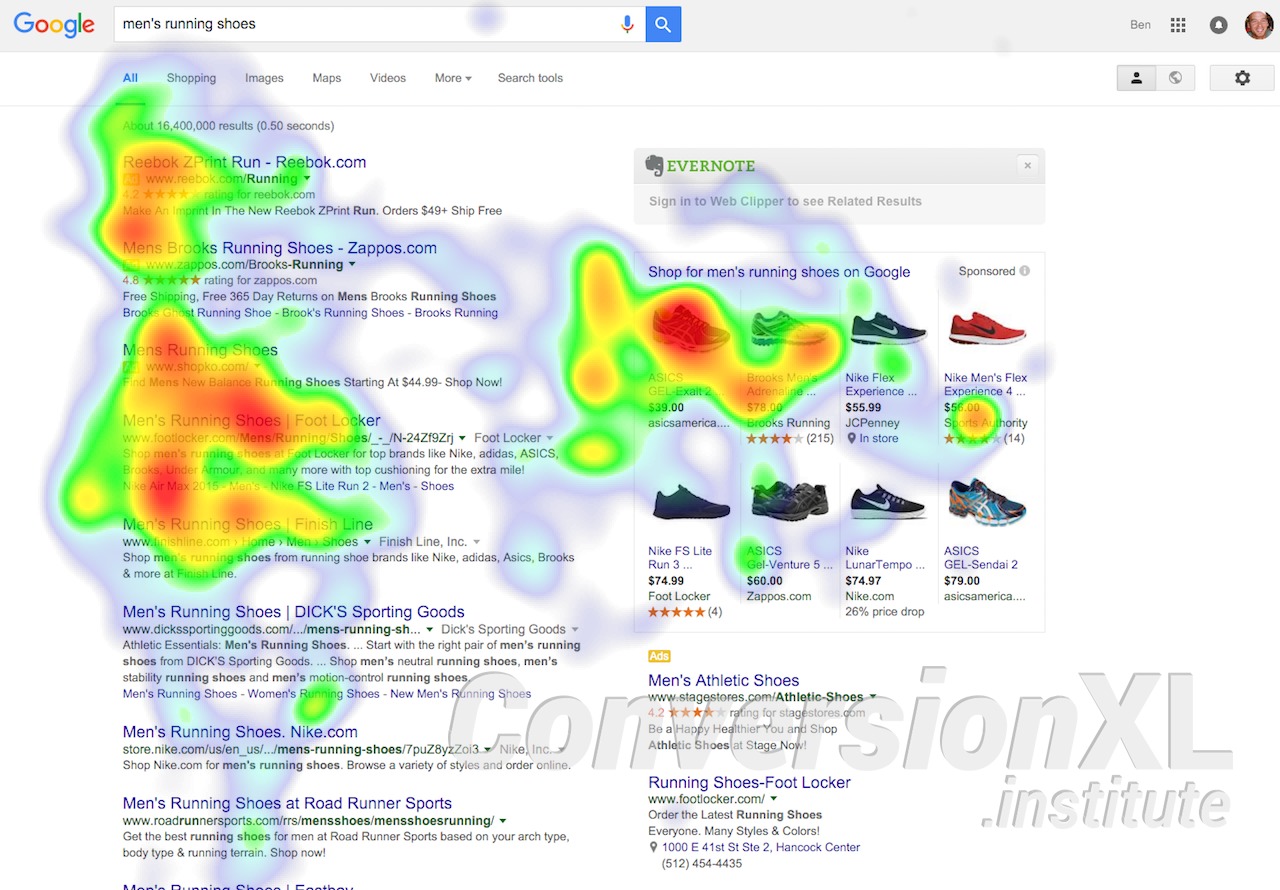
How do people view search results? The answer to this questions brings great insight to those trying to make money on search marketing, whether SEO or PPC. We conducted a new eye tracking study to find out.